.svg)


.svg)
- Room names shape culture, wayfinding, and how often spaces get booked
- Pick a theme with enough depth to scale as you add locations
- Involve employees in naming; top-down choices rarely stick
- Function-based names work best for hybrid teams who aren't in the office daily
- Your booking system needs to display names clearly or the whole effort is wasted
Room names for offices aren't just a fun Friday project. They're a small decision that touches wayfinding, brand identity, and whether people actually book the right space. Get them right and your office feels intentional. Get them wrong (or skip the exercise entirely) and you end up with "Conference Room 3B," which tells visitors and employees exactly nothing about your company.
Why room names matter
A room name is the first piece of culture someone encounters when they walk into your office or open a booking app. It signals whether your company takes itself seriously, has a sense of humor, or values creativity.
There's a practical case too. Workplace research has shown that memorable, themed names measurably boost room utilization compared to generic numbered rooms. That makes sense: people remember "The Treehouse" and forget "Room 204." When rooms are memorable, they're easier to reference in conversation, easier to find on a floor plan, and easier to book correctly.
For hybrid teams especially, clear naming matters. Someone who's in the office two days a week doesn't have the mental map that a daily commuter builds over months. Descriptive, themed names act as wayfinding shorthand that helps occasional visitors navigate without asking for directions. And if your company operates across multiple office locations, a consistent naming system creates coherence between sites that numbered rooms never will.
The psychology behind memorable room names
Naming things is how humans make sense of spaces. An organizational psychologist at Columbia's Teachers College put it well: companies that name rooms according to themes are communicating their values to employees, clients, and everyone who walks through the door.
That's measurable. Disengaged employees cost $8.9 trillion in lost productivity globally, according to Gallup. Room names alone won't fix disengagement, obviously. But they're part of the broader employee experience strategy that tells people their workplace was designed with thought, not just spreadsheets.
Names also affect behavior. A room called "The Library" sets a different expectation than one called "The Arena." A huddle room named "Quick Sync" signals short meetings. One named "Deep Dive" signals longer working sessions. These cues are subtle, but they shape how people use space.
7 Naming themes (with 150+ ideas your team will actually use)
Not every theme works for every company. A law firm and a gaming studio have different tolerances for whimsy. Below, each theme includes guidance on where it fits best, plus enough names to get you started.
Theme 1: Geographic (cities, landmarks, neighborhoods)
Best for: Global or distributed teams, companies with offices in multiple cities.
This is the most popular theme for a reason. The most common city choices are London, Paris, Tokyo, Sydney, Berlin, New York, Madrid, Shanghai, Hong Kong, and Barcelona. But you can go deeper than capital cities.
Names to steal:
- World cities: Kyoto, Lisbon, Marrakech, Reykjavik, Buenos Aires, Nairobi, Seoul, Vancouver, Prague, Dubrovnik
- U.S. neighborhoods: SoHo, Wicker Park, Mission District, Capitol Hill, French Quarter, Wynwood, Pearl District
- Landmarks: Machu Picchu, Santorini, Fjords, Serengeti, Great Barrier Reef, Patagonia, Amalfi, Yosemite
- Local references (customize to your city): street names, parks, historic buildings, beloved restaurants
Scaling tip: Cities are nearly infinite. You won't run out. But avoid naming rooms after cities where you have actual offices; it creates confusion when someone says "Meet me in the London room" and you have a London office.
Theme 2: Nature and the outdoors
Best for: Wellness-focused companies, sustainability brands, organizations that want a calming aesthetic.
Nature themes work well because they're universally understood, culturally neutral, and pair beautifully with biophilic office design trends.
Names to steal:
- Trees: Sequoia, Birch, Willow, Cedar, Banyan, Aspen, Magnolia, Cypress, Baobab, Redwood
- Bodies of water: Cascade, Lagoon, Tributary, Glacier, Coral Reef, Tideline, Delta, Estuary
- Weather and sky: Aurora, Solstice, Nimbus, Cirrus, Monsoon, Equinox, Zenith, Twilight
- National parks: Denali, Zion, Acadia, Yellowstone, Olympic, Glacier, Arches, Big Bend
- Ecosystems: Canopy, Meadow, Tundra, Savanna, Reef, Rainforest, Alpine, Dunes
Theme 3: Pop culture and entertainment
Best for: Creative agencies, startups, gaming companies, any culture that doesn't take itself too seriously.
The risk here is picking references that age badly or exclude people. Stick to broadly recognized properties, and refresh every year or two.
Names to steal:
- Classic films: Casablanca, Rosebud, Gotham, Shire, Hogwarts, Narnia, Wakanda, Tatooine
- TV shows: The Upside Down, Central Perk, Dunder Mifflin, Paddy's Pub, The Good Place, Pawnee
- Music: Abbey Road, Electric Ladyland, Purple Rain, Graceland, Motown, Nashville, Vinyl
- Books: Neverland, Wonderland, Hundred Acre Wood, Rivendell, Room of Requirement, Diagon Alley
- Video games: Hyrule, Mushroom Kingdom, Rapture, Citadel, Sanctuary, Midgar
Theme 4: Science, tech, and innovation
Best for: Tech companies, engineering-heavy orgs, R&D teams.
Names to steal:
- Space: Apollo, Nebula, Quasar, Orbit, Voyager, Cosmos, Pulsar, Andromeda, Kepler, Hubble
- Computing pioneers: Turing, Lovelace, Hopper, Berners-Lee, Knuth, Dijkstra, Shannon
- Elements: Titanium, Cobalt, Neon, Argon, Helium, Carbon, Lithium, Platinum
- Inventions: Telegraph, Compass, Pendulum, Prism, Catalyst, Algorithm, Cipher, Helix
Theme 5: Playful and humorous
Best for: Companies with a strong internal culture, teams that bond over shared jokes.
A word of caution: humor is subjective. What's funny to the founding team might be baffling to a new hire. Keep it accessible.
Names to steal:
- Food: The Waffle House, Espresso Yourself, Nacho Average Meeting, The Bread Room, Full Beans
- Wordplay: Bored Room (for the conference room nobody likes), Déjà Vu, Plot Twist, Brainstorm Shelter
- Absurdist: The Rubber Duck, Schrodinger's Room, Room With a View (no windows), The Panic Room
- Office life: Reply All, Mute Button, Ctrl+Z, 404 Room Not Found, TL;DR, Bandwidth
Theme 6: Professional and aspirational
Best for: Client-facing offices, law firms, financial services, companies hosting frequent visitors.
These names project competence without being boring. They work especially well when you need your visitor management experience to feel polished.
Names to steal:
- Virtues and values: Integrity, Clarity, Momentum, Resolve, Horizon, Vanguard, Keystone
- Architectural terms: Atrium, Cornerstone, Pinnacle, Terrace, Colonnade, Rotunda, Pavilion
- Leadership figures: Curie, Da Vinci, Mandela, Earhart, Turing, Nightingale, Tesla
- Gemstones: Sapphire, Onyx, Emerald, Topaz, Opal, Garnet, Jade, Amethyst
Theme 7: Function-based naming
Best for: Hybrid offices where people aren't in every day, large campuses, companies prioritizing clarity over creativity.
Sometimes the most creative thing you can do is be obvious. A focus room called "Focus" tells a hybrid worker exactly what to expect. This approach works well when combined with a secondary theme (e.g., "Focus: Sequoia" or "Huddle: Nimbus").
Names to steal:
- By activity: Brainstorm, Deep Work, Quick Sync, Town Hall, Workshop, Debrief, Sprint, Demo
- By size: The Duo, Quad, The Six, Roundtable, Amphitheater, The Nook, The Den
- By energy: Quiet Zone, Buzz Room, The Greenhouse, Launchpad, The Studio, The Lab
- Hybrid combos: Focus: Cedar, Huddle: Prism, Collab: Amalfi, Present: Apollo

Room names are just one piece. Here's how to design meeting spaces that actually support productive collaboration.
Read the guide
How to choose the right naming system for your office
Picking a theme is the easy part. Making it work at scale requires a bit more thought.
Start with your brand voice. If your company values page says "bold and unconventional," then naming rooms after gemstones sends a mixed signal. The theme should feel like a natural extension of how you already talk about yourselves. Review your company core values before you start brainstorming.
Test for scalability. "Star Wars characters" sounds fun until you open a second office and realize you've used all the good ones. Pick themes with hundreds of options, not dozens. Cities, trees, elements, and authors all pass this test. "Characters from one TV show" usually doesn't.
Check for inclusivity. Run your shortlist past a diverse group before finalizing. Names that reference alcohol, religious figures, or culturally specific humor can alienate people. This isn't about being overly cautious; it's about making sure the room name doesn't become the thing people remember for the wrong reasons.
Consider your visitors. If clients walk through your office regularly, "The Panic Room" might not land the way you intended. Match the tone to who's in the building.
Plan for multi-location consistency. If you have offices in three cities, decide whether each location gets its own sub-theme (New York does neighborhoods, London does parks) or whether one theme spans all sites. Both work. Inconsistency doesn't.
Best practices for rolling out new room names
The rollout matters as much as the names themselves. A quiet rename in the booking system confuses people. A thoughtful launch builds buy-in.
Involve employees early. The fastest way to kill enthusiasm for new room names is to announce them without input. Run a nomination round, then a vote. People use spaces they feel ownership over. This is a low-effort, high-return employee engagement strategy.
Update every touchpoint simultaneously. Door signage, digital displays, your booking platform, calendar integrations, floor plan maps, the Slack channel where people ask "which room is free?" If even one system still says "Conference Room 3B," the new name won't stick.
Make it an event. Host a reveal over coffee. Print a map. Give people a reason to walk the floor and learn the new names. It sounds small, but rituals create memory.
Set a review cadence. Room names aren't permanent. Plan to revisit them annually. Teams change, offices expand, and the pop culture references from 2024 might feel stale by 2027.
From interactive floor plans to calendar integrations, Gable Offices makes it easy to display, book, and track every named room across your portfolio.
Learn more
Making room names work in your booking system
Creative names are useless if nobody can find them when they're trying to book a room at 8:47 AM on a Tuesday. The naming system and the booking system need to work together.
Display names clearly on floor plans. Interactive maps should show the themed name prominently, with capacity and equipment details one click away. If someone has to hover over "Room 204" to discover it's actually called "Sequoia," you've already lost.
Include the name in calendar invites. When a meeting invite says "Sequoia, 3rd Floor" instead of "Conf Rm 204," attendees know exactly where to go. This is especially important for hybrid office setups where people aren't in the building every day.
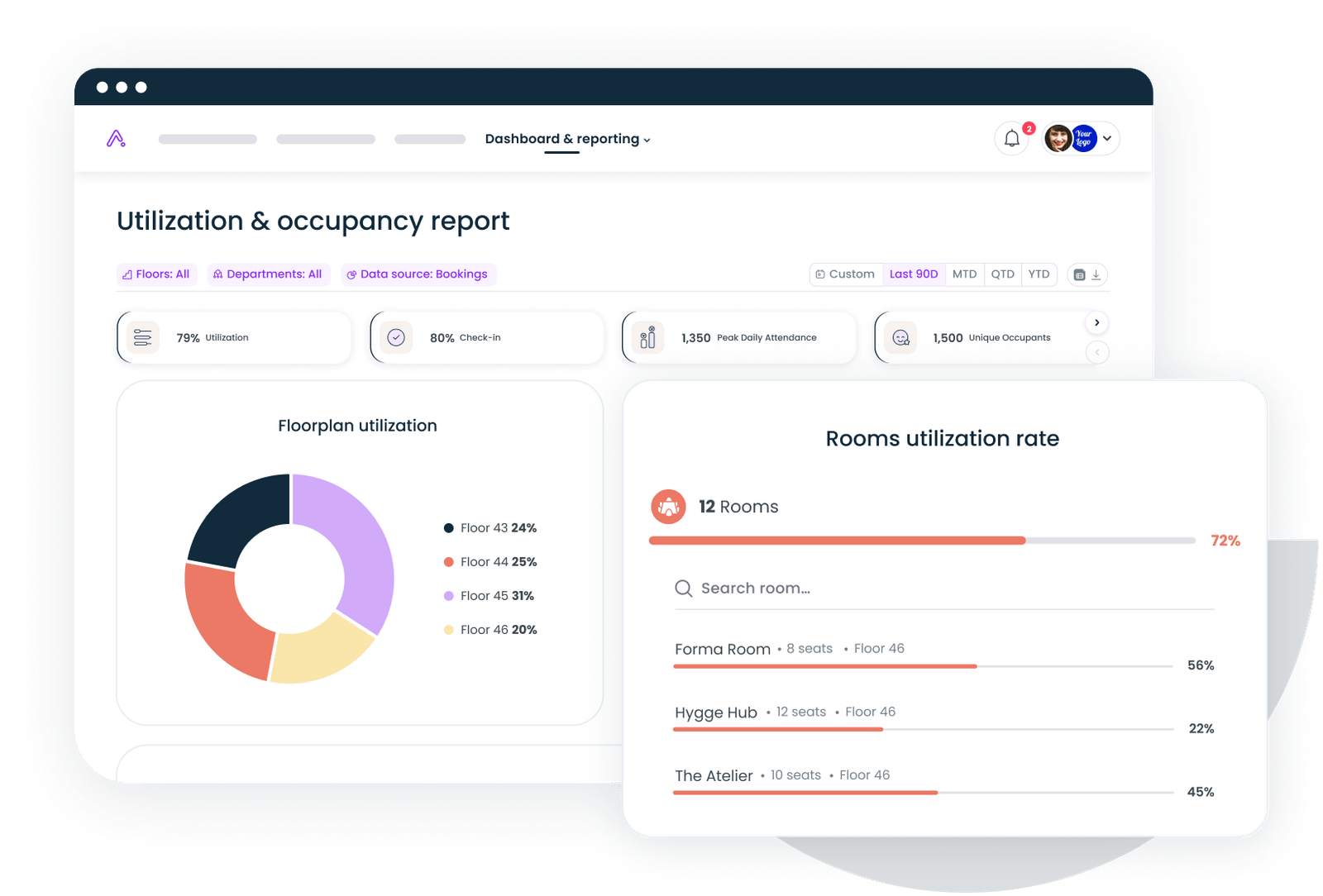
Use names in analytics. Tracking utilization by room name (not just room number) makes reporting more intuitive. When your workplace team can say "Sequoia is booked 80% of the time but Birch sits empty," that's a conversation starter. Gable Offices handles this natively, displaying custom room names across desk booking, meeting room reservations, and utilization dashboards so the creative work you put into naming actually shows up where people interact with it.
Keep names short. "The Enchanted Forest of Creativity and Wonder" doesn't fit on a door sign, a mobile screen, or a calendar invite. Two words is ideal. Three is the max.
Real-world naming examples from companies that got it right
Google names rooms after local cultural references in each office. In Zurich, rooms are named after Swiss chocolates. In New York, they reference local landmarks. The system scales because each office has its own sub-theme within a broader "local culture" framework.
Spotify leans into its identity with music-themed rooms. Genres, albums, and studio references show up across their offices. "Techno Bunker" is a real room name. It works because it's on-brand without being forced.
Facebook (now Meta) let employees vote on room names, which created buy-in and surfaced ideas that leadership wouldn't have chosen. The result was a mix of inside jokes and cultural references that felt authentically like the people who worked there.
The common thread: none of these companies outsourced the decision to a branding agency. They treated room naming as a culture exercise, not a design exercise.
The naming strategy that actually scales
Here's the framework, condensed:
- Audit your spaces. List every bookable room, its capacity, its primary function, and its location. You can't name what you haven't inventoried. A solid office space planning process makes this easier.
- Pick a theme family. Choose one broad theme (nature, geography, science) that has enough depth for your current footprint plus 2x growth.
- Assign sub-themes by function. Large conference rooms get one category (mountains), huddle rooms get another (rivers), focus rooms get a third (weather). This creates an intuitive system where the name itself hints at the room type.
- Crowdsource specific names. Give employees the sub-theme and let them fill in the specifics. Vote on the finalists.
- Implement everywhere at once. Signage, booking software, floor plans, Slack channels. No half-measures.
- Review annually. Add new names as you add rooms. Retire names that nobody uses or that have aged poorly.
See how Gable helps workplace teams display, manage, and measure every named space across their office portfolio.
Get a demo