
.svg)


.svg)
An employee experience (EX) strategy is a holistic plan designed to optimize every interaction an employee has with a company, from recruitment to exit. Organizations that treat employee experience as an ongoing process, not a one-off initiative, consistently see higher retention rates, improved productivity, and increased profitability.
If you're a workplace or people leader looking to improve employee experience across your organization, this guide outlines the frameworks, tools, and steps to build an effective employee experience strategy that keeps pace with evolving employee expectations and delivers real business outcomes.
What is an employee experience strategy?
An employee experience strategy is a structured, organization-wide approach to designing and improving every touchpoint across the employee lifecycle. It covers how employees perceive their workplace culture, the tools they use to get their work done, and the physical (or virtual) spaces where that work happens.
Think of it this way: employee experience encompasses every interaction an employee has with your company, from their first day to their last. An experience strategy is your intentional plan for making those interactions work for both people and the business.
A successful employee experience strategy requires a transition from reactive HR policies to an intentional, data-driven approach to designing the employee journey. Instead of waiting for problems to surface in annual reviews or exit interviews, effective EX strategies follow a continuous cycle of listening, understanding, and acting.
This matters because the data is hard to ignore. Global employee engagement dropped to just 21% in 2024, costing the world economy an estimated $438 billion in lost productivity, according to Gallup's 2025 State of the Global Workplace report. Meanwhile, managers, who account for roughly 70% of the variance in team engagement, are struggling themselves, with manager engagement falling from 30% to 27% in the same period.
The gap between what companies think they're offering and what employees actually experience is widening. Closing that gap starts with a deliberate strategy.
Why employee experience strategy matters for your organization
When people talk about employee engagement and employee experience, they often use the terms interchangeably. But they're not the same thing. Employee engagement is an outcome. Employee experience is the input that drives it. When experience thrives, so does engagement.
And the returns are significant. Gallup's research consistently shows that highly engaged employees drive up to 23% greater profitability. Happy employees are also more likely to stay with a company and become brand advocates, contributing to a strong employer reputation and making talent acquisition significantly easier.
A poor employee experience, on the other hand, leads to a costly cycle: disengaged employees leave, turnover rises, institutional knowledge walks out the door, and your hiring process starts over. For organizations managing hybrid and distributed teams, where employees feel connected to the company's mission largely through digital and workplace experiences, a strong EX strategy is even more critical.
Here's what a well-executed employee experience strategy can do for organizational success:
- Higher employee engagement and motivation. When employees feel valued and supported at every stage of their journey, they bring more energy and creativity to their work. Organizations with high employee experience scores demonstrate more frequent and successful innovations and lower turnover rates.
- Better retention and lower costs. A positive employee experience reduces turnover and helps attract top talent. Replacing a single employee can cost anywhere from half to twice their annual salary, which means every retained team member saves real budget.
- Stronger business outcomes. Companies that invest in employee experience create happier workplaces and more productive teams. Investing in employee experience can deliver measurable returns across your organization, from increased productivity to improved customer satisfaction.
- A culture people want to be part of. A strong company culture enhances employee satisfaction, drives business growth, and strengthens your organization's reputation. When people genuinely enjoy their work environment, they talk about it, and that word-of-mouth does wonders for recruiting.

The right technology connects your engagement goals to daily employee actions. Explore the best employee engagement platforms for hybrid teams.
See the top tools
The three pillars of an effective employee experience strategy
An effective EX strategy addresses three main pillars: the physical, cultural, and technological environments. Each one shapes how employees perceive their daily work and whether they feel set up to succeed.
Physical environment
The physical environment includes the workspace, whether a corporate office, a home office, a coworking space, or a combination of all three. For hybrid and remote teams, this pillar has become more complex and more important.
A well-designed work environment affects how employees feel, perform, and connect with their organization. That means considering everything from meeting room availability and desk booking to providing remote employees with perks such as workspace stipends and ergonomic equipment.
Flexible workplace models, such as hybrid and remote work, can significantly improve employee experience when they're backed by the right infrastructure. Employees who can choose where they work based on their daily tasks tend to be more engaged and value the autonomy they're given.
Cultural environment
The cultural environment encompasses the company's mission, values, leadership, and inclusivity. It's how employees feel about their place within the organization and whether they believe their contributions matter.
Embedding inclusion and diversity into the company culture creates an environment where employees feel valued and connected. This goes hand in hand with psychological safety, which fosters trust, openness, and belonging. When employees feel heard, they are 4.6 times more likely to perform at their best, according to Salesforce research.
Building an inclusive company culture requires action, not just stated values. Organizations that define and reinforce their core values create environments where employees feel aligned with the company's mission and motivated to contribute to long-term growth.
Technological environment
The technological environment covers the tools and software provided to perform work. Utilizing modern tools and platforms can streamline workflows and improve communication for employees, while outdated or fragmented technology creates daily frustration.
Employees with the technology they need to perform their jobs are more engaged and more likely to stay with the company. Streamlined technology is especially crucial for effective communication and collaboration among remote and hybrid workers, where a seamless digital employee experience can make or break daily productivity.
Modernizing the digital employee experience involves using consumer-grade tools for communication and self-service. Organizations should collaborate with employees to identify gaps in technology that affect their experience, then prioritize tools that reduce friction rather than adding to it.
How to build an employee experience strategy in 7 steps
Developing a successful EX strategy involves mapping the entire employee journey from hiring to exiting to align organizational culture with daily workplace reality. Here's a practical framework.
1. Establish your mission and goals
Start by establishing a clear mission for your EX that aligns with company values. What does your organization want employees to feel at every stage of their employee life cycle? Setting clear, measurable goals for employee experience initiatives ensures that efforts are intentional and results-driven. Employee experience strategies should include clear goals to track progress and impact, from employee satisfaction targets to retention benchmarks.
2. Map the employee journey
Creating an employee journey map helps organizations identify key moments that impact the employee experience. Mapping the employee journey involves documenting current emotional highs and lows at each touchpoint, from the hiring process and onboarding through development, retention, and offboarding.
Identifying critical "moments that matter" is essential for understanding where to focus improvements. A high-performance EX strategy centers on these moments that shape long-term loyalty and engagement. Using employee personas can also help tailor benefits and communication to specific employee groups, ensuring different teams and roles receive what they need rather than a one-size-fits-all approach.
3. Collect and act on employee feedback
Employee feedback should be collected through tools like pulse surveys and one-on-one meetings. Implementing frequent, informal one-on-one meetings can significantly improve employee experience, even when annual reviews are relied on.
Real-time pulse checks and sentiment analysis are necessary for identifying emerging issues before they lead to turnover. Employee surveys provide valuable insights into how people feel about their work, their managers, and their opportunities for career growth.
But collecting feedback is only half the equation. Acting on employee feedback is crucial for driving change within organizations. Closing the feedback loop by sharing what actions are being taken builds trust with employees. When people see that their employee input leads to real improvements, they're much more likely to keep sharing openly. Organizations should create channels to collect regular employee feedback and make transparent communication about resulting actions a standard practice.
4. Invest in onboarding and development
A well-structured onboarding program sets new hires up for success and accelerates their integration into the company. A structured onboarding process should include mentoring, IT setup, and cultural integration, whether the new employee is joining remotely or in person.
Beyond onboarding, providing diverse development opportunities enhances employee engagement and retention over the long term. Offering clear career paths and holistic wellness support demonstrates that you're invested in employees' professional development and growth as individuals. Mentorship programs, skill-building workshops, and career development opportunities all signal that work isn't just a paycheck but a path toward long-term growth.
From desk booking and room scheduling to real-time analytics, Gable gives workplace teams the tools to create a seamless, data-driven office experience.
Learn more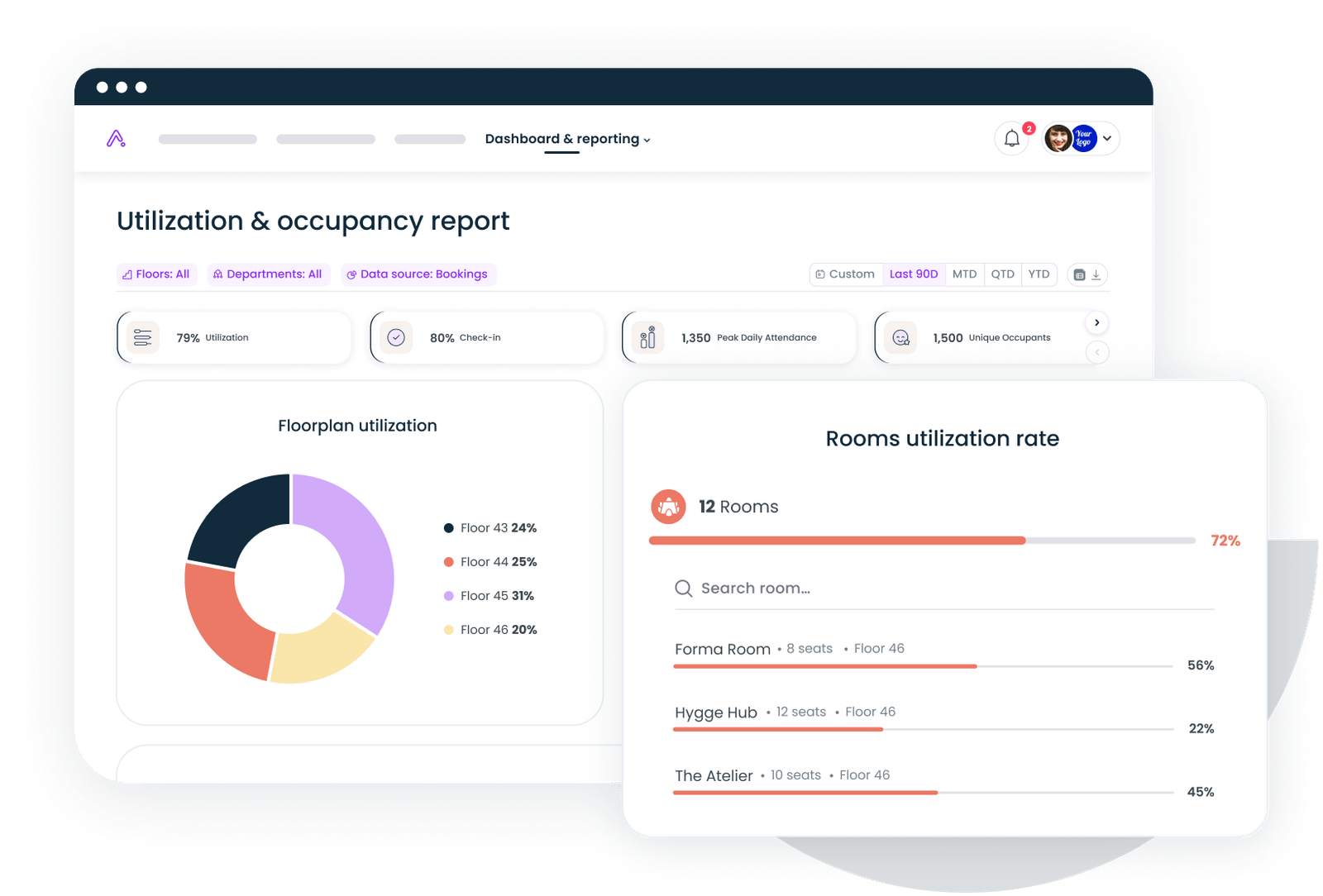
5. Empower your managers
Gallup data shows that managers account for roughly 70% of the variance in team engagement, making them critical to the success of any EX strategy. Training managers to provide constructive feedback, support, and recognition directly influences employee engagement levels.
This means investing in manager development isn't optional. Equip managers with the tools and training to run effective one-on-ones, recognize contributions, and create team environments where people feel safe to share ideas. A supportive environment encourages employees to share ideas and innovate, and managers create that environment every day.
6. Design your workplace for how people work
For organizations running hybrid or distributed teams, the physical workplace is no longer a static entity. It's a tool that needs to flex based on when, where, and why people come together.
This is where workplace management platforms come in. Tools like Gable's office management software help organizations coordinate desk booking, room scheduling, and space analytics so that when employees come into the office, the experience is purposeful and seamless. When every office visit feels intentional rather than arbitrary, it reinforces the organization's respect for employees' time and autonomy.
For teams without dedicated office space, on-demand workspaces can connect employees across cities, providing professional spaces for collaboration and building face-to-face connections that strengthen workplace culture.
7. Measure, iterate, and improve
Measuring and evaluating employee experience is crucial for any organization's sustained success and growth. Tracking a mix of leading and lagging indicators demonstrates ROI and maintains executive buy-in for EX strategies.
Leading indicators include onboarding satisfaction scores, frequency of manager one-on-ones, and participation rates in employee experience initiatives. Lagging indicators include retention rates, Employee Net Promoter Score (eNPS), and absenteeism. Using data to identify friction points helps prioritize areas for improvement in employee engagement.
Effective EX requires regular audits and iterations to keep pace with evolving workforce expectations. Employee engagement scores, gathered through surveys and feedback tools, give you a regular pulse on whether your strategy is working. Track progress consistently and be ready to adjust, because employee expectations evolve and your strategy should too.
Recognition, well-being, and the role of culture
Beyond frameworks and tools, a thriving employee experience also depends on the human elements that make employees feel connected, motivated, and cared for.
Recognition programs that highlight contributions can directly increase employee motivation. This doesn't need to be complex. Consistent, specific acknowledgment of great work helps create satisfied employees who feel seen and appreciated, which in turn drives more engaged employees to keep raising the bar.
Well-being programs are another important piece. Promoting a culture that respects work-life boundaries can help prevent burnout, and investing in employee well-being through flexible work arrangements leads to a more engaged and productive workforce. Organizations that support employee wellness with mental health support, healthy work-life balance initiatives, and genuine flexibility see measurable improvements in employee productivity and retention.
Employee-led committees can also foster collaboration and provide a platform for diverse perspectives to shape organizational initiatives. When you involve employees in shaping their own experience, the result is an engaging work environment where people feel genuine ownership over their workplace culture.
A great employee experience strategy starts with the right foundation. See how Gable helps organizations manage offices, flex spaces, and data in one platform.
Get a demo