.svg)


.svg)
- Only 27% of employees strongly believe in their company's values, which means the vast majority of organizations have a credibility gap, not a values gap
- The best core values are specific, actionable, and tested against real business decisions (not generic posters on the wall)
- Companies with strong values alignment see 23% higher profitability and 43% less turnover according to Gallup
- Industry matters: healthcare companies need different core values than tech startups or financial services firms
- Hybrid and distributed teams need values that are explicitly reinforced through every touchpoint, not assumed through proximity
Core values are the fundamental principles that guide how your company operates. They shape which behaviors get rewarded, how decisions get made during tough calls, and what kind of culture your team actually experiences day to day. But most organizations get them wrong: research shows that roughly three out of four employees don't actually believe in their company's stated values. In 2026, as more organizations manage hybrid and distributed teams, getting your core values examples right has never mattered more.
What are company core values?
Company core values are the foundational beliefs and principles that define how an organization operates, treats its people, and makes decisions. Think of them as your company's operating system. When someone asks "How should we handle this?" or "What's our approach to this problem?", your core values provide the answer.
Strong values aren't just words on your careers page. They are the decision-making framework that shapes how teams collaborate, how managers lead, and whether employees feel genuinely aligned with the company's mission. When values are real (meaning they actually influence hiring, promotions, and tough calls) they become the connective tissue between strategy and culture.
The distinction matters because many organizations confuse aspirational statements with operational values. Aspirational values describe what you want to become. Core values describe what you already are and refuse to compromise on. A value you wouldn't uphold when it costs you something, like a major client or a quarter's revenue, probably isn't a core value. It's a decoration.
Building trust in the workplace starts with values that your team actually believes in. Trust doesn't come from telling people what to value. It comes from consistently demonstrating those values in action, especially when the stakes are high.
For hybrid and distributed teams, core values take on even greater importance. When your team isn't physically together every day, you can't rely on office culture osmosis to transmit what matters. Values need to be explicit, visible, and actively reinforced across every location and time zone.
Why core values matter: the data
Most companies have a values problem, and it's not the one they think. The issue isn't that organizations lack core values. Nearly every company has them written down somewhere. The problem is that employees don't believe in them.
Gallup research reveals that only 27% of U.S. employees strongly agree they believe in their company's values, and just 23% strongly agree they can apply those values to their daily work. That means roughly three out of four employees see their company's stated values as disconnected from reality.
This gap has real consequences. Gallup's State of the Global Workplace report found that global employee engagement dropped to just 21% in 2024, costing the world economy an estimated $8.9 trillion in lost productivity. Organizations where engagement is high (because values are lived, not just posted) operate in an entirely different category.
The business case is clear. Organizations in the top quartile for employee engagement see 23% higher profitability and 43% less turnover compared to those in the bottom quartile. And when employees feel aligned with their organization's values, they are 9x more committed to their roles, according to Achievers.
A strong employee retention strategy doesn't start with perks or pay raises. It starts with values that employees can actually see in action every day. When there's a gap between what you say you value and what you actually reward, your best people notice, and they leave.
The shift to hybrid work has made values alignment even more critical. When teams aren't together in person every day, culture can't spread through proximity alone. Companies need to deliberately build their employee experience strategy around values that translate across in-person, remote, and hybrid settings. Organizations that get this right, that make values the backbone of how distributed teams operate, build cultures that are resilient regardless of where people work.
75+ core values examples by category
Choosing the right core values starts with understanding the range of options available. Below are 78 core value examples organized by theme, each with a brief description of what it looks like in practice. Use this list as a starting point, then narrow down to the four to seven values that feel most authentic to your organization.
Leadership and character values
These values define how your organization leads, makes decisions, and holds itself accountable.
Integrity - Doing the right thing even when it's difficult, expensive, or invisible to others.
Accountability - Owning outcomes (good and bad) rather than pointing fingers or making excuses.
Honesty - Sharing information openly, even when the truth is uncomfortable.
Courage - Speaking up about problems, taking calculated risks, and challenging the status quo.
Humility - Admitting mistakes quickly, asking for help freely, and giving credit generously.
Responsibility - Following through on commitments without being reminded or supervised.
Authenticity - Showing up as yourself, not performing a corporate persona.
Fairness - Applying the same standards consistently, regardless of title or tenure.
Ethics - Making decisions that hold up to public scrutiny, even when no one is watching.
Reliability - Delivering what you promised, when you promised it, every time.
Consistency - Behaving the same way whether the CEO is watching or not.
Discipline - Staying focused on what matters most, even when distractions are tempting.
Self-awareness - Understanding your strengths, weaknesses, and the impact you have on others.
Stewardship - Treating company resources, reputation, and people as things entrusted to your care.
Servant leadership - Leading by removing obstacles for your team rather than directing from above.
Decisiveness - Making timely decisions with available information instead of waiting for perfect data.
Innovation and growth values
These values drive how your organization learns, adapts, and pushes boundaries.
Innovation - Actively seeking better ways to solve problems, not just doing what's always worked.
Curiosity - Asking "why?" and "what if?" as a daily habit, not just during brainstorms.
Creativity - Finding unexpected connections between ideas to produce original solutions.
Growth mindset - Treating failures as learning opportunities rather than career-ending events.
Adaptability - Adjusting your approach quickly when circumstances change.
Boldness - Pursuing ambitious goals that might fail rather than safe ones that barely matter.
Ambition - Setting goals that stretch the organization beyond its current comfort zone.
Continuous learning - Dedicating real time and resources to developing new skills, not just talking about it.
Experimentation - Running small tests before making big bets, and treating negative results as data.
Agility - Responding to market changes in weeks, not quarters.
Resilience - Bouncing back from setbacks without losing momentum or morale.
Persistence - Staying committed to long-term goals when progress is slow or invisible.
Scrappiness - Doing more with less and finding creative workarounds when resources are tight.
Forward-thinking - Making decisions based on where the market is heading, not where it's been.
Kaizen - Pursuing continuous, incremental improvement in every process and interaction.
Problem-solving - Treating obstacles as puzzles to be figured out rather than reasons to stop.
People and culture values
These values shape how your team members treat each other every day.
Collaboration - Working across teams and functions without needing to be told to.
Teamwork - Contributing to collective success rather than individual recognition.
Empathy - Taking time to understand someone's perspective before responding or deciding.
Respect - Treating every person's contribution as worthy of consideration, regardless of role.
Inclusion - Actively ensuring every voice is heard, not just welcomed in theory.
Diversity - Seeking out different perspectives, backgrounds, and experiences as a strategic advantage.
Belonging - Creating an environment where people feel safe to be themselves at work.
Compassion - Responding to colleagues' struggles with genuine care, not just policy compliance.
Kindness - Choosing generosity in small moments, like giving someone the benefit of the doubt.
Trust - Defaulting to believing in people's good intentions rather than micromanaging.
Communication - Sharing information proactively and clearly, even when it's not your responsibility.
Openness - Being receptive to feedback, criticism, and ideas that challenge your own.
Psychological safety - Making it safe to disagree, ask questions, and admit "I don't know."
People-first - Prioritizing the wellbeing of your team in every business decision.
Joy - Finding moments of genuine happiness and celebration in everyday work.
Fun - Creating space for laughter and lightness without sacrificing performance.
Customer and community values
These values guide how your organization serves the people it exists for.
Customer obsession - Starting every project by asking "What does the customer actually need?"
Service - Going beyond what's expected to solve problems people didn't know they had.
Hospitality - Making every interaction feel personal, warm, and worth remembering.
Quality - Refusing to ship anything you wouldn't be proud to put your name on.
Excellence - Pursuing the highest standard in every detail, not just the visible ones.
Results-driven - Measuring success by outcomes, not hours worked or meetings attended.
Efficiency - Eliminating waste and unnecessary complexity without sacrificing quality.
Simplicity - Making things easier for customers and colleagues, even when it's harder for you.
Long-term thinking - Making decisions that pay off in five years, not just next quarter.
Loyalty - Standing by your customers, partners, and team through difficult periods.
Community - Contributing to the places and people beyond your office walls.
Social impact - Using your business as a platform for meaningful positive change.
Responsiveness - Replying quickly and helpfully, because someone's time matters as much as yours.
Partnership - Treating clients, vendors, and collaborators as true partners, not transactions.
Craftsmanship - Taking pride in the work itself, not just the recognition that follows.
Sustainability and responsibility values
These values reflect your organization's commitment to the world beyond the bottom line.
Sustainability - Making environmental impact a factor in every business decision.
Transparency - Sharing the reasoning behind decisions, not just the decisions themselves.
Safety - Prioritizing physical and psychological safety for every employee and customer.
Balance - Respecting boundaries between work and personal life as a company norm, not an individual choice.
Wellness - Investing in the physical and mental health of your team as a business priority.
Environmental stewardship - Actively reducing your environmental footprint, not just offsetting it.
Social responsibility - Holding yourself accountable to the communities you operate in.
Purpose-driven - Connecting daily work to a mission that matters beyond profit.
Equity - Designing systems and policies that produce fair outcomes for everyone.
Work-life integration - Helping people blend professional and personal priorities without guilt.
Mindfulness - Encouraging thoughtful, intentional action over reactive busyness.
Global citizenship - Operating with awareness that your decisions affect people worldwide.

Learn how to create a company culture that strengthens engagement, retention, and team performance across every work model.
Read the guide
25+ companies with strong core values
The following companies demonstrate what it looks like when values move from a poster on the wall to a real operating principle. Here's what they value and why their approach works.
Core values: Focus on the user, fast is better than slow, you can be serious without a suit, great isn't good enough, you can make money without being evil.
Why it works: Google's values are specific enough to actually influence decisions. "Fast is better than slow" isn't a generic statement. It's a design philosophy that shaped everything from search algorithms to product launches. The "without a suit" value signals a culture of informality and meritocracy that attracts engineering talent.
Amazon
Core values: Customer obsession, ownership, invent and simplify, hire and develop the best, insist on the highest standards, think big, bias for action, frugality, earn trust, dive deep, have backbone (disagree and commit), deliver results.
Why it works: Amazon's leadership principles are extraordinarily detailed, with each one accompanied by specific behavioral expectations. "Disagree and commit" is particularly effective because it solves the common problem of consensus paralysis. Leaders are expected to voice disagreement clearly, then fully commit once a decision is made.
Netflix
Core values: Judgment, communication, curiosity, courage, passion, selflessness, innovation, inclusion, integrity, impact.
Why it works: Netflix defines each value with specific behaviors, making them testable. Their culture doc (which went viral) created a talent magnet by being transparent about what the company actually expects. This level of specificity helped high-performing teams understand exactly what success looked like.
Patagonia
Core values: Build the best product, cause no unnecessary harm, use business to protect nature, not bound by convention.
Why it works: Patagonia passes the cost test. They've turned away revenue, sued the government, and told customers not to buy their products in service of these values. When your values have actually cost you something significant, people believe them.
Airbnb
Core values: Champion the mission, be a host, embrace the adventure, be a cereal entrepreneur, simplify.
Why it works: "Be a cereal entrepreneur" references the founders selling cereal boxes to fund the company's early days. It signals scrappiness and resourcefulness. These values feel personal and memorable, not corporate, which helps employees actually remember and apply them.
Zappos
Core values: Deliver WOW through service, embrace and drive change, create fun and a little weirdness, be adventurous and open-minded, pursue growth and learning, build open and honest relationships, build a positive team and family spirit, do more with less, be passionate and determined, be humble.
Why it works: Zappos makes values a hiring filter. Candidates go through a separate "culture fit" interview, and the company famously offers new hires money to quit during training. This ensures every employee actually aligns with the values, not just nods along during orientation.
IKEA
Core values: Togetherness, caring for people and planet, cost-consciousness, simplicity, renew and improve, different with a meaning, give and take responsibility, lead by example.
Why it works: "Cost-consciousness" is a value most companies wouldn't publicize, but IKEA makes it aspirational. It connects directly to their mission of affordable design, and employees see it reflected in everything from how stores are designed to how business travel is booked.
Ben & Jerry's
Core values: Human rights and dignity, social and economic justice, environmental protection, restoration, and regeneration.
Why it works: These values are unusually specific for a consumer brand, and Ben & Jerry's backs them up with public advocacy on controversial issues. The company treats values not as a PR strategy but as genuine constraints on business decisions.
Salesforce
Core values: Trust, customer success, innovation, equality, sustainability.
Why it works: Salesforce operationalizes equality by publishing pay equity audits and tying executive compensation to DEI metrics. Making values measurable and visible forces accountability at the highest levels.
Trader Joe's
Core values: Integrity, product-driven, creating a WOW customer experience, no bureaucracy, kaizen (continuous improvement), the store is the brand.
Why it works: "The store is the brand" is a remarkably clear value that decentralizes decision-making. It empowers store-level employees to create the customer experience without waiting for corporate approval.
Marriott International
Core values: Put people first, pursue excellence, embrace change, act with integrity, serve our world.
Why it works: "Put people first" applies to both guests and employees, which creates alignment across hospitality operations. Marriott consistently ranks among the best employers in hospitality because this value extends to employee benefits and development.
Etsy
Core values: Minimize waste, embrace differences, dig deeper, commit to being better.
Why it works: "Dig deeper" encourages employees to look past surface-level solutions. For a marketplace built on unique, handmade goods, this value reinforces the attention to craft that defines the brand experience.
HubSpot
Core values: Solve for the customer, default to transparency, favor autonomy and accountability, be remarkably human, obsess over quality.
Why it works: "Default to transparency" is an operating instruction, not a vague aspiration. HubSpot publishes their culture code publicly and shares internal metrics widely. The word "default" matters: it means transparency is the starting position, not the exception.
Costco
Core values: Obey the law, take care of our members, take care of our employees, respect our suppliers.
Why it works: The simplicity is the point. Four values, clearly prioritized. Costco's employee retention rate is among the highest in retail because "take care of our employees" isn't just stated; it's reflected in wages and benefits that significantly exceed industry averages.
REI
Core values: Spend time outside, stewardship, community, shared passion.
Why it works: REI closes every store on Black Friday and pays employees to spend the day outdoors. This single action, which directly costs revenue, communicates more about values than any mission statement could.
Southwest Airlines
Core values: Warrior spirit, servant's heart, fun-LUVing attitude.
Why it works: These values are distinctive and memorable. "Warrior spirit" sounds unusual for an airline, but it captures the company's emphasis on resilience and determination. The playful language reinforces a culture where employees feel permission to be themselves.
Buffer
Core values: Default to transparency, cultivate positivity, show gratitude, practice reflection, improve consistently, act beyond yourself.
Why it works: Buffer publishes employee salaries, revenue figures, and even their equity formula publicly. "Default to transparency" isn't aspirational; it's measurable and verifiable by anyone with an internet connection.
GitLab
Core values: Collaboration, results, efficiency, diversity/inclusion/belonging, iteration, transparency.
Why it works: As a fully remote company, GitLab documents everything in a public handbook. Their values are designed specifically for distributed work, making them a useful reference for any organization navigating hybrid models and maintaining company culture across locations.
Warby Parker
Core values: Treat customers the way we'd like to be treated, create an environment where employees can think big, have fun, and do good, get out there, green is good.
Why it works: "Get out there" encourages community engagement and hands-on experience. Warby Parker's buy-a-pair/give-a-pair program gives employees a tangible connection between their daily work and the company's social mission.
Lego
Core values: Imagination, fun, creativity, caring, learning, quality.
Why it works: These values mirror the play experience that defines the product. When your core values align with your product experience, employees naturally understand what they're building toward. Every decision can be tested against a simple question: does this inspire play?
Canva
Core values: Be a force for good, empower others, pursue excellence, make complex things simple, set crazy big goals and make them happen.
Why it works: "Make complex things simple" is both a product philosophy and a cultural value. It guides design decisions, internal communication, and how the company approaches onboarding and documentation.
Shopify
Core values: Build for the long term, thrive on change, be merchants first.
Why it works: "Be merchants first" keeps the entire organization focused on the end user. It prevents internal priorities from overshadowing customer needs, which is a common trap for fast-growing platforms.
Starbucks
Core values: Creating a culture of warmth and belonging, acting with courage, being present, delivering our very best.
Why it works: "Being present" is an unusual corporate value, but it connects directly to the barista experience. It reinforces the idea that every customer interaction matters, which is critical in a high-volume retail environment.
Johnson & Johnson
Core values: Our responsibility to patients, employees, communities, and stockholders (in that order).
Why it works: The explicit prioritization is the differentiator. By stating that patients come first and stockholders last, J&J created a values hierarchy that provides clear guidance during crises. Their handling of the Tylenol recall in 1982 is still cited as a landmark values-driven decision.
Whole Foods Market
Core values: Sell the highest quality natural and organic foods, satisfy and delight customers, team member happiness and excellence, create profits and growth, care about communities and the environment.
Why it works: Placing product quality first (not profit) signals what the company refuses to compromise on. The values create a clear decision tree: if it's not high quality, don't sell it, regardless of margin.
Adobe
Core values: Genuine, exceptional, innovative, involved.
Why it works: Four simple words, each chosen for specificity. "Genuine" applies to both product design (no dark patterns) and internal culture (honest feedback). Adobe's move to eliminate annual performance reviews in favor of ongoing check-ins demonstrated "genuine" in practice.
Atlassian
Core values: Open company (no BS), build with heart and balance, don't mess with the customer, play as a team, be the change you seek.
Why it works: Atlassian's values are deliberately irreverent, which makes them memorable. The casual, direct language signals that values are meant to be used daily, not framed on a wall. Their emphasis on being an "open company" has led to radical transparency in areas like salary bands and company goals.
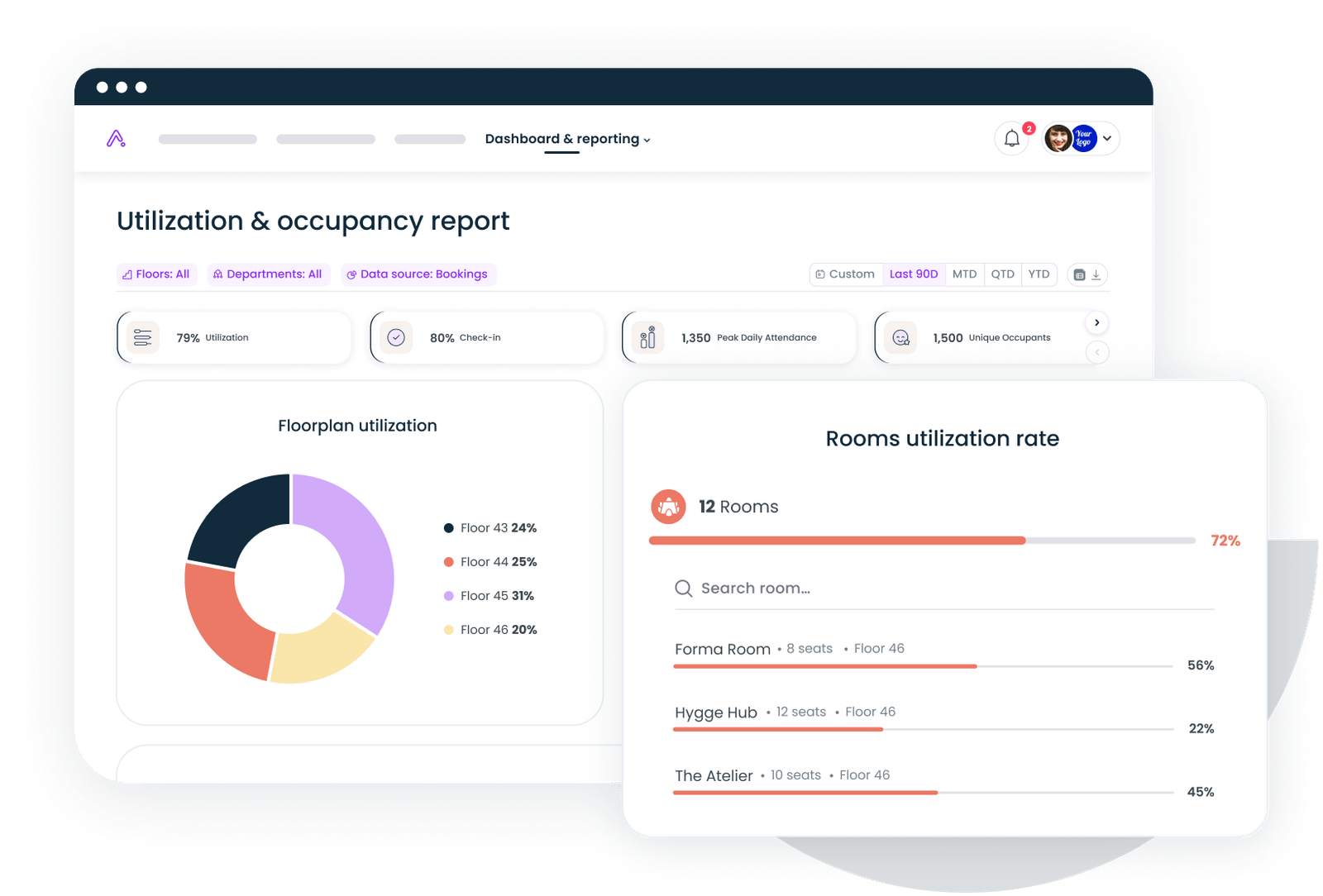
From desk booking to utilization data, Gable Office Management helps you design a workplace that reflects what your company actually stands for.
Learn more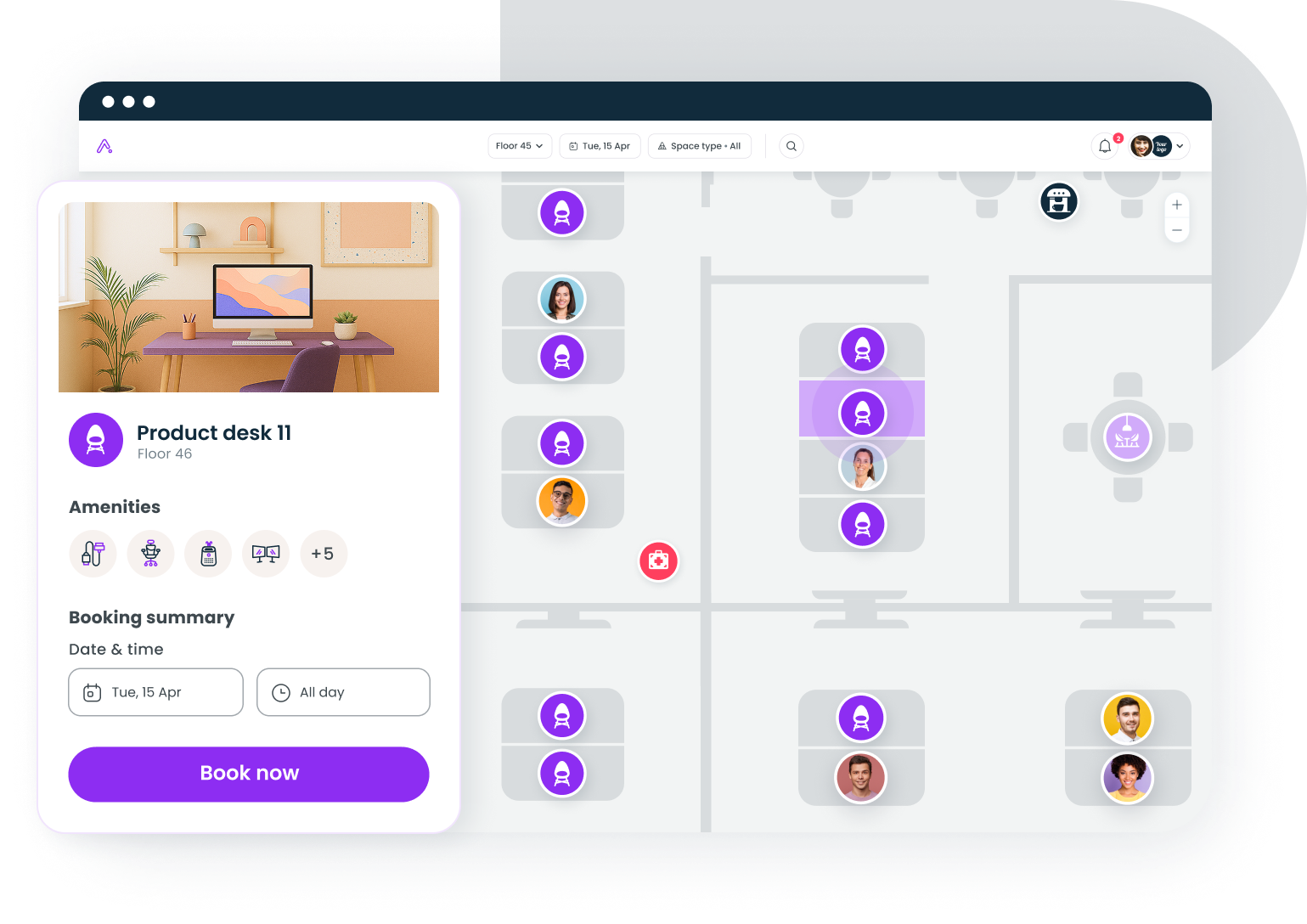
Core values by industry
Not all industries face the same challenges, so not all core values carry the same weight. The values that matter most for a healthcare organization are different from those that drive a tech startup or a financial services firm. Here's how to think about core values within specific industries.
Tech and SaaS
The tech industry moves fast, which means values need to enable rapid iteration without sacrificing trust. The most effective tech values include:
Psychological safety - Engineers and designers need to take risks and propose ideas that might fail. Without psychological safety, innovation stalls and teams default to safe, incremental work.
Ship fast, iterate faster - Speed matters, but only if paired with a willingness to learn from what doesn't work. This value prevents perfectionism from blocking progress.
Transparency-first - Remote and hybrid tech teams run on information. Hoarding knowledge creates bottlenecks and erodes trust, especially across time zones.
User-centricity - Every decision should trace back to a real user problem, not an internal assumption or a competitor's feature list.
Companies following hybrid work model best practices in tech often find that transparency and psychological safety become the most important values when teams are distributed across time zones. Without them, async communication breaks down and people stop sharing early-stage ideas.
Healthcare
Healthcare values need to balance clinical excellence with compassion, all within strict regulatory frameworks.
Patient-first - Every operational decision, from scheduling to facility design, should prioritize patient outcomes and experience above administrative convenience.
Safety - In healthcare, safety isn't aspirational; it's non-negotiable. This includes physical safety for patients, data privacy, and psychological safety for staff who need to report errors without fear.
Continuous learning - Medical knowledge evolves rapidly. Organizations that value continuous learning adapt faster to new protocols and treatments, which directly affects patient outcomes.
Regulatory integrity - Compliance isn't a box to check; it's a value that protects patients and practitioners alike. The best healthcare organizations treat regulation as a floor, not a ceiling.
Financial services
Trust is the product in financial services. Values need to reflect that reality at every level.
Fiduciary duty - Acting in the client's best interest, even when it conflicts with short-term revenue. This value is both a legal obligation and a cultural commitment.
Precision - In finance, details matter. Small errors compound into large problems, and a culture that values precision prevents costly mistakes before they happen.
Long-term thinking - Building lasting client relationships instead of chasing quarterly metrics. This value separates firms that retain clients for decades from those that constantly churn.
Confidentiality - Handling sensitive information with the highest level of care and discretion. In financial services, a breach of confidentiality can destroy client trust permanently.
Retail and hospitality
Customer-facing industries depend on frontline employees to embody values in real time, often without a manager present.
Customer delight - Going beyond satisfaction to create genuinely memorable experiences that customers talk about.
Consistency - Delivering the same quality experience whether it's the first store visit or the hundredth, the flagship location or the smallest outlet.
Frontline empowerment - Giving employees the authority to solve problems on the spot without waiting for approval. This value requires trust and training in equal measure.
Warmth - Making every interaction feel human and personal, not scripted. Warmth can't be faked, which is why hiring for this value matters more than training for it.
Nonprofits
Nonprofit values need to balance mission passion with operational sustainability.
Mission alignment - Every hire, program, and partnership should connect directly to the mission. Without this focus, organizations drift toward activities that feel productive but don't advance the cause.
Stewardship - Managing donor funds and organizational resources with care and accountability. Nonprofits operate under higher scrutiny, and stewardship builds the credibility that sustains funding.
Community voice - Including the communities you serve in decision-making, not just speaking for them. The best nonprofits treat their beneficiaries as partners, not recipients.
Impact measurement - Tracking outcomes, not just activities, to ensure your work creates real change. This value prevents organizations from confusing effort with results.
How to develop your company's core values
Creating core values that actually stick requires more than a leadership offsite and a whiteboard. Here's a framework that produces values people can live by.
Start with your current culture. Before you write aspirational values, document what your organization already does well. Talk to employees at every level. Ask: "When was a time you were proud to work here?" and "What behaviors do we reward informally?" The patterns in these answers are your real values, whether you've named them or not.
Identify what matters for your future. Your values should bridge who you are today with where you're headed. If you're scaling from 50 to 500 people, you might need values around communication and documentation that weren't necessary when everyone sat in the same room. Look at your strategic plan and ask which cultural traits will make that plan succeed.
Make each value specific and actionable. "Excellence" could mean anything. "We don't ship anything we wouldn't be proud to show our biggest customer" means something specific. Each value should be concrete enough that two different employees, given the same scenario, would make the same decision based on the value.
Choose values you can actually uphold. This is the cost test. If you list "work-life balance" but expect employees to answer emails at midnight, you've created a credibility gap that will undermine every other value on your list. Only adopt values that your leadership team is willing to uphold even when it's inconvenient or expensive.
Test them against real situations. Run your draft values against five or six real decisions your company has made in the past year. Would the values have guided the right call? If not, revise. Good values should make hard decisions easier, not more complicated.
Involve your team in the process. Values created exclusively in the C-suite rarely survive first contact with the rest of the organization. Include representatives from different teams, levels, and locations. When people help create the values, they're far more likely to adopt them. This matters even more during employee onboarding, when new hires are forming their first impressions of the culture and deciding whether they made the right choice.
How to communicate and reinforce values in hybrid teams
Defining values is the easy part. The real challenge is embedding them into how your organization operates every day, especially when your team works across offices, homes, and coworking spaces.
Build values into hiring and onboarding. Ask interview questions that reveal whether candidates naturally align with your values. During onboarding, dedicate time to explaining not just what the values are, but how they show up in daily work. Share real stories of employees living the values. Welcome messages for new employees that reference your core values set the tone from day one and signal that values are more than a slide in the orientation deck.
Use values in performance reviews. If values matter, they should appear in how you evaluate performance. Ask managers to reference specific values when giving feedback, and when someone gets promoted, explain which values they exemplified. This creates a direct connection between values and career growth.
Recognize people who live the values. Public recognition tied to specific values creates powerful reinforcement loops. When you call out that someone demonstrated "courage" by flagging a problem early, you teach the entire team what courage looks like in practice.
Let leaders model them consistently. Values flow downward. If leaders behave in ways that contradict stated values, employees notice immediately and stop taking the values seriously. Leadership alignment is the single biggest factor in whether values actually stick. Gallup research shows that managers account for roughly 70% of the variance in team engagement.
Make them visible and accessible. Values should be woven into the physical and digital spaces where work happens. Display them in offices, include them in internal communication templates, and reference them in team meetings. For organizations managing a distributed workforce, this means building values into digital rituals: weekly check-ins, async updates, and virtual team events.
Design your workplace around your values. The physical spaces where teams gather should reflect your culture. Gable's internal data shows that 72% of bookings on the platform are for team gatherings, which means most in-person time is spent collaborating, not working in isolation. If collaboration is a core value, your office layout, desk booking system, and meeting room design should all support it. Gable Office Management helps workplace leaders design spaces that reinforce cultural priorities through utilization data and flexible booking tools.
How to know if your core values are actually working
Check your engagement data. The most direct measurement is whether employees feel connected to the company's mission and values. Include values-specific questions in your employee engagement surveys. Gallup's finding that only 27% of employees believe in their company's values should be your benchmark: if your internal numbers are significantly higher, your values work is paying off.
Audit your decisions. Look at the last 10 major decisions your leadership team made. How many explicitly referenced a core value? If the answer is zero, your values aren't influencing decisions. They're just wall art.
Review exit interviews. When people leave, ask whether the company lived up to its stated values. Patterns in exit interview data reveal whether your values are credible or aspirational fiction. A consistent gap between stated and experienced values is a leading indicator of retention problems.
Watch manager behavior. Managers account for roughly 70% of the variance in team engagement. Track whether managers reference values in their feedback, coaching, and decision-making. If they don't, invest in manager development that connects directly to your HR goals around values alignment and leadership effectiveness.
Look at your referral rate. Employees who genuinely believe in the company's values refer their friends. A healthy referral rate is one of the strongest organic signals that your culture is real, not just well-marketed.
Making your values stick
Core values aren't a set-it-and-forget-it exercise. They require ongoing investment, measurement, and honest self-assessment. The companies on this list that do values well share a common trait: they treat values as operational tools, not branding exercises.
In 2026, with teams spread across offices, homes, and coworking spaces, the challenge isn't defining values. The challenge is making them real in contexts where culture can't spread through hallway conversations and lunch-table osmosis. The organizations that succeed are the ones that build values into every touchpoint: hiring, onboarding, performance reviews, recognition programs, workspace design, and leadership development.
Start by auditing where you are. Do your employees know your values? Can they name them without looking at the company intranet? More importantly, can they point to a recent decision where a value actually influenced the outcome? If the answer to any of these is no, you have work to do.
The good news is that values work compounds. Every time a leader makes a tough call and points to a specific value as the reason, trust builds. Every time an employee is recognized for living a value, behavior reinforces. And every time a new hire experiences your values during their first week, culture solidifies.
The most effective core values share three qualities: they are specific enough to guide decisions, tested enough to have cost the company something, and embedded deeply enough that they show up in daily behavior rather than just quarterly town halls. Whether you're building your first set of values or refreshing an existing list, the principles in this guide will help you create values that actually work.
If you're rethinking how your workplace reflects your values, Gable Office Management gives you the tools to design spaces that support how your team actually works, from desk booking and room scheduling to utilization data that shows whether your spaces match your cultural priorities.
Whether you're managing a fully remote team, a hybrid model, or bringing people together for offsites, Gable helps you design the physical and operational infrastructure that supports your culture. Get a demo and see how Gable can help your team work better together.
Get a demo