


.svg)


.svg)
Hybrid work is no longer an experiment. It's the way most companies operate. But managing a workplace where some people are in the office on Tuesday, others on Thursday, and half the team is remote? That's where things get complicated fast.
Hybrid work software bridges the gap between remote and in-office environments, giving workplace teams the tools to manage desks, rooms, schedules, and data from a single platform. The right hybrid work tools keep everyone on the same page, whether they're working in the physical office or from home. Without them, your workplace strategy is essentially a guessing game.
This guide breaks down what hybrid work software actually does, which features matter most, and how to pick a hybrid work platform that fits your team. No fluff. Just the practical stuff you need to make a confident decision.
What is hybrid work software?
At its core, hybrid work software is a category of management software designed to help organizations run flexible workplaces where employees split time between home and the office. Think of it as a central hub that connects people, spaces, and data.
On one side, you've got tools for the physical office: desk booking, room scheduling, interactive floor plans, visitor management, and access control. On the other hand, you've got digital collaboration layers: integrations with Slack, Microsoft Teams, Google Calendar, and your existing tech stack.
Effective hybrid work software integrates these logistical and digital tools to ensure the entire workplace runs smoothly. Employees can book a desk in just a few clicks, see which teammates will be in the office, and plan their week around collaboration rather than guesswork. Workplace teams and facilities management leaders, meanwhile, receive real-time employee data on how space is actually used, enabling data-driven decisions on layouts, policies, and real estate.
Here's the key distinction: hybrid work software isn't just another project management tool or messaging platform. Project management tools like Asana, Monday.com, and Trello allow teams to track progress and visualize workflows. Communication apps such as Slack and Microsoft Teams enable instant messaging, file sharing, and virtual meetings. These are essential components of a hybrid work technology stack, but they don't address the core challenge of managing where and when people sit. That's what dedicated hybrid office software does.
Hybrid isn't optional. Neither is the software that supports it.
The data on hybrid work is clear, and it keeps getting stronger.
According to Gallup's latest research, 53% of remote-capable employees now work hybrid schedules, with six in ten preferring this arrangement over fully remote or fully in-office options. Globally, 83% of workers say a hybrid work model is their ideal setup, balancing flexibility and collaboration in a way that neither extreme offers.
This isn't just an employee satisfaction trend. It's a financial one. The global hybrid workplace technology market was valued at $4.9 billion in 2023 and is projected to reach $21.1 billion by 2032, growing at an 18.3% CAGR, according to Market.us. Companies are putting serious money behind making flexible teams work.
And the business case is solid. Adopting a hybrid model offers powerful benefits, including reduced real estate costs and the ability to attract and retain top talent from a wider geographic area. A Stanford University study found that employees working from home two days per week showed zero impact on productivity, while resignation rates dropped by 33%. Flexibility in scheduling improves work-life balance and job satisfaction, and employees can match their tasks to the best environment: home for deep focus, office for collaboration.
But here's the catch: 87% of workers now say good technology is crucial for hybrid work, yet only 32% of companies invest in top-tier collaboration tools for flexible teams, according to Cisco's 2025 Global Hybrid Work Study. That gap between what employees need and what companies provide is where organizations lose productivity, engagement, and eventually people.
Without the right hybrid work software, businesses fall behind in managing flexible work environments effectively. Double bookings pile up. Office attendance becomes unpredictable. Employee experience suffers. And workplace teams can't answer basic questions like "How much space do we actually need?"

Explore 28 workplace statistics that show exactly how hybrid work is reshaping the modern office, from productivity gains to real estate savings.
Read the research
Key features to look for in hybrid work software
Choosing the right hybrid work software can be overwhelming, given the variety of options. Not every platform is built the same, and the features that matter depend on your specific workplace challenges. That said, the best hybrid work solutions cover a consistent set of capabilities that make the entire office experience smoother.
Desk and room booking
This is the foundation. Employees need a simple way to reserve desks and meeting rooms, and the system needs to prevent double bookings and wasted space. The best platforms offer interactive office maps or interactive floor plans so people can visually see what's available, filter by amenities, and book in just a few clicks.
Room availability should update in real time, and auto-release features (where no-shows free up the room after a set time) are essential to maintaining efficiency. For organizations with hot desking policies, the booking system is especially critical. It needs to handle recurring reservations, neighborhood preferences, and check-in confirmations across multiple offices and multiple locations.
Team scheduling and shared calendars
A hybrid work platform is only useful if people actually know who's coming into the office and when. Team scheduling tools, including a shared hybrid work calendar, streamline coordination. Employees can see which teammates plan to be in the office on a given day, enabling them to align their schedules for collaboration rather than arriving to an empty floor.
This visibility is what keeps a hybrid work model from feeling disjointed. When workplace teams can see attendance patterns across the week, they can also manage office traffic, balance resources, and create hybrid schedules that work for both the organization and its people.
Visitor management
Hybrid workplaces frequently host guests, contractors, and partners on irregular schedules. A robust visitor management feature streamlines check-in, sends automated notifications to hosts, and maintains secure visitor logs. Many hybrid work platforms offer visitor management as part of their all-in-one solution, meaning visitor data feeds into the same analytics engine as desk bookings and attendance.
This matters for both security and space planning. Access systems can issue temporary badges, and visitor flows can be managed without requiring your front desk team to handle manual processes. It's just one example of how the right platform handles the entire process from pre-registration to checkout.
Workplace analytics and reporting
Data generated from hybrid work software helps facility managers and workplace operations teams make informed decisions about office layouts and policies. Strong analytics features provide insights into space utilization and employee attendance patterns, answering questions like: Which floors are consistently overcrowded? Which meeting rooms sit empty despite being booked? What's the actual desk-to-employee ratio?
Without this data, you're guessing. With it, you can right-size your real estate portfolio, adjust policies based on real behavior, and justify budget decisions with numbers. Understanding space utilization metrics is what separates reactive facilities management from strategic workplace management.
Integrations with your existing tech stack
Here's the reality: if your hybrid work software doesn't integrate with the tools your team already uses, adoption will suffer. User experience is critical. If a platform is difficult to use or requires employees to switch between multiple apps, they simply won't use it.
The best hybrid work tools integrate natively with Google Calendar, Google Workspace, Microsoft Teams, Slack, and single sign-on providers. This means employees can manage bookings without leaving their communication apps. When booking a desk feels as natural as sending a message, adoption happens almost effortlessly. Look for platforms that integrate with HRIS, access control, and other tools in your tech stack to enable seamless resource management.
From desk booking and room scheduling to visitor management and workplace analytics, Gable brings your entire workplace together in one platform.
Learn more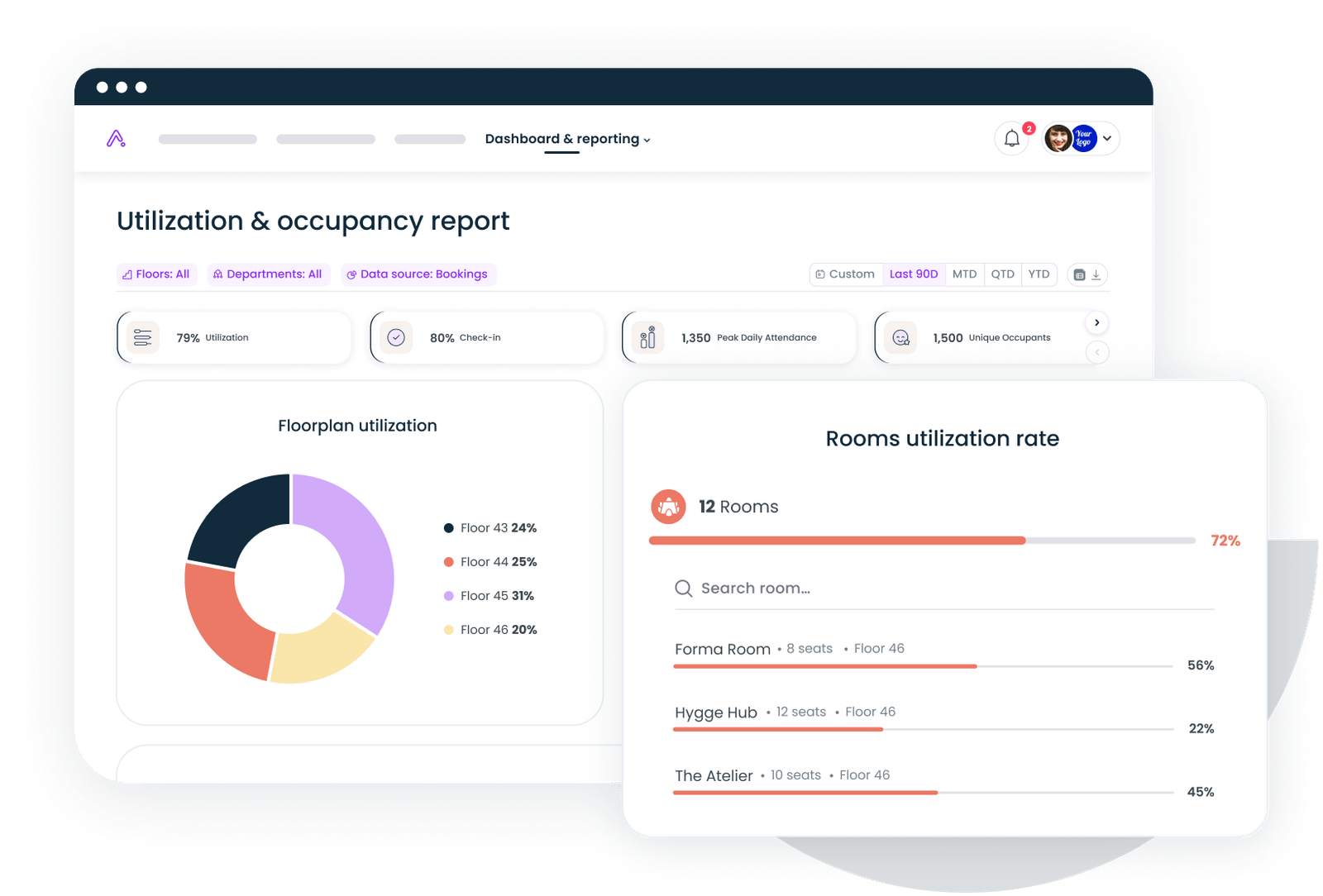
The broader hybrid work tech stack
Dedicated hybrid office software is the backbone, but it works best when paired with other tools that support the hybrid work environment. Here's how the full tech stack comes together.
Google Workspace and Microsoft 365 provide cloud-based, real-time document editing, eliminating version control issues and ensuring all team members have equal access to information regardless of location. Shared digital workspaces reduce information silos and keep company knowledge accessible to everyone.
Centralized project management tools such as Asana, Monday.com, and Trello ensure that all updates are documented digitally, preventing remote workers from being excluded. When a project milestone gets updated, everyone sees it, whether they're in the office or working from home.
Platforms like Notion and Slack allow asynchronous communication and collaboration across time zones, which is essential for organizations with flexible teams spread across multiple locations. For meetings, video conferencing tools ensure remote workers have the same visibility as in-office employees.
The key is that none of these other tools replace hybrid work software. They complement it. Your project management tools keep work moving. Your messaging tools keep people connected. But your hybrid work platform manages the physical office, the space, the schedules, and the data that ties everything together. Effective hybrid work software provides a central hub for these essential functions, not as a replacement for your existing tools, but as the connective layer between them.
How to choose the right hybrid work platform
With so many hybrid platforms on the market, narrowing down the right one takes a clear-eyed evaluation. Here's what to prioritize.
Start with your core challenges. Are you dealing with desk booking chaos? Visibility problems around who's in the office? Underutilized real estate? Identify the pain points first, then look for platforms that solve those specific issues. Choosing the right hybrid work software involves understanding your organization's specific needs and how the software can address them.
Prioritize integrations. Seamless integrations with tools such as Slack, Microsoft Teams, and Google Calendar are crucial to user adoption. If employees have to log into a separate platform or download a new app, you'll struggle with engagement. The best hybrid work model best practices emphasize meeting employees where they already work.
Evaluate security and compliance. Strong security and data protection are essential when using hybrid work software, as it handles sensitive employee information. The software should support compliance with data protection regulations like GDPR to ensure the security of employee data. Before committing to any platform, verify its security certifications and data handling policies.
Think about scalability. Your hybrid workplace will evolve. The platform you choose today should support more advanced features as you grow, including additional offices, new integrations, and deeper analytics. Scalability is an important consideration, as the software should grow with your organization. Many hybrid work platforms offer tiered pricing based on user count or required features, so a clear understanding of the pricing model is necessary to avoid unexpected costs.
Check mobile access. Mobile access is essential for hybrid work software, allowing employees to book desks and check schedules on the go. If the platform doesn't work well on a phone, you're cutting off a huge portion of how people actually plan their work days.
Demand transparency on pricing. Pricing for hybrid work software varies widely, with some platforms offering free plans and others requiring custom quotes. Look for platforms that are upfront about costs from the start. Hidden fees and unclear per-feature pricing create budget headaches down the line.
Making hybrid work software a smart investment
The future of hybrid work technology is focused on creating intelligent workplaces that are responsive and predictive. AI is set to become a key player in managing offices by analyzing data on office usage to optimize layouts and predict busy days. Integrating IoT into hybrid work software enables real-time data on desk usage, enhancing space utilization and reducing no-shows.
Companies that invest in the right hybrid work solutions today aren't just solving today's operational problems. They're building the infrastructure for a workplace that adapts to changing needs. Hybrid work software connects people, spaces, and data, making collaboration easier and the overall employee experience smoother. It's the difference between managing a hybrid environment reactively and running it strategically.
The right platform makes office attendance intentional, not obligatory. It gives workplace teams the data to optimize every square foot. And it gives employees the flexibility and visibility they need to do their best work, whether that's from the office, from home, or from an on-demand workspace in another city.
That's not a nice-to-have. For companies adopting a hybrid work model in 2026, it's the foundation of a successful workplace strategy.
Get a demo and see how Gable helps workplace teams manage desks, rooms, visitors, and analytics from one platform.
Get a demo


