.svg)


.svg)
- Three days in-office has become the dominant hybrid standard, with roughly two-thirds of Fortune 100 companies now following some form of hybrid policy
- Microsoft, Meta (Instagram), and Google all tightened their policies in late 2025 and early 2026, signaling a shift toward structured flexibility over open-ended remote work
- Fully flexible companies grew revenue approximately 1.3x faster than mandate-driven firms between 2019 and 2024
- Only 12% of executives with hybrid or remote employees plan full return-to-office mandates, despite headline-grabbing announcements
- The most effective companies hybrid work strategies focus on purposeful in-person time rather than counting office days
Hybrid work is the dominant workplace model in 2026. According to Gallup research, 51% of remote-capable employees now work in hybrid arrangements, and 60% say hybrid is their preferred setup. But the way companies implement hybrid policies varies enormously. Google requires three specific days. Spotify lets employees work from anywhere. Amazon pulled everyone back to the office full-time.
This guide breaks down what major companies are doing with their hybrid work policies, the data behind what's working, and how to build a workplace strategy that fits your team's needs in 2026.
What is a hybrid work model?
A hybrid work model combines in-office work with remote work, allowing employees to split time between home, office, and flexible workspaces. The specifics vary dramatically between organizations, but most models fall into three categories.
Preference-based hybrid
Employees choose when they come into the office. Companies like Adobe fall into this category, though most maintain expectations around minimum office days. This model prioritizes autonomy while still encouraging regular in-person collaboration.
Time-based hybrid
Employees must be in the office a certain number of days per week (usually two to three) without specifying which days. Teams decide together when to come in. This approach offers structure while preserving scheduling flexibility.
Set-day hybrid
Mandated office days are strictly enforced. Google's Tuesday, Wednesday, Thursday requirement is the clearest example, ensuring team alignment and space utilization while preserving some remote work benefits.
The data on hybrid work effectiveness
Stanford research published in Nature provides compelling evidence that hybrid work delivers measurable benefits. The study of 1,600 workers at Trip.com found that employees working from home two days per week showed:
- Zero impact on productivity or career advancement compared to peers who work in-office full-time
- 33% reduction in resignations when shifting from full-time office to hybrid schedules
- Significant cost savings from reduced attrition, especially among women, non-managers, and employees with long commutes
The financial case is equally strong. Analysis from BCG and the Flex Index found that fully flexible companies grew revenue at approximately 12% per year between 2019 and 2024, while mandate-driven firms grew at roughly 7% per year. Even after controlling for company size and industry, the flexible group still grew about 1.3x faster.
Meanwhile, 88% of U.S. employers now provide some form of hybrid work options, though the specifics vary by seniority and role. The three-day office week has emerged as the most common structure, with 76% of hybrid companies following a 3-2 model (three days in-office, two remote).

Get the latest research on hybrid work effectiveness, including productivity findings and retention data from one of the field's leading researchers.
Read the research
Companies with structured hybrid work models
These organizations require specific days or minimum office attendance, balancing flexibility with in-person collaboration needs.
Google: three defined days per week (with tighter controls)
Google maintains one of the most structured hybrid policies among tech giants. Employees work in the office on Tuesday, Wednesday, and Thursday, with Monday and Friday available for remote work. The company also offers annual "work from anywhere" weeks and built-in reset days for employee recharge.
However, Google tightened its WFA policy in October 2025. Even a single day of remote work during a WFA week now counts as a full week deducted from the allowance. This change signals Google's intent to maintain its three-day core while limiting how much flexibility employees can stack on top of it.
The mid-week office pattern Google enforces reflects broader industry data: Tuesday sees roughly 52% office utilization while Friday barely reaches 28%, a pattern consistent across sectors where mid-week becomes collaboration time and bookend days focus on individual productivity.
Amazon: from hybrid to full RTO
Amazon's workplace strategy has evolved dramatically. The company moved from enabling teams to decide their own arrangements in 2021, to requiring three days per week in 2023, to mandating five days per week starting January 2025.
CEO Andy Jassy cited the need to "strengthen the culture and teams" as the primary driver. The policy shift demonstrates how some companies are using workplace strategies as both culture-building tools and, in some cases, workforce reduction mechanisms.
Microsoft: new three-day mandate (february 2026)
Microsoft's policy has shifted significantly. Previously, the company allowed employees to work remotely up to half of their time without formal approval. As of February 2026, Microsoft now requires three days per week in-office for employees within 50 miles of their offices, with the policy rolling out globally.
This represents one of Microsoft's biggest cultural pivots since its pandemic-era embrace of remote work. The company still covers home office setup expenses and allows employees to lose permanent office spots if they rarely come in, a practical acknowledgment of space optimization needs.
Apple: structured three-day requirement
Apple requires employees to be in the office three days per week: Monday, Tuesday, and one flexible day determined by team needs. The company also offers four weeks of annual "work from anywhere" allowance.
Despite employee petitions and internal feedback expressing dissatisfaction, Apple has held firm on this policy. The structured approach reflects Apple's belief that in-person collaboration drives innovation, though getting employee buy-in for these requirements has been an ongoing challenge.
Meta: fixed-split hybrid with instagram tightening
Meta implemented a "fixed-split hybrid work model" requiring most employees to spend three days per week in the office. The company tracks office attendance and has threatened consequences for employees who don't meet the three-day requirement.
The bigger news: Meta's Instagram division moved to five days per week effective February 2026, citing the need for a more creative and collaborative working environment. While broader Meta maintains its three-day policy, the Instagram shift suggests the company may be testing stricter requirements within specific business units.
Remote-first companies maintaining flexibility
Several major organizations have doubled down on flexible work arrangements, viewing them as competitive advantages for talent attraction and retention.
Spotify: work from anywhere commitment
Spotify introduced its "Work From Anywhere" policy in February 2021 and has consistently reaffirmed this approach despite industry trends toward return-to-office mandates. HR Chief Katarina Berg has stated: "You can't spend a lot of time hiring grown-ups and then treat them like children."
The results are hard to argue with: attrition dropped by 50% since implementing the policy, and the company reports a six-day reduction in time-to-hire for open roles. Spotify maintains offices for employees who prefer in-person work and hosts annual "core week" gatherings for strategic alignment.
Nvidia: flexible work without mandates
The chip company allows employees to work remotely, in-office, or hybrid based on individual and team needs. CEO Jensen Huang has stated he has no issue with indefinite remote work, and the company remains committed to its flexible model.
Nvidia operates offices in over 50 locations worldwide but doesn't mandate specific attendance requirements, viewing flexibility as essential for attracting top technology talent in a fiercely competitive market.
Airbnb: live and work from anywhere
Airbnb adopted a comprehensive "Live and Work from Anywhere" policy in 2022, allowing employees to work from home or other remote locations within their country without pay impact. Rather than regular office days, Airbnb encourages quarterly team gatherings and allows employees to work in over 170 countries for up to 90 days annually.
The approach prioritizes planned on-sites and purposeful in-person time over routine office attendance.
Salesforce: structured hubs with ai-powered alignment
Salesforce updated its workplace model in 2024, moving from broad "Success from Anywhere" flexibility to a more structured approach with three designations:
- Office-Based (4-5 days/week): Sales, workplace services, and data center engineering roles
- Office-Flex (3 days/week or 10 days/quarter): Most employees, including product and engineering teams
- Remote: Specialized roles that primarily work from home or customer sites
By 2026, Salesforce has also integrated AI tools directly into hybrid workflows to handle coordination tasks, allowing remote and local teams to stay aligned without constant status meetings. The company kept its iconic towers but fundamentally changed what happens inside them, focusing on structured collaboration hubs rather than daily desk attendance.
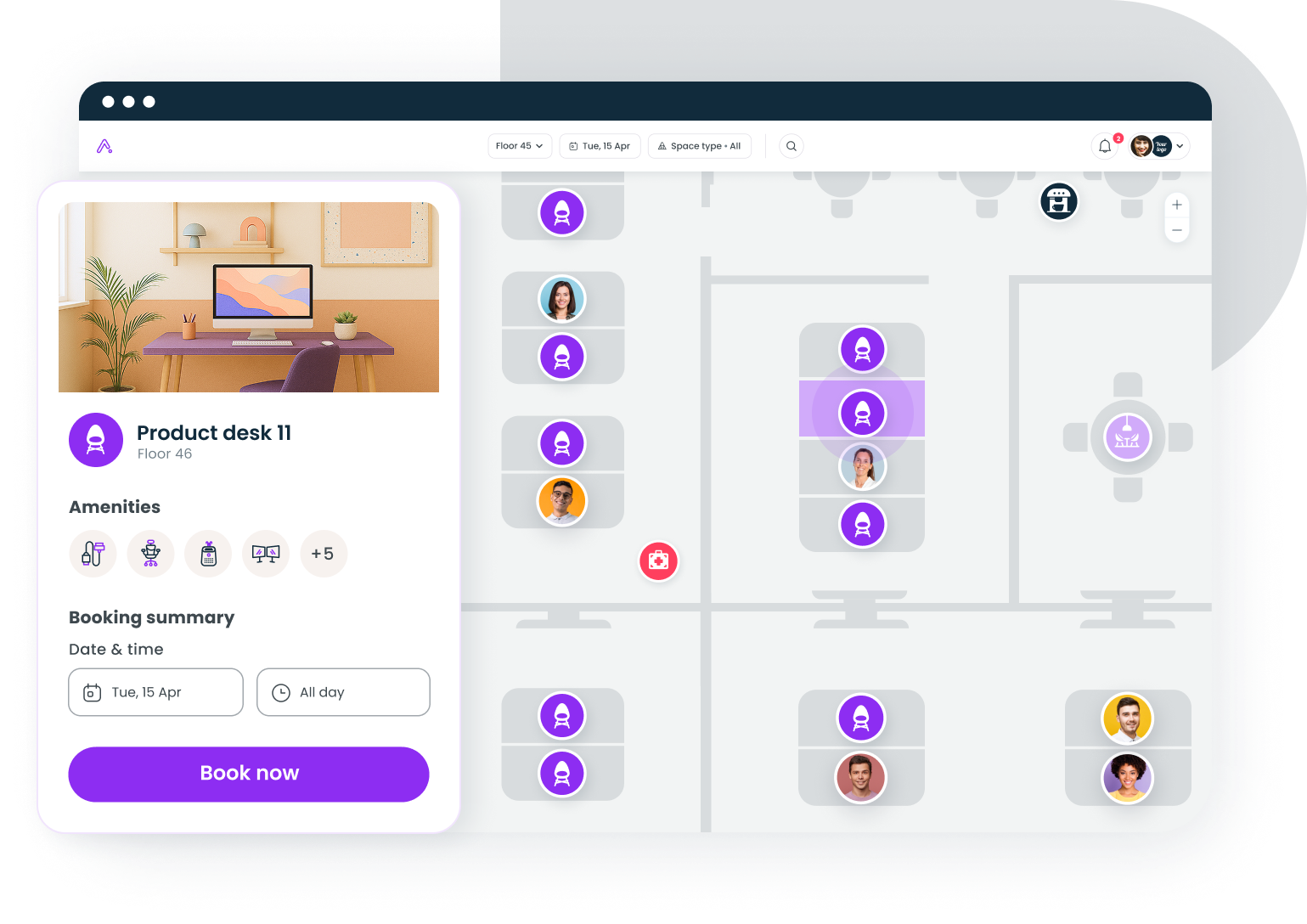
Gable's workplace platform gives you desk booking, room scheduling, interactive floor plans, and AI-powered insights to make hybrid work data-driven, not guesswork.
Learn more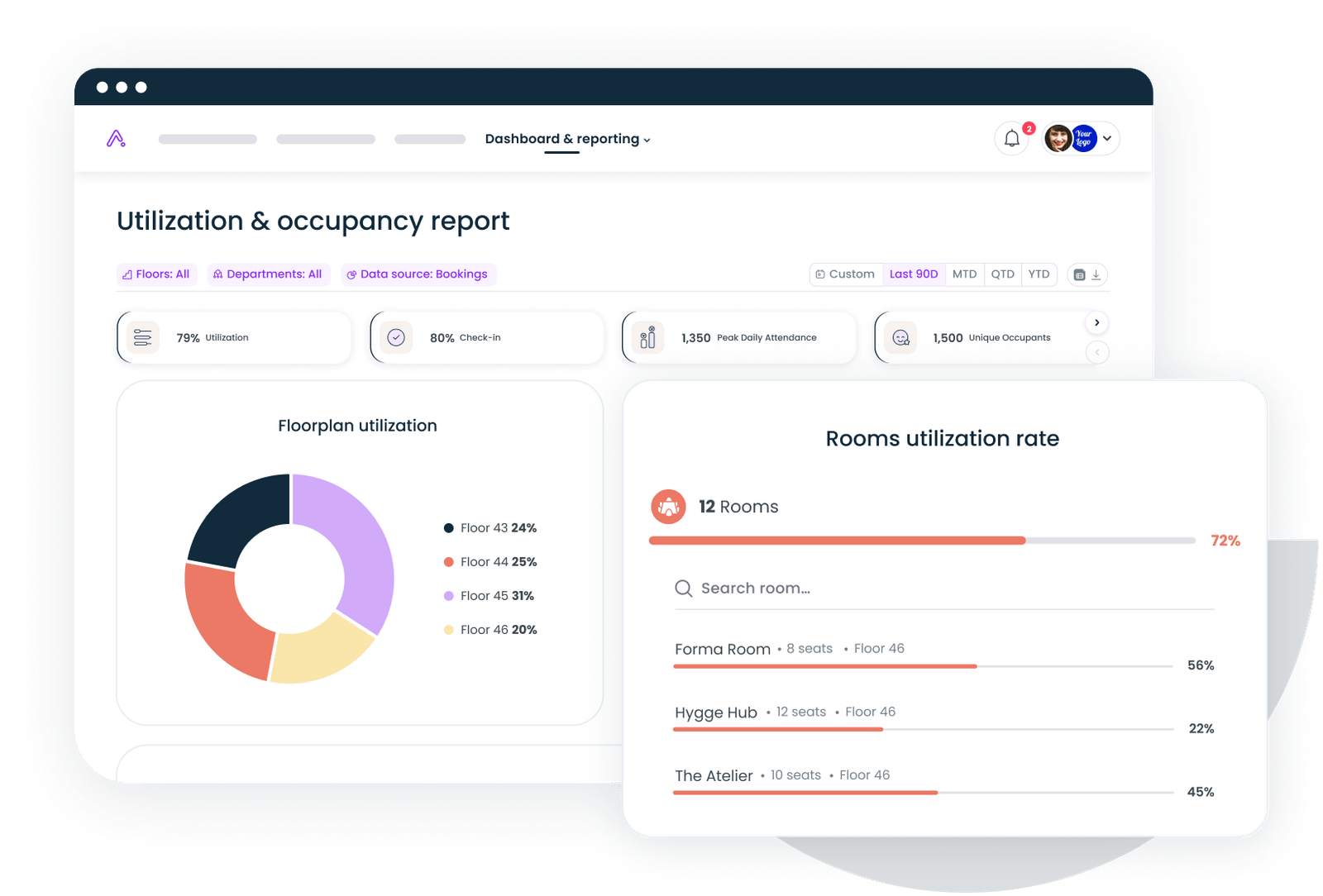
The full return-to-office companies
Some organizations have moved away from hybrid models entirely, believing in-person work drives better results.
Goldman sachs: Five days per week
Goldman Sachs CEO David Solomon has consistently pushed for a full return to the office, believing that on-site interaction is essential to the firm's culture. The company implemented a five-day office policy in March 2022 and maintains it as of 2026, representing one of the strictest approaches among major employers.
Disney: four days mandated
Disney CEO Bob Iger implemented a four-day office requirement in March 2023, citing the need for in-person collaboration to foster creativity. Over 2,300 Disney employees signed a petition protesting the policy, arguing it would lead to "forced resignations among some of our most hard-to-replace talent." The resistance highlights the difficulty of communicating policy changes after employees have adapted to flexible arrangements.
Jpmorgan chase: Five-day mandate
JPMorgan Chase requires senior leaders and managers to be in the office five days per week, while other employees generally come in three days. CEO Jamie Dimon has been vocal about the benefits of in-person work, making headlines with strong statements about full-time office attendance expectations. For a deeper look at what data-driven leaders do differently, see our analysis of JPMorgan's return-to-office approach.
The RTO backlash: What the data shows
While Amazon, JPMorgan, Microsoft, and others dominate headlines with RTO mandates, the broader picture tells a different story. Only 12% of executives with hybrid or remote employees plan full return-to-office mandates. Even among that 12%, over a quarter will still offer hybrid arrangements of one to four days per week.
The talent implications are significant. According to Robert Half's 2026 data, 47% of professionals who aren't actively job searching cited not wanting to lose their current level of flexibility as a key reason to stay. And while only 20% of LinkedIn job listings are remote or hybrid, those listings receive 60% of all applications.
Companies considering stricter mandates should weigh these retention risks carefully. A well-designed employee retention strategy accounts for flexibility as a core benefit, not a perk to be revoked.
Industry patterns and the three-day consensus
Different industries employ distinct approaches to hybrid work, tailored to their operational needs and talent markets.
Technology
Tech companies generally offer the most flexibility, driven by competition for technical talent. However, the trend is moving toward structured hybrid (three days) rather than fully open remote policies. Microsoft's February 2026 shift is the clearest signal.
Financial services
Banks and financial firms tend to have stricter in-person requirements, with many major institutions requiring four to five days per week. Regulatory requirements and traditional collaboration methods influence these decisions.
Media and entertainment
Mixed approaches dominate, with some companies embracing flexibility while others (like Disney and Instagram) emphasize in-person creative collaboration.
The emerging standard
The market is settling on three office days as the default hybrid structure. Among Fortune 100 firms, roughly two-thirds use hybrid models, and "three days in office" is the single most common rule. This balances team collaboration with focused work time and gives employees enough flexibility to manage commutes, caregiving, and personal productivity.
From day counting to "moments that matter"
The most effective companies hybrid work strategies in 2026 aren't focused on counting office days. They're focused on making in-person time purposeful.
Microsoft research suggests 73% of staff need a better reason to go to the office than company expectations alone. Leaders who focus less on the number of days and get more intentional about in-person "moments that matter" (kickoffs, brainstorms, all-hands, team celebrations) see better engagement and collaboration outcomes.
This shift has practical implications for workplace strategy:
- Design offices for collaboration, not individual work. If employees can do focused work better at home, the office should offer something home can't: collaboration spaces, team neighborhoods, and social areas.
- Coordinate team schedules. Random office attendance doesn't drive collaboration. Teams that plan their in-office days together report higher satisfaction and better outcomes.
- Measure what matters. Track collaboration frequency, project velocity, and employee engagement rather than badge swipes. Workplace analytics should inform strategy, not enforce compliance.
Beyond location: The compressed workweek trend
The conversation about flexible work is expanding beyond where people work to include when they work. A six-month pilot in South Africa with 28 companies found that 92% plan to maintain four-day workweeks after the trial, citing productivity improvements. The pilot showed an 11% average reduction in turnover, a 9% decrease in absenteeism, and a 10.5% increase in revenue.
While four-day workweeks remain experimental for most organizations, the data suggests that flexibility in scheduling, not only location, will be the next frontier for companies hybrid work models.
Building your hybrid work strategy
The most effective hybrid policies start with understanding that what works for one company won't necessarily work for another. Here's how to approach it.
Start with employee data
Conduct surveys to understand current satisfaction levels, productivity patterns, and preferences. 28.2% of full-time employees currently work hybrid, but the right percentage for your organization depends on your industry, culture, and operational needs.
Design for outcomes, not attendance
Focus on what work gets done rather than where it happens. Companies achieving the best results from hybrid work emphasize clear goals, effective communication, and collaboration tools over tracking office days. Gable's workplace platform helps teams coordinate in-office days with interactive floor plans and AI-powered occupancy insights, so you can right-size space based on real usage rather than assumptions.
Invest in both physical and digital infrastructure
Successful hybrid work requires spaces designed for collaboration when teams are together, paired with technology that works across locations. This includes desk booking systems, meeting room scheduling, and integrated communication tools.
Plan for iteration
Most organizations expect to change their work models in the near term, acknowledging that hybrid work strategies need ongoing refinement. Treat your workplace policy like a product: test, measure, and refine based on results.
Conclusion
The companies getting hybrid work right in 2026 share a common thread: they treat flexibility as a strategic advantage rather than a concession. Whether it's Spotify's full autonomy, Google's structured three-day model, or Salesforce's AI-powered hub approach, the most successful organizations design their policies around outcomes, invest in the right tools and spaces, and iterate based on data.
The three-day office week has emerged as the market standard, but the specific implementation matters more than the number. Companies that create compelling reasons for employees to be together, rather than mandating attendance for its own sake, will continue to win on retention, productivity, and revenue growth.
From on-demand coworking access to office management and event planning, Gable gives you one platform to manage your people and spaces. Book a demo to see it in action.
Get a demo