.svg)


.svg)
- Talent attraction is a workplace problem, not just an HR problem
- Your office signals your values before a recruiter ever calls
- A strong EVP means nothing if the lived experience doesn't match
- Flexibility isn't a perk anymore; it's table stakes for hiring
- Retention and attraction feed each other in a compounding loop
Your talent attraction workplace strategy says more about your company than any careers page ever will. The office a candidate walks into, the flexibility you offer, the culture people actually experience on day three versus day one: these are the things that close hires and keep them. Most companies still treat talent attraction as a recruiting function. The ones winning the hiring war in 2026 treat it as a workplace design problem.
Why talent attraction is now a workplace strategy problem
Recruiting used to be about compensation, title, and maybe a ping-pong table. That math broke somewhere around 2022 and hasn't recovered. Today, 52% of U.S. employees are either casually browsing or actively job hunting. That's not a talent shortage but a talent dissatisfaction problem.
The shift matters because the levers that move candidates have changed. Salary still matters, obviously. But when half your workforce is one LinkedIn message away from entertaining a conversation, the differentiator isn't another $10K. It's whether your workplace makes people want to show up, literally and figuratively.
This is why the talent attraction conversation belongs in workplace strategy meetings, not just HR standups. The VP of Workplace, the Head of Real Estate, the People Ops lead: they're all shaping the candidate experience whether they realize it or not. If you're still thinking about workplace experience as separate from recruiting, you're leaving your best hiring tool on the table.
The three pillars candidates actually care about
Let's be specific about what moves the needle. After years of post-pandemic experimentation, three things consistently show up in candidate decision-making: flexibility, purpose, and belonging.
Flexibility is the most obvious one, and the most misunderstood. It's not just "we allow remote work." Companies offering flexible work show 21% higher retention rates and access to talent pools five times larger than rigid competitors. That's a structural advantage, not a nice-to-have. But flexibility only works as a talent magnet when it's real. Saying "we're hybrid" while quietly penalizing people who don't come in four days a week isn't flexibility. It's theater. If you're still figuring out what flexibility actually means for your organization, that's worth getting right before you put it on a job posting.
Purpose has become non-negotiable for younger workers. 70% of Gen Z workers say they want to work for a company whose values align with their own. That doesn't mean you need a mission statement about changing the world. It means the work itself needs to feel meaningful, and the company's actions need to match its words.
Belonging is the hardest to manufacture and the easiest to destroy. It's whether someone feels like they're part of something on their second week, not just their first day. It's whether distributed team members feel as included as the people sitting in HQ. Building that kind of company culture takes intentional design, not just good intentions.
How your office tells candidates who you really are
Here's something workplace leaders don't talk about enough: your physical space is a recruiting pitch. Every candidate who visits your office is reading signals. Cramped, outdated cubicles say one thing. Thoughtful collaboration zones, quiet focus areas, and spaces designed for how people actually work say something entirely different.
This isn't about spending a fortune on designer furniture. It's about alignment. If you say you value collaboration, but your office is rows of identical desks with no breakout spaces, candidates notice the gap. If you say you care about wellbeing, but there's nowhere to take a quiet call or decompress, that registers too.
Activity-based working environments, where spaces are designed around tasks rather than assigned seats, signal that a company has thought carefully about how work happens. Collaboration space design isn't just an interior design exercise. It's a statement about what you prioritize. The same goes for wellness rooms, mothers' rooms, and spaces that accommodate different working styles. These aren't perks. They're proof points.
The companies getting this right aren't just filling seats. They're creating environments that candidates talk about after they leave the building.

A strong workplace experience doesn't happen by accident. This guide breaks down how to design an employee experience strategy that drives engagement, retention, and growth.
Read the guide
Building an EVP that survives the first 90 Days
Every company has an employee value proposition, whether they've formalized it or not. The problem is that most EVPs are marketing documents. They describe the company leadership wants to be, not the company employees actually experience.
That gap is a talent attraction killer. 77% of prospective employees evaluate company culture before applying for a job. They're reading Glassdoor reviews, checking LinkedIn comments, asking friends who work there. If your EVP promises "autonomy and growth" but new hires spend their first quarter navigating bureaucracy with no clear development path, word gets out fast.
The fix isn't better marketing. It's better alignment. Your EVP should describe what's actually true about working at your company, then you improve the reality until it matches your ambition. That means continuous feedback loops: onboarding surveys, stay interviews, pulse checks. It means acting on what you hear, not just collecting data.
Organizations that get this right see real results. Well-defined EVPs attract 50% more qualified candidates and reduce employee turnover by 28%. But "well-defined" is the key phrase. An EVP that doesn't match the lived experience is worse than no EVP at all, because it creates a bait-and-switch that damages your employer brand for years.
If you're serious about this, start with your employee retention strategy. The things that keep people are the same things that attract them.
Using workplace data to inform your talent strategy
Most talent attraction strategies are built on assumptions. Leadership assumes candidates want a downtown office. HR assumes employees prefer open floor plans. Facilities assumes Tuesday is the busiest day. Sometimes they're right. Often they're not.
The companies making smarter talent decisions are the ones using actual data: occupancy patterns, space utilization rates, booking behavior, employee feedback. When you know that 60% of your collaboration spaces sit empty on Mondays but are overbooked on Wednesdays, you can design schedules and spaces that match how people actually work. When you know which office amenities correlate with higher attendance, you can invest accordingly.
This is where workplace technology earns its keep. Platforms like Gable unify office booking, on-demand space access, visitor management, and analytics into a single view, giving workplace leaders the data they need to iterate on their strategy instead of guessing. That kind of visibility turns your workplace from a fixed cost into a dynamic talent attraction tool.
The connection to recruiting is direct. When your workplace runs well, when spaces are available, when the office experience is smooth, when remote employees have access to great spaces near them, people notice. They tell candidates about it. They post about it. That organic signal is worth more than any employer branding campaign.
Gable's insights platform gives you real-time visibility into how your spaces are used, so you can optimize for the experience employees actually want.
Learn more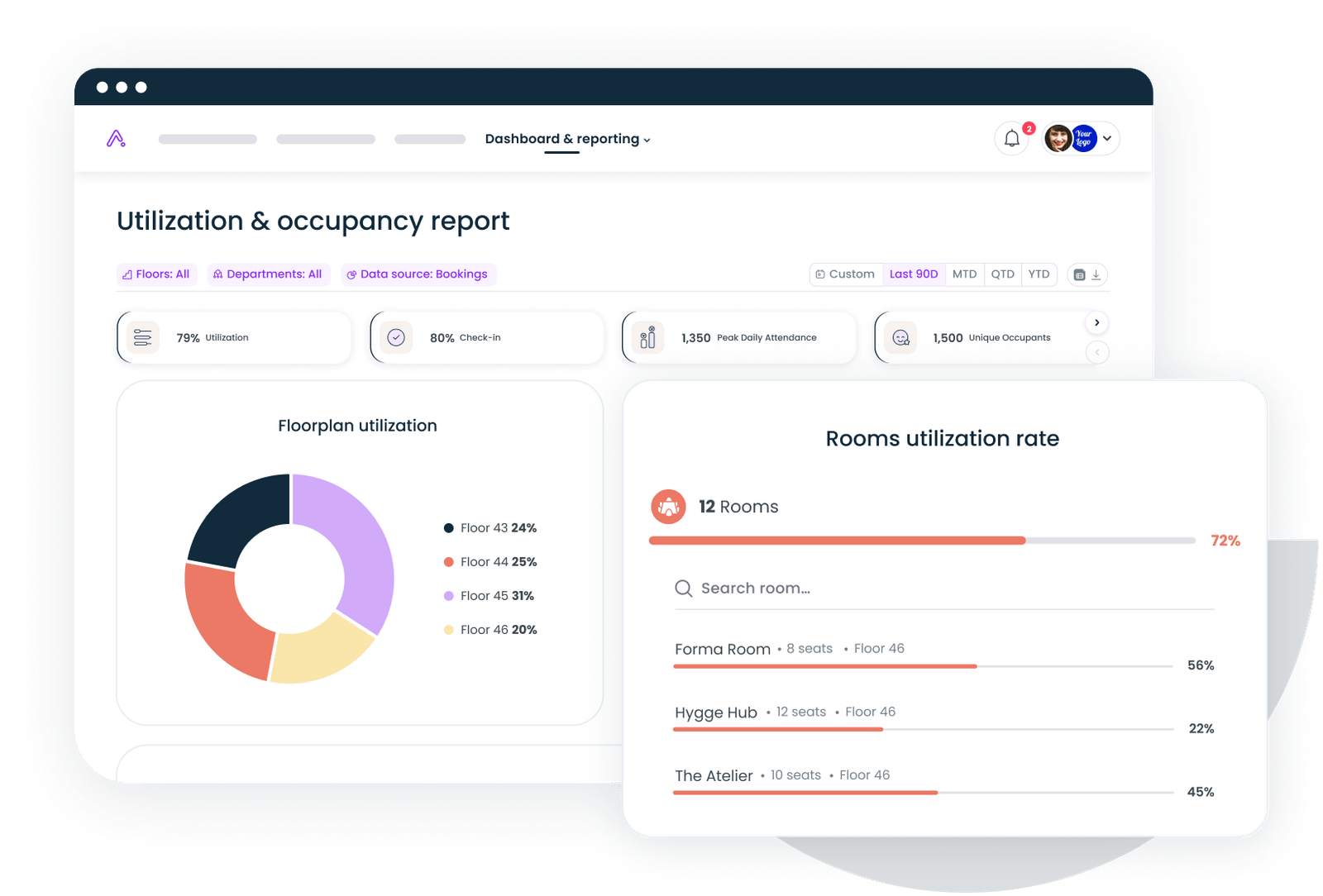
The retention-attraction flywheel
Here's the dynamic most companies miss: retention and attraction aren't separate problems. They're the same system.
When you keep your best people, they become your most effective recruiters. Not through formal referral programs (though those help), but through the way they talk about work. Top performers attract top performers. When someone genuinely enjoys where they work, it shows up in conversations, on social media, in industry events. That signal is incredibly hard to fake and incredibly powerful when it's real.
The reverse is also true. High turnover creates a negative signal that no amount of employer branding can overcome. If candidates see a revolving door on LinkedIn, they'll draw their own conclusions.
65% of workers say upskilling is very important when evaluating a potential new job. Career development, internal mobility, learning opportunities: these aren't just retention tools. They're attraction tools. When candidates see that people grow at your company, that's a stronger pitch than any recruiter script.
This flywheel effect means that every investment in employee experience compounds over time. Better hybrid work practices lead to higher retention, which leads to stronger employer brand, which leads to better candidates, which leads to higher performance, which makes the workplace even better. It's a virtuous cycle, but only if you're intentional about it.
2026 Priorities for workplace leaders competing for talent
If you're a workplace leader thinking about talent attraction this year, here's where I'd focus:
Audit your EVP for authenticity. Ask ten recent hires whether their experience matches what they were told during recruiting. If there's a gap, close it before you invest in more employer branding.
Design for flexibility, not just allow it. There's a difference between tolerating remote work and building infrastructure that makes it great. That means investing in scheduling tools, on-demand spaces for distributed employees, and hybrid work technology that actually works.
Treat your office as a product. Product managers iterate based on user feedback and usage data. Your workplace should work the same way. Measure what's used, ask what's missing, and adjust quarterly.
Connect workplace data to people data. Occupancy numbers alone don't tell you much. But occupancy data combined with engagement scores, retention rates, and hiring metrics starts to reveal which workplace investments actually move the needle.
Invest in the flywheel. Every dollar spent on employee development, career pathing, and internal mobility pays dividends in both retention and attraction. Don't treat these as separate budget lines.
The workplace is the pitch
The talent market in 2026 isn't forgiving. Candidates have options, information, and high expectations. The companies that win aren't necessarily the ones paying the most. They're the ones where the workplace itself, the physical spaces, the flexibility model, the culture, the growth opportunities, tells a coherent and honest story.
That story can't be manufactured by marketing. It has to be built by workplace leaders, people ops teams, and real estate strategists working together. The talent attraction workplace strategy that works is the one where every touchpoint, from the first office visit to the hundredth day on the job, reinforces the same message: this is a place worth being.
From office management to on-demand spaces to real-time analytics, Gable gives workplace leaders the tools to create experiences that attract and retain top talent.
Get a demo