.svg)


.svg)
- Lobby management covers more than visitor check-in; it includes queue flow, occupancy tracking, and receptionist automation
- Visitor management is a subset of lobby management, not a synonym
- Multi-tenant buildings and healthcare facilities benefit most from full lobby systems
- The best systems integrate with desk booking, calendars, and access control
- Lobby data feeds smarter decisions about space, staffing, and security
A lobby management system controls the full experience of everyone entering your building: visitors, employees, contractors, and deliveries. It goes beyond basic visitor sign-in to include queue management, occupancy flow, real-time notifications, and integration with access control. If your organization manages significant foot traffic across one or more locations, understanding what a lobby management system actually does (and doesn't do) will save you from buying the wrong tool.
What is a lobby management system and how does it work?
A lobby management system orchestrates everything that happens between someone walking through your front door and reaching their destination inside the building. That includes digital check-in (via kiosk, QR code, or pre-registration), badge printing, host notifications, queue routing, and exit tracking.
Think of it as the operating system for your building's front-of-house. A paper logbook tracks names. A basic visitor app handles check-in. A lobby management system ties those functions together with occupancy data, security screening, and workflow automation so your front desk isn't a bottleneck.
The core components are straightforward: a check-in interface (tablet, kiosk, or mobile), a backend that routes notifications and stores records, integrations with calendars and access control, and a reporting layer that shows you who's in the building at any given moment. Microsoft's rollout is a useful reference point. Over 357 sites now use their guest management system, with more than one million guests processed since launch. That's the scale where lobby management stops being a nice-to-have and becomes infrastructure.
Most organizations start with a narrower tool and realize they need the broader system once they hit pain points: long wait times, security gaps, no visibility into who's actually on-site. If that sounds familiar, you're not alone.
Lobby management vs. visitor management: Key differences
These terms get used interchangeably, and that causes real purchasing mistakes. They're related but not the same.
Visitor management focuses on the guest lifecycle: pre-registration, check-in, badge printing, host notification, and check-out. It answers one question: who is this person, and are they allowed to be here? If you need a deeper primer, our complete visitor management guide breaks down the fundamentals.
Lobby management is the broader category. It includes visitor management plus queue management (routing people to the right service or person), occupancy flow optimization (preventing bottlenecks during peak hours), receptionist automation (reducing manual tasks), and sometimes wayfinding. It answers a bigger question: how do we move everyone through this space efficiently and securely?
Here's a simple way to think about it:
| Capability | Visitor management | Lobby management |
|---|---|---|
| Guest check-in/check-out | ✓ | ✓ |
| Badge printing | ✓ | ✓ |
| Host notifications | ✓ | ✓ |
| Security screening/watchlists | ✓ | ✓ |
| Queue management | ✗ | ✓ |
| Occupancy flow optimization | ✗ | ✓ |
| Receptionist task automation | ✗ | ✓ |
| Multi-service routing | ✗ | ✓ |
| Wayfinding integration | ✗ | ✓ |
When do you need which? A single-tenant office with moderate visitor traffic probably needs visitor management. A multi-tenant building, a hospital with walk-in patients, or a financial services branch with queued services needs lobby management. The distinction matters because buying a visitor management tool when you need lobby management means you'll bolt on queue software, occupancy tracking, and flow tools separately, and they won't talk to each other.
Vendor labels make this harder than it should be. Many tools sell as a digital visitor management system with lobby language layered on top, so compare the capability list against the table above rather than trusting the product name. If queue routing, occupancy flow, and receptionist automation are missing, you're buying visitor management under a broader label, and you'll be shopping again within a year.
For organizations evaluating specific tools, our visitor management software ratings cover the landscape in detail.
Core features of a modern lobby management system
Not every feature matters equally for every organization. But these are the capabilities that separate a real lobby management system from a glorified sign-in sheet.
Digital check-in with multiple pathways
Visitors should be able to check in via QR code, kiosk, tablet, or pre-registration link. Walk-ins need a different flow than pre-registered guests. Contractors need a different flow than interview candidates. The system should handle all of these without requiring a receptionist to intervene.
Badge printing and access control integration
A printed badge isn't just a name tag. It's a visual security signal that tells everyone in the building this person has been screened. Better systems integrate directly with badge access control to grant temporary credentials tied to specific zones and time windows.
Real-time host notifications
When a visitor checks in, their host should know immediately via Slack, Teams, email, or SMS. No more "your guest is waiting in the lobby" phone calls from reception.
Queue management and wait-time visibility
This is where lobby management diverges from visitor management. In healthcare, banking, and government settings, people arrive for different services. The system routes them to the right queue, displays estimated wait times, and notifies staff when it's time to call the next person.
Watchlist screening and compliance reporting
Security teams need real-time screening against internal watchlists (terminated employees, banned individuals) and sometimes external databases. Compliance teams need audit trails showing who entered, when, where they went, and when they left.
Multi-location support
If you manage more than one building, you need a single dashboard that shows lobby activity across all sites. This is especially critical for organizations managing multiple office locations with different visitor profiles and security requirements.
Analytics and reporting
Peak arrival times, average wait durations, visitor-to-employee ratios, no-show rates for pre-registered guests. This data feeds space planning, staffing decisions, and security reviews.

Before you evaluate lobby management tools, make sure you understand the visitor management features that form the foundation.
Read the guide
Industries and use cases that benefit most
Lobby management isn't a universal need. Some organizations genuinely don't need more than a visitor sign-in app. Here's where the full system earns its cost.
Corporate offices and multi-tenant buildings
Shared lobbies with multiple tenants create unique challenges. Each tenant may have different security policies, visitor types, and notification preferences. A lobby management system lets building operators enforce baseline security while giving each tenant customized workflows. This is especially relevant as companies right-size their portfolios and move into shared or flexible spaces.
Healthcare facilities
Hospitals and clinics deal with patients, family members, vendors, and emergency responders, all arriving through the same entrance with very different needs. Queue management is essential. So is compliance documentation for regulatory audits.
Government buildings and educational institutions
High-security environments where every visitor must be screened, credentialed, and tracked. Evacuation readiness (knowing exactly who's in the building) is a regulatory requirement, not a nice-to-have.
Financial services
Banks and credit unions use lobby management to route walk-in customers to the right service representative. The goal is reducing wait times while maintaining security for sensitive transactions. HID Global reports that over 40 million visitors check in annually through their solutions, giving a sense of the scale involved in financial and enterprise environments.
Hybrid corporate offices
This is the use case that's grown fastest since 2023. When only a fraction of employees are on-site on any given day, and visitor patterns are unpredictable, lobby management data becomes a critical input for workplace analytics. You can't optimize space you can't measure.
How lobby management improves security, efficiency, and experience
The business case for lobby management rests on three pillars. Security gets the most attention, but efficiency and experience often deliver the faster ROI.
Security
Real-time occupancy tracking means you know exactly who's in the building at any moment. During an emergency, that's not a convenience; it's the difference between an orderly evacuation and chaos. Watchlist integration catches flagged individuals before they get past the front desk. Audit trails satisfy compliance requirements without manual record-keeping. For a broader view of physical security strategy, our workplace security guide covers the full picture.
Efficiency
A well-implemented lobby system reduces receptionist workload by automating the repetitive parts of their job: looking up visitor appointments, printing badges, calling hosts, logging entries. That doesn't mean eliminating front desk staff. It means freeing them to handle exceptions, VIP guests, and situations that actually require a human. Qmatic's research on lobby optimization found that connecting all steps in the visitor journey creates a friction-free experience while increasing staff efficiency.
Experience
Your lobby is the first physical impression of your company. A visitor who waits 15 minutes while a receptionist hunts for their appointment forms an opinion before the meeting starts. Pre-registration, fast check-in, and clear wayfinding signal that you've thought about their experience. That matters for recruiting candidates, hosting clients, and welcoming partners.
The ROI math isn't complicated. Reduced receptionist hours, fewer security incidents, better compliance documentation, and space optimization data all have dollar values. The harder-to-quantify benefit is the cultural signal: we take this seriously.
What to look for when choosing a lobby management system
Feature lists are easy to compare. What's harder is evaluating whether a system will actually work in your environment. Here's what separates good purchases from regrettable ones.
Integration depth, not just integration count
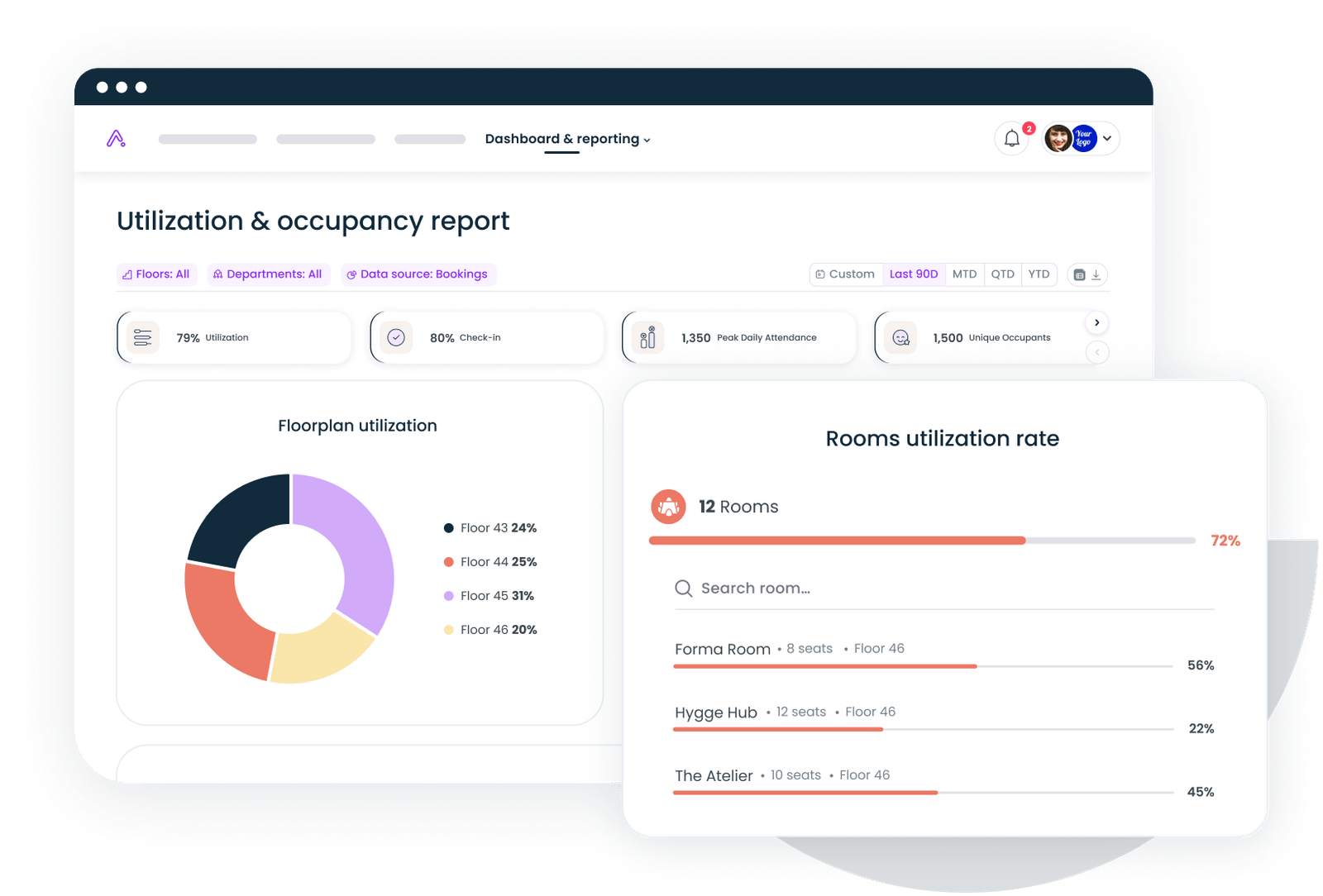
Every vendor claims to integrate with Outlook, Google Calendar, and Slack. The question is how deep those integrations go. Does a calendar invite automatically trigger a pre-registration flow? Does check-in data sync with your access control system in real time? Does the system pull employee data from your HRIS so hosts are always current? Shallow integrations create more manual work, not less. Gable Offices, for example, combines visitor management with desk booking, room scheduling, and utilization data in a single platform, so lobby activity connects directly to how space is actually being used.
Scalability across locations
If you have three offices today and might have eight next year, you need a system that handles multi-site deployment without requiring separate instances or custom configurations for each location. Look for centralized administration with per-location customization.
Security and compliance alignment
At minimum, you want SOC 2 Type II auditing, GDPR-aligned data handling, role-based access control, and AES-256 encryption. Ask vendors specifically about data retention controls and how visitor data is stored, accessed, and deleted.
Ease of use for visitors
Your visitors didn't choose this system. They're encountering it for the first time, possibly while running late for a meeting. If check-in takes more than 60 seconds or requires downloading an app, you've already failed the experience test.
Analytics that inform decisions
Dashboards are table stakes. What you actually need is data that answers operational questions: Which days have the highest visitor volume? How long do visitors wait on average? Which hosts are consistently late to greet their guests? This data should feed into your broader workplace analytics practice, not live in a silo.
Gable Offices combines visitor check-in, desk booking, room scheduling, and occupancy analytics so your lobby data connects to your space strategy.
Learn more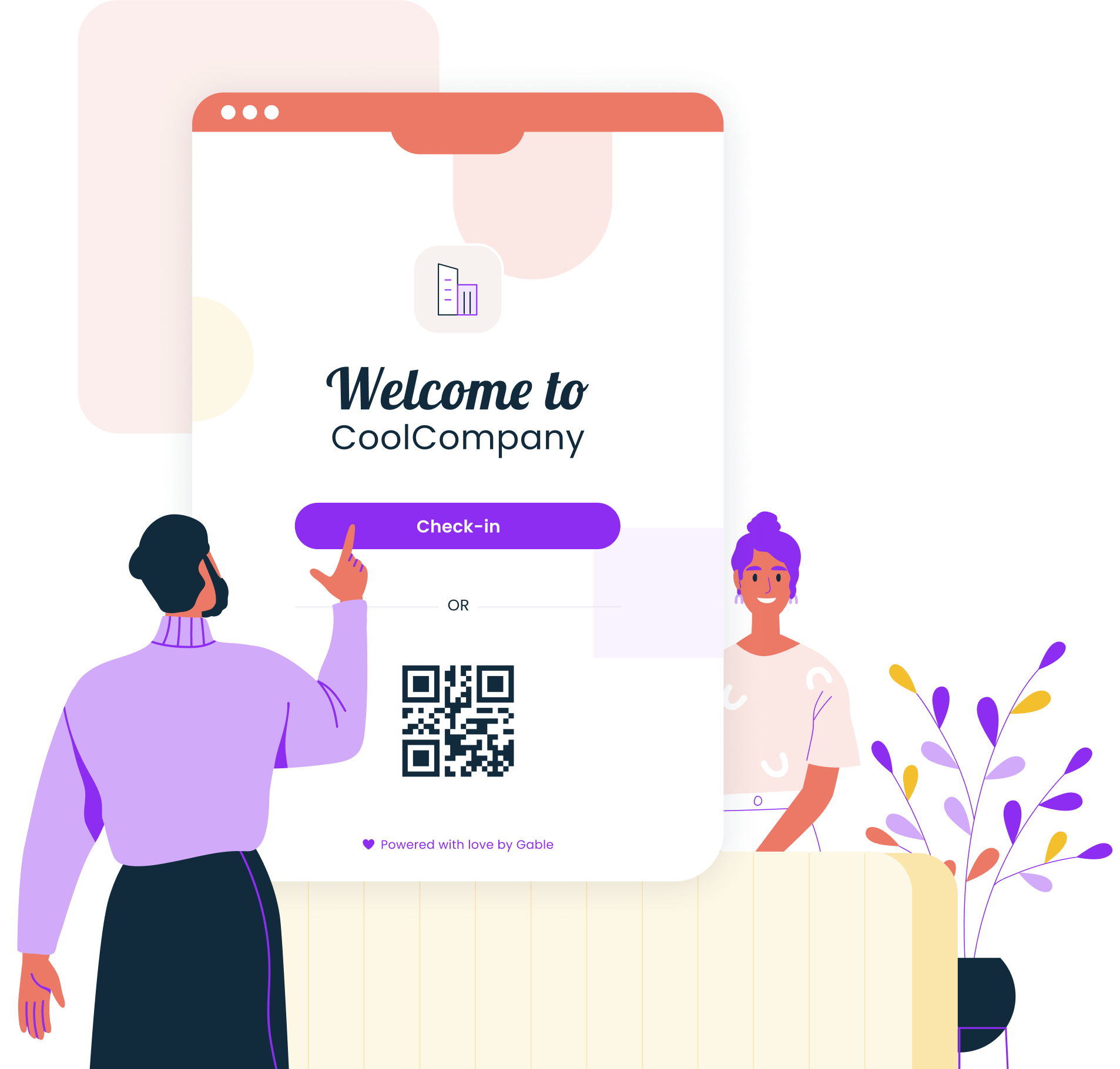
Implementation best practices and common pitfalls
The technology is the easy part. The hard part is changing how people work.
- Start with an audit. Before you buy anything, document your current lobby process end to end. How do visitors check in today? How are hosts notified? What security screening happens? Where are the bottlenecks? What data do you capture, and what do you wish you captured? This audit becomes your requirements document and your baseline for measuring improvement.
- Define success metrics before rollout. Average check-in time, visitor wait time, receptionist hours spent on manual tasks, security incident response time, compliance audit pass rate. Pick three to five metrics and measure them before and after implementation. Without this, you'll never know if the system is working.
- Phase the rollout. Don't go live across all locations simultaneously unless you enjoy chaos. Start with one high-traffic location, work out the kinks, train staff, gather feedback, then expand. Our guide on running workplace pilot programs covers this approach in detail.
- Invest in change management. Front desk staff may see a new system as a threat to their jobs rather than a tool that makes their jobs better. Hosts may resist pre-registering visitors because it's "one more thing." Address these concerns directly. Explain what changes, what doesn't, and why it matters. The workplace change management playbook has a step-by-step framework for this.
Common pitfalls to avoid:
- Under-customizing workflows. Using the default check-in flow for every visitor type (interview candidates, delivery drivers, board members) creates a generic experience that serves no one well.
- Ignoring the offline scenario. What happens when the internet goes down or the kiosk crashes? You need a fallback process.
- Skipping staff training. A system is only as good as the people using it. Budget time for training, not just installation.
- Treating it as a one-time project. Visitor patterns change. Security requirements evolve. Review and adjust your configuration quarterly.
Lobby management as a data layer for workplace decisions
Here's the angle most organizations miss: your lobby isn't just a security checkpoint. It's a data source.
Every check-in, check-out, and queue interaction generates information about how your building is actually used. When that data connects to desk booking, meeting room utilization, and badge access records, you get a complete picture of building occupancy that no single system provides alone.
That picture drives real decisions. If Tuesday lobby traffic is three times Monday's, you might staff differently. If 40% of pre-registered visitors no-show, you might adjust how you allocate meeting rooms. If one floor consistently has more visitor traffic than others, you might rethink your office space planning to put client-facing teams closer to the lobby.
The organizations getting the most value from lobby management aren't treating it as a reception tool. They're treating it as one input in a broader workplace intelligence system, alongside occupancy sensors, booking data, and employee feedback. That's the shift from managing a lobby to managing a workplace.
The bottom line on lobby management systems
Lobby management is broader than visitor management, more specific than workplace management, and more valuable than most organizations realize. The system you choose should handle the basics (check-in, badges, notifications, security screening) while connecting to the rest of your workplace infrastructure. If it lives in a silo, you're paying for a digital clipboard.
The real question isn't whether you need a lobby management system. It's whether your current approach gives you the security, efficiency, and data you need to run your buildings well. If the answer is no, the gap between where you are and where you need to be is probably wider than you think.
Gable brings visitor management, space booking, and workplace analytics together so you can stop stitching tools together and start making decisions from one platform.
Get a demo