.svg)


.svg)
- Open offices created a noise crisis; phone booths are the fastest fix
- Expect to pay $4,000 to $11,500 per single-person booth
- ROI breakeven hits in roughly 6 to 7 months via productivity recovery
- Plan for 1 booth per 6 to 12 employees, then track actual usage
- Booking and utilization data turn booths from furniture into strategy
An office phone booth isn't a luxury perk anymore. It's the minimum viable infrastructure for any open-plan or hybrid workplace that wants focused work to actually happen. This guide compares the leading brands, breaks down what to spend, and explains how to make booths part of a broader space strategy instead of an expensive impulse buy.
Why every hybrid office needs phone booths now
Open offices won the last two decades of workplace design. They lost on acoustics. Office noise is widespread: 56% of office workers describe their workspace as noisy, and only about a third believe their environment supports productivity. That was a problem before hybrid work. Now it's worse.
When people come into the office two or three days a week, those days are packed with video calls, cross-functional syncs, and the kind of collaborative work that generates noise. The employees who came in to focus? They're stuck wearing noise-canceling headphones at a desk they commuted 45 minutes to reach. That's not a workplace strategy. That's a failure of planning.
Phone booths solve the immediate problem: give people a soundproof, bookable space for calls, deep work, or sensitive conversations without building out permanent rooms. They're modular, they don't require permits, and they can move when your floor plan changes. For companies still figuring out their hybrid work schedule, that flexibility matters more than it sounds.
Quick comparison: Top office phone booth brands in 2026
Before diving into details, here's how the major players stack up. Prices reflect single-person models; multi-person pods cost more.
This table is a starting point. The right booth depends on your floor plan, your noise environment, and how you plan to manage usage. Let's break down what actually matters.
Acoustics: the spec that justifies the purchase
If a booth doesn't block sound, it's just a glass box. Look for models rated under ISO 23351-1, which classifies acoustic performance from Class A (best) to Class D. Most quality booths hit Class A or B, reducing ambient noise by 30 to 40 dB.
That number matters because of how distraction works. Phone booths recover concentration by about 23 minutes per interruption avoided. In an open office where someone gets pulled out of focus four or five times a day, that's nearly two hours of productive time recovered. Per person. Per day.
Framery and Zenbooth consistently test at the top of acoustic performance. ROOM and Soundbox are close behind. TalkBox trades some sound isolation for a smaller footprint, which can be the right call if your floor plan is tight and your primary use case is quick calls rather than deep focus sessions.
Don't skip the in-person demo. Acoustic specs on a data sheet don't capture how a booth performs in your specific office, with your HVAC system humming and your sales team celebrating a closed deal ten feet away.
Size and footprint: Matching booths to your floor plan
A single-person phone booth takes up roughly 12 to 16 square feet. Compare that to a traditional meeting room at 150+ square feet, and the math gets interesting fast. 40% of conference rooms are occupied by just one person. Every time that happens, you're burning 150 square feet on a solo call that could've happened in a booth.
For teams thinking about office space planning, here's the sizing framework most facilities teams use:
- Solo booth (12-16 sq ft): One person, video calls, focused work, private conversations
- Duo pod (25-35 sq ft): Two-person meetings, interviews, 1:1s
- Quad pod (50-70 sq ft): Small team huddles, brainstorms, client calls with multiple participants
Framery's recommended ratio is 1 booth per 6 to 12 employees as a starting point. That's a useful baseline, but your actual number depends on how noisy your office is, how many hybrid employees come in on peak days, and whether you have other quiet spaces available. If you're tracking workplace occupancy data, use it to right-size the order instead of guessing.

Phone booths are one piece of a broader focus strategy. Our guide to focus room office design covers placement, policies, and the data behind quiet zones.
Read the guide
Pricing and ROI: what booths actually cost (and save)
Let's talk money. Single-person booths range from roughly $4,000 to $11,500 depending on brand, materials, and features. Multi-person pods run $8,000 to $20,000+. Installation is usually included or minimal; most booths ship flat-pack or pre-assembled and don't require contractors.
Compare that to building a permanent room. Drywall construction for a small office runs $20,000 to $30,000 when you factor in electrical, HVAC, permitting, and labor. And that room can't move when you renegotiate your lease or consolidate floors.
The productivity ROI is where booths pay for themselves. Most reach breakeven in approximately 6.2 to 6.8 months through recovered focus time and reduced meeting room contention. That calculation assumes a single employee using the booth regularly; if multiple people rotate through it daily, the payback period shrinks.
There's also a tax angle. Phone booths are classified as movable furniture, not permanent fixtures, which means they typically qualify for Section 179 depreciation. Your finance team will appreciate that distinction when you're building the business case for workplace technology.
Brand-by-brand breakdown
Framery one
The premium option. Framery has been in the acoustic pod business longer than most competitors, and it shows in the build quality and sensor integration. The One model includes occupancy sensors, air quality monitoring, and connects to most room booking platforms. Acoustics are Class A. The price tag reflects all of that; expect $11,000+ for a single-person unit.
Best for: Large enterprises that want sensor data and are willing to pay for top-tier acoustics.
ROOM One
ROOM's big differentiator is logistics. Their booths ship flat-pack and assemble without tools in about an hour. That matters if you're outfitting multiple floors or locations quickly. Sound isolation is strong (30+ dB), and the design is clean without being flashy. At roughly $5,995, it hits a sweet spot between quality and budget.
Best for: Fast-growing companies that need to deploy quickly across multiple offices.
Zenbooth duo
Handcrafted in California with sustainably sourced materials. Zenbooth leans into the eco-friendly angle, which resonates with companies tracking ESG reporting metrics. Acoustics are excellent. The Duo model fits two people comfortably, making it versatile for both solo work and 1:1 meetings. Lead times run longer (6 to 8 weeks) because of the handmade process.
Best for: Companies that prioritize sustainability and want a premium, American-made product.
Soundbox hush
A solid mid-range option from a European manufacturer. The Hush line offers modular configurations, so you can start with a single-person booth and expand to larger pods using compatible components. Sound reduction is good (28 to 35 dB), though not quite at Framery's level. Pricing around $6,500 makes it competitive.
Best for: Budget-conscious teams that want modularity and room to expand.
TalkBox
The most compact option on this list. TalkBox booths fit into tight floor plans where a Framery or Zenbooth simply won't work. Sound isolation is adequate for calls but not ideal for deep focus work in a very loud environment. At roughly $4,500, it's the most accessible entry point.
Best for: Small offices, coworking spaces, or teams that primarily need a call booth rather than a focus pod.
Loop solo
Loop positions itself between ROOM and Zenbooth, with customizable exterior finishes that let you match your office aesthetic. The sustainable build uses recycled materials. Acoustics are solid at 28 to 32 dB. Pricing around $5,200 puts it in the middle of the pack.
Best for: Design-conscious teams that want the booth to blend into a curated office environment.
Gable Offices lets you handle desk reservations, meeting room scheduling, and space utilization tracking from one platform, so phone booths don't become another unmanaged resource.
Learn more
Implementation: placement, quantity, and booking
Buying booths is the easy part. Making them work requires thinking about three things: where they go, how many you need, and how people reserve them.
Placement. Put booths where people already are, not in a back corner where nobody walks. High-traffic-adjacent locations work best: near open desk areas, close to collaboration zones, visible from main pathways. Visibility drives usage. If people forget the booths exist, they'll keep booking conference rooms for solo calls.
Quantity. Start with the 1-per-6-to-12-employees ratio, then adjust. If your office runs a hot desking model, peak-day headcount matters more than total headcount. An office with 200 assigned employees but only 80 on any given day needs booths for 80, not 200.
Booking. This is where most companies stumble. Without a booking system, booths become first-come-first-served, which means the person who arrives at 8 AM camps in one all day while everyone else knocks on the glass. A simple reservation system, even 30-minute time slots, solves this. Pair booth booking with your desk and room scheduling so employees can see all available spaces in one place.
Etiquette. Post clear guidelines. Maximum session length (45 to 60 minutes is common). No eating inside. Wipe down surfaces when you leave. These sound obvious, but without explicit norms, someone will turn the booth into their personal office and eat lunch in there daily.
Beyond acoustics: The strategic case for phone booths
Phone booths aren't just about noise. They're a signal about how your company thinks about work.
Privacy and compliance. HR conversations, salary discussions, client negotiations, healthcare-related calls. These happen every day, and in an open office, they either happen where everyone can hear or they don't happen at all. For companies in regulated industries, acoustic privacy isn't optional; it's a compliance requirement.
Employee wellbeing. Chronic noise exposure increases stress hormones and lowers job satisfaction. Booths provide a pressure valve. Even employees who don't use them regularly report feeling better knowing the option exists. That psychological safety matters for improving workplace experience in ways that show up in engagement surveys.
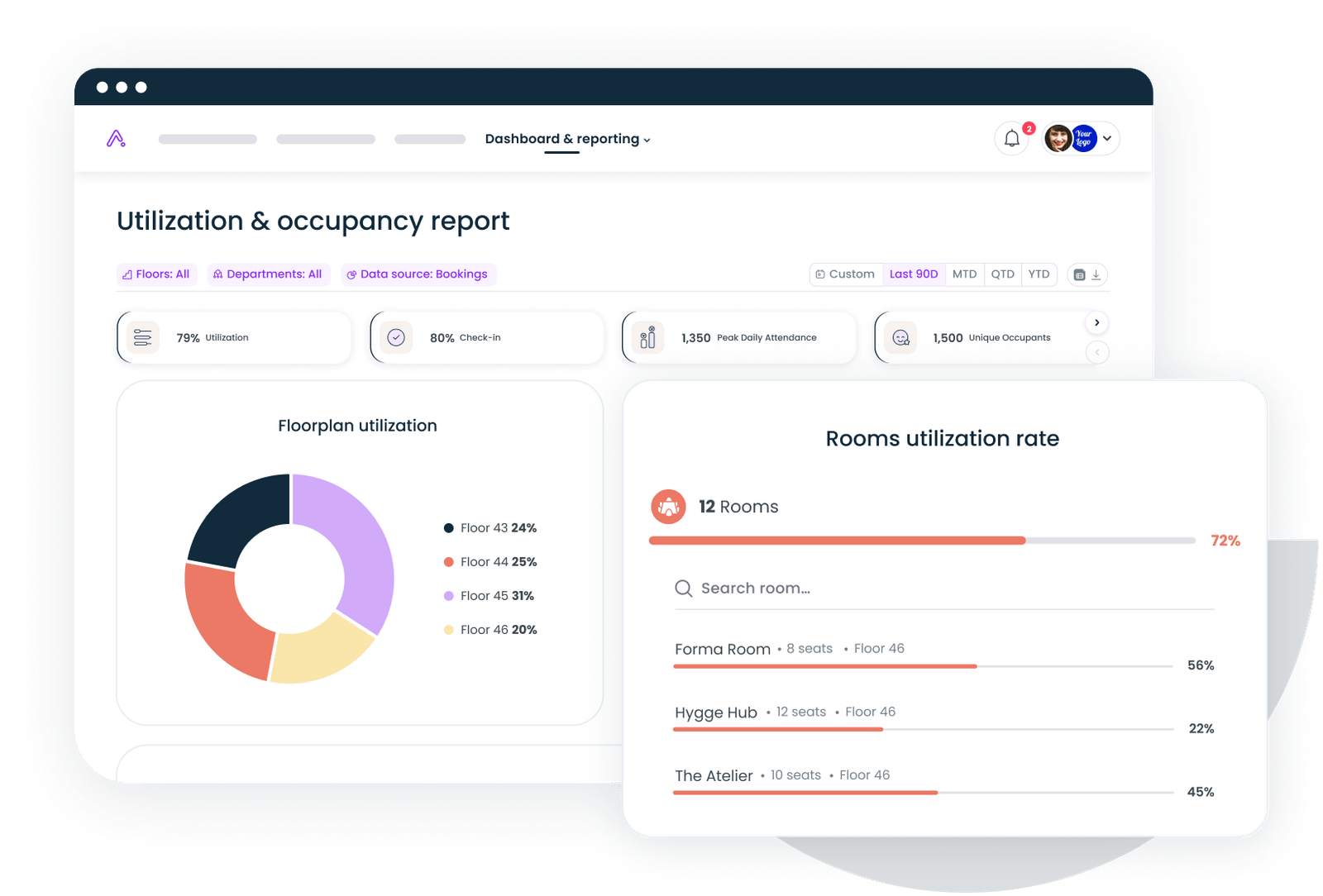
Space efficiency. When you track how booths are used alongside conference rooms and desks, patterns emerge. Maybe your 12-person boardroom is booked for 2-person meetings 60% of the time. Maybe your booths hit 90% utilization on Tuesdays and Wednesdays but sit empty on Fridays. That data informs real estate decisions: how many square feet you actually need, which office design trends are worth following, and whether your next lease should be bigger or smaller.
The phone booth is infrastructure, not furniture
Here's the shift that matters: stop thinking of phone booths as office accessories and start treating them as workplace infrastructure. They solve a real problem (noise and privacy in open offices), they generate measurable ROI (6 to 7 months to breakeven), and they produce utilization data that feeds into broader space strategy.
The brands on this list all make good products. The difference between a phone booth that justifies its cost and one that collects dust comes down to how you integrate it into your workplace operations: where you place it, how you manage bookings, and whether you're tracking usage to optimize over time.
That's not a furniture decision. That's a workplace strategy decision.
From desks to meeting rooms to phone booths, get a walkthrough of how Gable brings booking, visitor management, and utilization data into one platform.
Get a demo