


.svg)


.svg)
- Lease type determines who pays what; compare structures apples-to-apples before negotiating
- Ten terms are always negotiable, and most landlords expect you to push back
- Red flags in landlord-drafted LOIs can lock you into bad economics for a decade
- Hire a tenant rep broker early; their commission usually comes from the landlord
- Start your lease search 9 to 12 months before you need to move in
A commercial lease is a binding contract between a landlord and a business tenant for the use of office, retail, or industrial space. Unlike residential leases, commercial leases have almost no consumer-protection guardrails. Everything is negotiable, which means everything is also a potential trap if you don't know what you're reading. This commercial lease guide walks you through the three main lease structures, the terms worth fighting for, the red flags that should make you pause, and the timeline you'll need to get it right.
If you're a Director of Workplace or Head of Real Estate approaching a new lease or renewal, this is the playbook. You don't need to become a CRE specialist. You need to know enough to hold your own across the table from a landlord's broker who does this every day.
What a commercial lease actually is (and why it's nothing like your apartment)
A commercial lease governs the relationship between a property owner and a business occupying their space. That's the simple part. The complicated part is that commercial leases are largely unregulated. There's no standard form. No mandatory disclosures. No cooling-off period. The document you sign is the document you live with, often for five to ten years.
Commercial leases typically cover base rent, operating expenses, tenant improvements, permitted use, maintenance responsibilities, and exit conditions. But the way those costs get allocated varies dramatically depending on the lease structure, which is why understanding the three main types matters before you even tour a building.
One more thing residential tenants take for granted: the space you pay for isn't the space you use. BOMA's office measurement standard is the industry-accepted method for calculating rentable square footage, and it includes a "load factor" that adds common areas (lobbies, hallways, restrooms) to your usable square footage. A 10,000 SF lease might only give you 8,000 SF of actual workspace. That 20% premium is baked into every lease, and most first-time tenants don't realize it until they're measuring furniture layouts.
Understanding lease structures: Gross vs. modified gross vs. triple net
The lease structure determines who pays for what. Get this wrong and your "great deal" on base rent becomes an expensive surprise when the first operating expense reconciliation hits.
Full-service gross lease
The landlord bundles everything into one number: base rent, property taxes, insurance, maintenance, and common area costs. You write one check. Simple.
The catch: that simplicity comes at a premium. Landlords price in their risk, so gross lease rates look higher on paper. They're common in multi-tenant office buildings where the landlord wants predictable cash flow and tenants want predictable budgets.
Watch for "base year" provisions. Most gross leases establish a base year for operating expenses, and you pay your share of any increases above that baseline. If your base year happens to be unusually low (say, the building was half-empty), your escalations will be steep.
Modified gross lease
A hybrid. The landlord covers some operating expenses; you cover others. Which ones? That's negotiated deal by deal. One modified gross lease might pass through property taxes but cover insurance. Another might do the opposite.
This is the structure where you need to read every line. "Modified gross" sounds standardized. It isn't. The term just means "somewhere between gross and net, and we'll figure out the details." If you're comparing two modified gross proposals, you're comparing apples to oranges unless you map out exactly which expenses each landlord is passing through.
Triple net lease (NNN)
The tenant pays base rent plus property taxes, insurance, and common area maintenance (CAM). You're responsible for nearly every operating cost associated with the space. NNN lease investment volume hit $51.4 billion nationally in 2025, making it the dominant structure for industrial and single-tenant properties.
The advantage: lower base rent and full transparency into what you're paying for. The risk: costs are variable and can spike. A roof replacement, a property tax reassessment, a jump in insurance premiums; all of those land on your desk.
For a deeper breakdown of how NNN economics work in practice, our triple net lease explainer walks through the math side by side with gross lease comparisons.
How to compare across structures
Here's the exercise most tenants skip. A space advertised at $30/SF on a gross lease and another at $18/SF on a NNN lease might cost roughly the same once you add taxes ($6/SF), insurance ($2/SF), and CAM ($4/SF) to the NNN number. Always convert proposals to a total occupancy cost per square foot before comparing. Ask every landlord for a detailed operating expense breakdown, not just the headline rent number.
If you're weighing a traditional lease against flexible workspace, the lease vs. flex space comparison lays out the total cost of ownership for each model.
The 10 Lease terms tenant-side leaders always negotiate
Landlords expect negotiation. A lease draft is a starting position, not a final offer. Here are the ten terms that matter most, and where you have leverage.
1. Tenant improvement allowance (TIA)
The TIA is a dollar-per-square-foot contribution from the landlord toward building out your space: walls, flooring, electrical, HVAC modifications, the works. TIAs enable tenants to customize spaces without bearing the full upfront cost, and they're one of the most valuable concessions in any lease.
Typical office TIAs range from $30 to $80+ per square foot depending on market, building class, and lease term. Longer lease commitments generally unlock higher allowances because the landlord amortizes the cost over more years.
Key negotiation points: push for the TIA to cover soft costs (architecture, permitting) in addition to hard construction costs. Negotiate the right to apply unused TIA toward rent abatement. And make sure the disbursement schedule aligns with your construction timeline so you're not floating costs for months.
For a full walkthrough of how TIAs work and how to maximize yours, read our tenant improvement allowance guide.
2. Free rent (abatement)
Free rent periods give you months of zero base rent, typically at the start of the lease while you're building out the space and not yet occupying it. One to three months of free rent on a five-year lease is common. On longer terms or in soft markets, six months or more is achievable.
Don't confuse gross rent abatement (no rent at all) with net rent abatement (no base rent, but you still pay operating expenses). The distinction matters. Get it in writing.
3. Escalation caps
Most leases include annual rent escalations, either fixed (3% per year) or tied to CPI. Fixed escalations are predictable. CPI-linked escalations can spike in inflationary periods.
Negotiate a cap on CPI-linked escalations (e.g., "CPI or 3%, whichever is less"). Without a cap, you're exposed to the same kind of inflation risk that caught tenants off guard in 2022 and 2023.
4. Sublease and assignment rights
Business needs change. You might outgrow the space, downsize, get acquired, or pivot to a distributed model. Sublease rights let you rent out part or all of your space to another tenant. Assignment rights let you transfer the lease entirely.
Landlords will try to restrict both. Push for "reasonable consent not to be unreasonably withheld" language, and negotiate to keep any sublease profit (or at least split it) rather than surrendering it to the landlord. Our office sublease guide covers the mechanics and pitfalls of subleasing in detail.
5. Expansion options
If you're growing, negotiate a right of first offer (ROFO) or right of first refusal (ROFR) on adjacent space. A ROFO means the landlord must offer you the space before marketing it. A ROFR means you can match any third-party offer.
ROFO is generally more tenant-friendly because you get first crack at setting terms. ROFR can put you in a reactive position, forced to match terms negotiated by someone else.
6. Early termination rights
This is the escape hatch. An early termination clause lets you exit the lease before the end of the term, usually in exchange for a penalty (often the unamortized TIA plus a few months' rent).
Landlords resist termination rights because they create uncertainty. Your leverage increases with longer initial terms. A ten-year lease with a termination option at year five is easier to negotiate than a five-year lease with a termination at year three.
7. Renewal options
Lock in the right to renew at predetermined terms (or at "fair market value" with a cap). Without a renewal option, you're at the landlord's mercy when your lease expires. They can raise rent dramatically or simply not renew.
Negotiate the notice period carefully. Most renewal options require 9 to 12 months' notice. Miss the window and you lose the option entirely.
8. Parking
In suburban markets, parking ratios (spaces per 1,000 SF) are a dealbreaker. In urban markets, reserved spots command premium pricing. Either way, get parking terms in the lease, not in a side agreement that can be modified.
Specify the ratio, the cost, whether spots are reserved or unreserved, and whether the landlord can relocate your parking during construction or events.
9. After-hours HVAC
Standard building hours are typically 8 AM to 6 PM, Monday through Friday. Need heating or cooling outside those hours? You'll pay for it, often $75 to $200+ per hour depending on the building's system.
Negotiate extended standard hours if your team regularly works evenings or weekends. Or negotiate a capped after-hours rate. This is a cost that surprises tenants who don't read the fine print.
10. Signage
Building signage (lobby directory, exterior, monument) is a branding opportunity and a negotiation point. In multi-tenant buildings, signage rights are allocated by floor or square footage. If you're a major tenant, push for prominent placement.
Get signage specifications in the lease: size, location, lighting, and approval process. A vague "signage rights subject to landlord approval" clause gives you nothing.

Our lease negotiation guide covers 15 specific tactics that workplace leaders use to reduce total occupancy costs.
Read the guide
Red flags in landlord-drafted LOIs and lease drafts
The Letter of Intent (LOI) is a non-binding outline of deal terms that precedes the formal lease. "Non-binding" doesn't mean unimportant. The LOI sets the negotiation frame. Concede a point in the LOI and you'll fight twice as hard to claw it back in the lease.
Here's what to watch for.
Uncapped operating expenses
If the lease doesn't cap your share of operating expense increases, you're writing the landlord a blank check. Look for "controllable expense" caps (typically 3% to 5% annually) that exclude taxes and insurance but limit management fees, maintenance, and administrative costs.
Also scrutinize the expense base year. Some landlords use a "grossed-up" base year that assumes full occupancy even if the building is half-empty. This artificially inflates the baseline and reduces your future escalation exposure, which sounds good until you realize the landlord priced that benefit into your base rent.
One-sided indemnification
Landlord lease drafts often require the tenant to indemnify the landlord for virtually everything, including the landlord's own negligence. Push for mutual indemnification: each party covers losses caused by their own acts or omissions.
Vague repair and maintenance obligations
"Tenant shall maintain the premises in good condition" sounds reasonable until the roof leaks and the landlord argues that "premises" includes the structural envelope. Define exactly what you're responsible for (interior, non-structural) and what the landlord covers (roof, exterior walls, building systems, common areas).
Personal guarantees
Landlords sometimes require company principals to personally guarantee the lease, especially for smaller tenants or startups. If you can't avoid it entirely, negotiate a "burn-off" provision that releases the guarantee after a set period (e.g., 24 months of on-time rent payments) or caps the guarantee at a specific dollar amount.
Aggressive default and cure provisions
Some leases give tenants as few as five days to cure a monetary default. That's unreasonable. Negotiate 10 to 15 days for monetary defaults and 30 days for non-monetary defaults, with the right to extend the cure period if you're actively working to resolve the issue.
Restrictive use clauses
"Premises shall be used solely for general office purposes" might seem fine until you want to host a client event, install a test kitchen, or sublease to a company in a different industry. Negotiate broad use language that covers your current operations and foreseeable future needs.
If you're managing CRE costs across a portfolio, catching these red flags early prevents compounding expenses over multi-year terms.
When to hire a tenant rep broker vs. going direct
You wouldn't negotiate a major contract without a lawyer. The same logic applies to a commercial lease, except the professional you need first is a tenant representation broker.
What a tenant rep does
A tenant rep broker works exclusively for you, the tenant. They identify properties, run financial comparisons, negotiate terms, and manage the LOI-to-lease process. They know which landlords are desperate to fill space (and will offer aggressive concessions) and which buildings have hidden problems.
How they get paid
Here's the part that surprises people: the landlord typically pays the tenant rep's commission. It's built into the deal economics. The landlord's listing broker splits their commission with your broker. You get professional representation at no direct cost.
That said, the commission structure creates a subtle misalignment. Brokers earn more on larger spaces and longer terms. A good tenant rep will recommend right-sizing your space even if it means a smaller commission. A mediocre one might not.
When to go direct
Going without a broker makes sense in very few scenarios: you're renewing a small lease in a building you know well, the terms are straightforward, and you have an experienced real estate attorney reviewing the documents. Even then, you're leaving money on the table. Brokers have market data you don't.
When to engage an attorney
Always. A tenant rep handles business terms. A real estate attorney handles legal terms: indemnification, default provisions, subordination, estoppel certificates, and the dozens of clauses that can cost you six or seven figures if they go wrong. Engage the attorney before you sign the LOI, not after.
The 9-to-12-month commercial lease timeline
Most workplace leaders underestimate how long a lease process takes. If you need to be in new space by a specific date, work backward from that date and add a buffer. Here's a realistic timeline.
Months 1 To 2: Strategy and requirements
Define your space needs. How many people? What's your office space planning strategy? Do you need collaboration zones, private offices, a mix? What markets are you targeting?
This is also when you engage a tenant rep broker. Give them a clear brief: size range, budget, location preferences, must-haves, and deal-breakers.
Months 2 To 4: Market survey and tours
Your broker identifies 10 to 20 options, narrows to 5 to 8 worth touring, and schedules visits. You'll tour with your broker and key stakeholders (facilities, HR, finance). After tours, shortlist 2 to 3 finalists.
Leasing activity grew 7.6% in Q1 2026 compared to Q1 2025, which means competition for quality space is tightening. Starting early gives you more options and more leverage.
Months 4 To 5: LOI Negotiation
Your broker drafts and submits LOIs to your top choices. Expect 2 to 3 rounds of back-and-forth. This is where you negotiate the big-ticket items: rent, TIA, free rent, term, and options.
Don't rush this phase. The LOI sets the frame for everything that follows.
Months 5 To 7: Lease negotiation
Once you've agreed on an LOI, the landlord's attorney drafts the formal lease. Your attorney reviews and redlines it. Expect 3 to 5 rounds of revisions. This is where the red flags from the previous section show up, and where having an experienced attorney pays for itself many times over.
Months 7 To 9: Design and permitting
While the lease is being finalized (or immediately after signing), your architect begins space planning and construction documents. Permitting timelines vary by city; some jurisdictions take 2 to 4 weeks, others take 2 to 4 months.
Months 9 To 12: Build-out and move-in
Construction begins. A standard office build-out takes 8 to 16 weeks depending on complexity. Factor in furniture procurement (lead times have improved but still run 4 to 8 weeks for custom pieces), IT infrastructure, and the move itself.
If you're relocating an existing office, our office relocation checklist covers the operational details that lease guides typically skip.
Month 12+: Occupancy and optimization
You're in. Now the real work starts. How are people actually using the space? Are desks sitting empty three days a week? Are meeting rooms overbooked on Tuesdays and ghost towns on Thursdays?
This is where lease strategy meets workplace operations. The concessions you negotiated (expansion options, termination rights, sublease clauses) only matter if you have data to trigger them at the right time. Gable Offices gives you real-time desk and room utilization data so you can make portfolio decisions based on actual occupancy, not assumptions, and walk into your next renewal negotiation with evidence.
Desk booking, room scheduling, and occupancy analytics in one platform, so you know exactly how your leased space is being used.
Learn more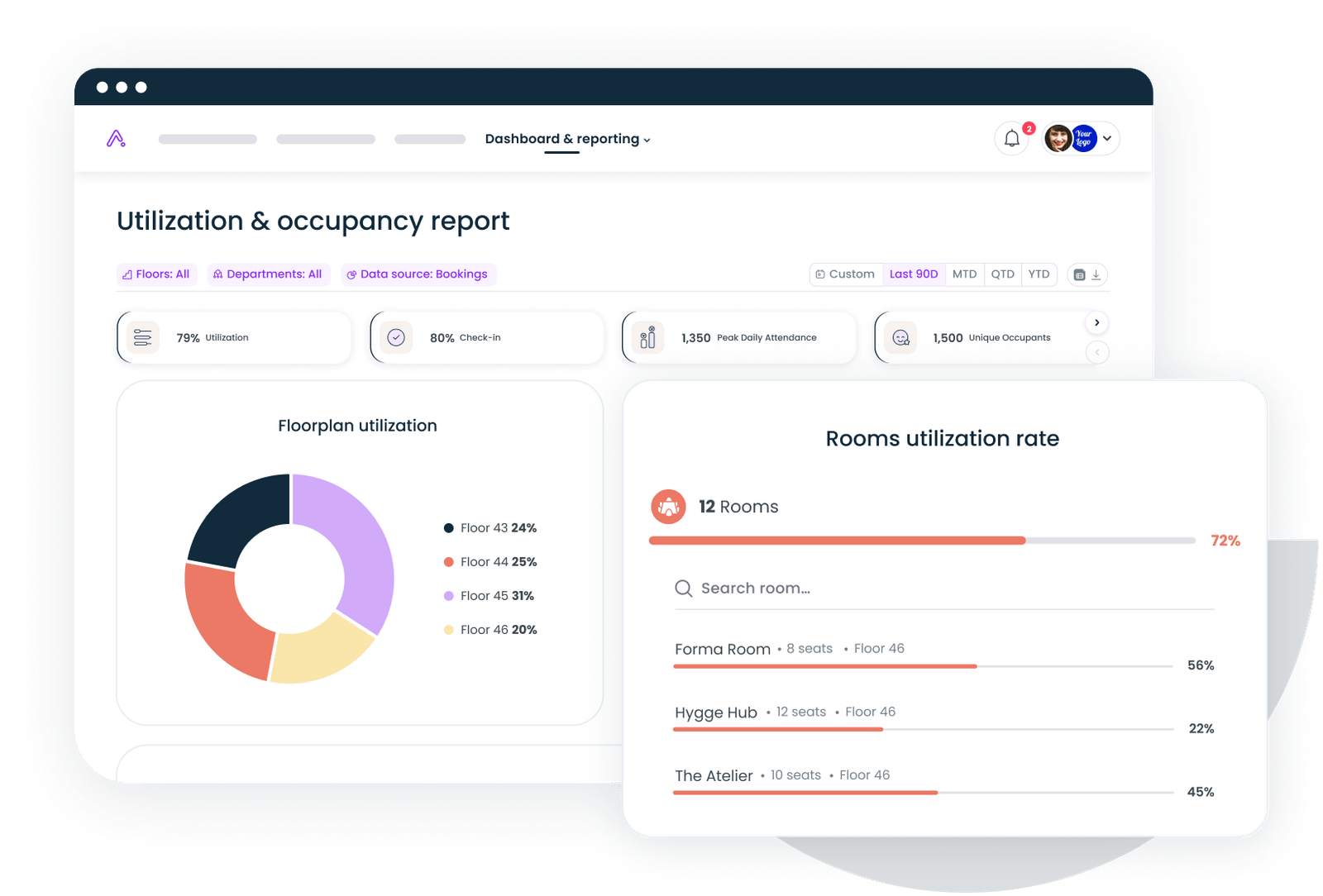
How to compare proposals and calculate true occupancy cost
Landlords quote rent in different ways. Some quote annual per-square-foot rates. Others quote monthly. Some include operating expenses; others don't. Comparing proposals without normalizing the numbers is like comparing salaries without factoring in benefits and taxes.
Here's the formula for true occupancy cost:
Total Occupancy Cost = Base Rent + Operating Expenses + Utilities + Parking + After-Hours HVAC + Insurance (if NNN) + Property Tax (if NNN) − TIA (amortized) − Free Rent (amortized)
Calculate this on a per-square-foot, per-year basis for every proposal. Then calculate it on a per-usable-square-foot basis (adjusting for the load factor) to understand what you're actually paying for the space your team can use.
If you're benchmarking against market rates, our CRE cost per square foot breakdown provides city-by-city data for 2026.
Also consider the total cost over the full lease term, not just year one. A lease with lower base rent but steep escalations and no TIA might cost more over seven years than a higher-rent lease with generous concessions upfront.
Common mistakes workplace leaders make on their first lease
Even smart operators make predictable errors. Here are the ones I see most often.
Falling in love with the space before negotiating. The moment a landlord knows you're emotionally committed, your leverage evaporates. Always have a credible alternative, and make sure the landlord knows it.
Ignoring the operating expense audit right. Most leases allow tenants to audit the landlord's operating expense calculations annually. Few tenants exercise this right. Those who do frequently find errors in their favor. Our lease audit guide explains when and how to run one.
Overcommitting on space. Hybrid work changed the math. If your team is in the office three days a week, you don't need a desk for every employee. But you do need enough space for peak days. The gap between average occupancy and peak occupancy is where money gets wasted or saved. Using workplace analytics to understand your actual usage patterns before signing prevents you from leasing 30% more space than you need.
Skipping the estoppel certificate review. If you're subleasing or if the building is being sold, the estoppel certificate confirms the terms of your lease. Review it carefully. Errors or omissions in the estoppel can be used against you later.
Not reading the rules and regulations exhibit. It's the boring attachment at the back of the lease. It's also where landlords bury restrictions on move-in hours, freight elevator access, signage, and after-hours use that can create real operational headaches.
The lease is just the beginning
Signing a commercial lease is a milestone, not a finish line. The terms you negotiated only create value if you actively manage the space, track utilization, and use the flexibility clauses you fought for.
The best workplace leaders treat the lease as one input into a broader real estate strategy. They monitor occupancy data monthly. They know their termination and expansion option dates. They start renewal planning 18 months before expiration, not 6. And they build relationships with their landlords that make the next negotiation collaborative rather than adversarial.
The market is shifting. New office completions are set to fall 75% in 2026, which means the supply pipeline is tightening even as leasing demand recovers. If you're signing or renewing this year, the window for tenant-favorable concessions is still open, but it won't stay open forever.
Know your numbers. Know your options. And know what you're signing.
From desk booking to occupancy analytics, Gable gives you the data to make your next lease decision with confidence.
Get a demo

