.svg)


.svg)
- NNN base rent looks cheaper, but total occupancy cost runs 25-40% higher than quoted
- Gross leases bundle everything into one number; you pay for predictability
- Modified gross splits the difference with a base year expense stop
- Your lease type determines how much control you have over operating costs
- Occupancy data is the best negotiation lever regardless of lease structure
A triple net lease (NNN) and a gross lease represent two fundamentally different ways to pay for office space, and the gap between them can be 25-40% of your total occupancy cost. If you're comparing lease proposals right now, the base rent number on a NNN offer will look significantly lower than a gross lease for the same building. That's by design. The question isn't which number looks better; it's which structure actually costs less for your specific situation.
What a triple net lease actually means
A triple net lease shifts three categories of operating expense from the landlord to the tenant: property taxes, building insurance, and common area maintenance (CAM). The "triple" refers to those three nets. Your base rent covers the space itself; everything else is on you.
Here's where it gets expensive. An office at $20/SF NNN can actually cost $35/SF once you add operating expenses, janitorial services, and utilities. That's a 75% premium over the quoted rate. If you're budgeting based on the base rent alone, you're going to have a bad quarter.
The pro-rata share is the mechanism that determines how much of the building's total operating costs you absorb. If you lease 10% of the building's rentable square footage, you pay 10% of the property taxes, 10% of the insurance premiums, and 10% of the CAM charges. These aren't fixed numbers. They fluctuate annually, sometimes dramatically, depending on tax reassessments, insurance market conditions, and what the landlord decides counts as "maintenance."
NNN leases dominate retail and industrial properties, but they're increasingly common in multi-tenant office buildings too. Understanding your CRE cost per square foot beyond the base rent is the only way to compare proposals honestly.
What a gross lease means
A gross lease (sometimes called a full-service gross lease) bundles everything into a single per-square-foot rate. Property taxes, insurance, CAM, janitorial, utilities: the landlord pays all of it out of your rent. You write one check. That's it.
The trade-off is straightforward. Gross lease rents run 25-40% higher than equivalent NNN rents. You're paying a premium for predictability. The landlord is taking on the risk that operating costs might spike, and they price that risk into your rent.
For workplace leaders who need clean budget forecasts, this matters. A gross lease means your facilities line item doesn't swing 8-12% year over year because the county reassessed property values or the building's insurance carrier raised premiums. You know what you'll pay in month one, and you know what you'll pay in month thirty-six.
The downside? You have zero visibility into what the landlord actually spends on operations. If they're running the building efficiently, you're overpaying. If they're not, you might be getting a deal. You'll never know, because the economics are opaque by design.
The modified gross lease: The middle ground most office tenants sign
Most Class A office leases in 2026 aren't pure NNN or pure gross. They're modified gross, and understanding this structure matters more than the textbook definitions of either extreme.
A modified gross lease sets a "base year" for operating expenses. The base year acts as a floor: the landlord covers all operating costs at the level they were in your first year. Any increases above that base year get passed through to you as the tenant.
Say your building's operating expenses are $12/SF in your base year. In year two, they rise to $13.50/SF. You pay the $1.50/SF difference. In year three, if they drop back to $12.75/SF, you only pay $0.75/SF above base. The landlord absorbs the base year amount permanently.
This structure shows up constantly in office lease negotiations because it gives both sides something. Tenants get first-year cost certainty. Landlords get protection against rising expenses over the lease term. The risk is shared, not shifted entirely to one party.

Before you sign a long-term lease of any type, compare the total cost of ownership against flexible workspace options that scale with your actual headcount.
Read the guide
Cost breakdown: NNN Vs. modified gross vs. full-service gross
Here's what a 5,000 SF office lease looks like under each structure, using realistic 2026 numbers for a Class B suburban office market:
A few things jump out. The NNN lease with the lowest base rent actually costs nearly as much as the gross lease once you add everything up. The modified gross lease in year three lands in between, but that gap widens as operating expenses escalate over a 5-7 year term.
The real danger with NNN isn't the year-one cost. It's the unpredictability. Property tax reassessments can spike 15-20% in a single year. Insurance premiums in coastal or wildfire-prone markets have doubled in some cases since 2023. Those costs flow directly to you.
If you're trying to reduce your real estate costs, the lease structure you choose determines how much control you have over the outcome.
Who wins: Tenant perspective
NNN favors tenants who want control. If you have a facilities team that can manage vendor relationships, audit CAM charges, and negotiate directly with service providers, NNN gives you leverage. You can choose your own janitorial company. You can contest property tax assessments. You can see exactly where every dollar goes and push back when charges seem inflated.
NNN also favors tenants in stable tax jurisdictions where operating costs are predictable. If you're leasing in a market where property taxes haven't moved more than 3% annually in a decade, the risk is manageable.
Gross leases favor tenants who need budget certainty. If your CFO wants a fixed facilities line item that doesn't require quarterly true-ups, gross is the answer. Startups, companies without dedicated real estate teams, and organizations that simply don't want to manage building operations should lean gross.
Modified gross is the pragmatic choice for most office tenants. You get first-year predictability, some cost transparency, and the ability to negotiate caps on annual escalations. Most corporate real estate strategies in 2026 default to modified gross for exactly this reason.
The one thing that helps in every scenario: knowing how much space you actually use. If your office occupancy rate is 45% on an average Tuesday, you're overpaying under any lease structure. The lease type matters less than the square footage you're committing to.
Who wins: Landlord perspective
NNN favors landlords who want passive income. The tenant handles everything. The landlord collects base rent and passes through all variable costs. There's minimal management overhead, and the landlord's income stream is insulated from operating cost fluctuations.
This is why NNN leases dominate single-tenant retail and industrial properties. The landlord is essentially a financing vehicle; the tenant runs the building.
Gross leases favor landlords in rising-cost environments. If a landlord can accurately predict operating expenses and price them into the gross rent with a margin, they profit from the spread. Sophisticated landlords in stable markets do very well with gross leases because they're essentially selling insurance against cost volatility, and they price it accordingly.
Modified gross gives landlords base-year protection. They absorb a known cost level and pass through anything above it. In inflationary periods, this protects the landlord from absorbing escalating expenses over a long lease term.
How to compare lease offers apples-to-apples
You can't compare a $22/SF NNN offer against a $38/SF gross offer by looking at the numbers on the page. You need a single metric: total occupancy cost per square foot per year.
The formula:
Total occupancy cost = base rent + estimated NNN charges + utilities + tenant-paid maintenance + parking + any other tenant expenses
For a gross lease, total occupancy cost is just the rent (plus any exclusions the landlord carved out, which you need to read carefully).
For a modified gross lease, total occupancy cost = base rent + estimated pass-throughs above the base year + any excluded expenses.
Three things to ask every landlord before comparing:
- What's included and what's excluded? Some "gross" leases exclude utilities, after-hours HVAC, or janitorial. Some "NNN" leases include certain CAM items in the base rent. The labels are inconsistent across markets.
- What were actual operating expenses for the last three years? Don't accept estimates. Ask for the reconciliation statements. This tells you what NNN charges actually looked like, not what the landlord projects.
- What caps exist on annual escalations? A NNN lease with a 5% annual CAM cap is a fundamentally different risk profile than one with no cap. Negotiate this before you sign.
Running a lease audit on your current space before entering new negotiations gives you real data to benchmark against. You'd be surprised how often CAM charges include items that shouldn't be there.
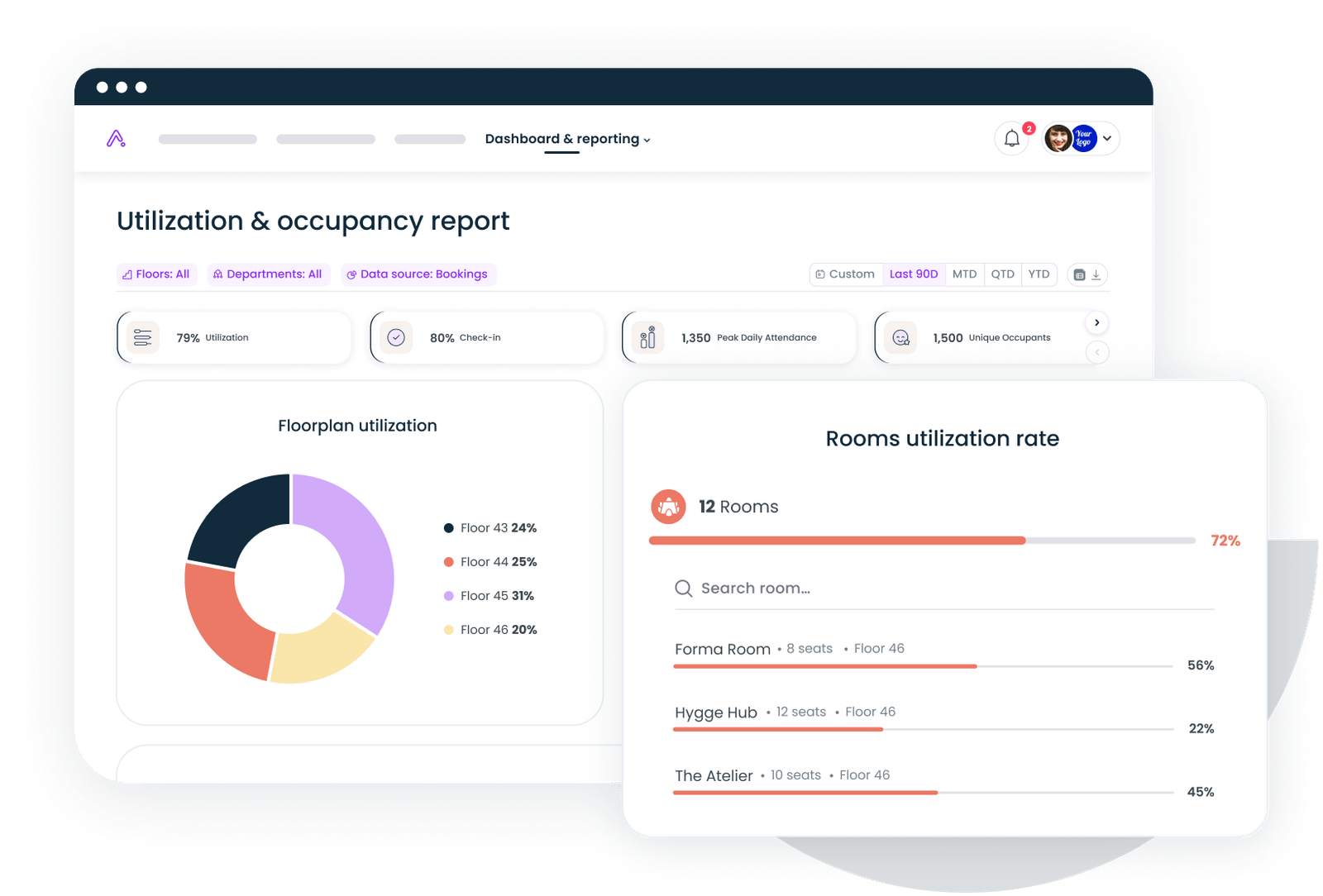
Gable Offices gives you desk booking, room scheduling, and utilization analytics so you negotiate based on real occupancy data, not guesswork.
Learn more
Red flags in NNN leases (and how to negotiate around them)
Not all NNN leases are created equal. Here's what to watch for:
Uncapped CAM charges. If the lease doesn't cap annual CAM increases, you're exposed to unlimited cost escalation. Push for a 3-5% annual cap. Landlords will resist, but it's standard in competitive markets.
Capital expenditure pass-throughs. Some NNN leases let landlords pass through capital improvements (new roof, HVAC replacement, elevator modernization) as CAM charges. These are the landlord's asset improvements, not your operating costs. Exclude them explicitly, or negotiate amortization over the useful life of the improvement.
Vague maintenance definitions. "Common area maintenance" can mean anything from landscaping to lobby renovations. Get a detailed list of what's included. If the landlord won't provide one, that's a red flag.
No audit rights. Your lease should give you the right to audit the landlord's operating expense records annually. If they won't agree to audit rights, ask yourself what they're hiding.
Tax reassessment exposure. If the building sells during your lease term, the new assessed value could dramatically increase your property tax share. Negotiate a cap on tax pass-throughs tied to the assessment at lease signing, not future reassessments triggered by building sales.
For a deeper look at negotiation tactics, the tenant improvement allowance is another area where the lease structure affects your total cost. TI dollars interact differently with NNN and gross leases, and getting this wrong can cost you six figures over a lease term.
When to consider skipping the traditional lease entirely
Here's the question most lease comparison articles don't ask: do you need a traditional lease at all?
If your team is hybrid, if your headcount fluctuates seasonally, or if you're growing faster than a 5-year lease term can accommodate, the entire NNN-vs-gross debate might be the wrong frame. Flexible workspace options let you pay for space you actually use rather than committing to square footage based on peak headcount projections.
The math is simple. If you're leasing 10,000 SF but only using 5,000 SF on any given day, you're paying double what you need to under any lease structure. A smaller NNN lease supplemented with on-demand workspace for peak days often costs less than a full-size gross lease, with more flexibility built in.
This isn't an either/or decision. Many workplace teams are running a core lease (usually modified gross) for their anchor office and using flexible space for satellite locations, project teams, or seasonal overflow. The key is having workplace analytics that show you actual utilization so you can size the core lease correctly.
The lease structure matters less than the square footage
Here's the honest conclusion: the difference between NNN and gross lease structures is real, but it's a second-order problem. The first-order problem is whether you're leasing the right amount of space.
A perfectly negotiated NNN lease on 15,000 SF you don't need will always cost more than a mediocre gross lease on 8,000 SF you actually use. The lease structure determines how costs are allocated. The square footage determines how much you spend.
Get the space right first. Then optimize the structure. And if you don't have reliable data on how your team actually uses your office, fix that before you sign anything.
From desk booking to occupancy analytics, get the data you need to right-size your lease and stop paying for empty desks.
Get a demo