.svg)


.svg)
- Wellness rooms reduce sick days and improve retention when designed intentionally
- Location, sensory elements, and privacy matter more than expensive furniture
- Different room types serve different needs; start with one and expand
- Without a booking system, wellness rooms become ghost rooms or turf wars
- Track utilization data to prove ROI and iterate on the design
A wellness room is only as good as its design, its policies, and the systems that keep it running. Most offices that build one get the first part right (comfortable chairs, some plants) and skip the rest. This guide walks through wellness room ideas from concept to measurement, so you end up with a space employees actually use rather than a room that quietly becomes storage.
Why your office needs a wellness room in 2026
The business case isn't abstract anymore. 89% of workers perform better when they prioritize health through structured workplace wellness initiatives. That's not a soft metric; it shows up in output, engagement scores, and retention numbers.
Burnout hasn't gone away just because hybrid work gave people more flexibility. If anything, the blurring of work and personal time has made it harder for employees to decompress during the day. A wellness room gives people a physical signal: this is where you stop, breathe, and reset.
The benefits of wellness programs are well documented, but a program without a dedicated space is like a gym membership without a gym. You need somewhere for the intention to land. And with 87% of organizations worldwide now running some form of formal wellness initiative, the question isn't whether to build a wellness room. It's how to build one that works.
Essential design principles for an effective wellness space
Location matters more than aesthetics. Put the wellness room next to the loudest conference room or the kitchen, and nobody will use it. Ideal placement is away from high-traffic areas, preferably near natural light but not in a fishbowl. If your floor plan doesn't have an obvious spot, look for underused spaces; that storage room or the conference room nobody books might be your best candidate. A broader office space planning exercise can help you identify dead zones worth repurposing.
Size guidelines are simpler than you'd think. For a small office (under 50 people), 75 to 150 square feet works. Medium offices (50 to 200) should aim for 150 to 300 square feet. Larger organizations might dedicate 500 or more square feet, or create multiple smaller rooms across floors.
Sensory design is where most wellness rooms succeed or fail. Here's what to get right:
- Lighting. Dimmable, warm-toned lights. Overhead fluorescents defeat the purpose. If you can't replace the fixtures, add floor lamps and use smart bulbs.
- Sound. Soundproofing is non-negotiable. Even basic acoustic panels on the walls and a white noise machine make a dramatic difference. Without them, you've just built a quiet room that isn't quiet.
- Color. Muted, natural tones. Blues, greens, soft grays. Skip the corporate branding on the walls.
- Scent. A diffuser with lavender or eucalyptus is low-cost and effective. Keep it subtle; the goal is calming, not overwhelming.
- Plants. Real ones if you can maintain them, high-quality artificial if you can't. Biophilic design isn't just trendy; it measurably reduces stress.
Accessibility isn't optional. The room should be wheelchair-accessible, with seating at multiple heights. Consider neurodivergent employees who may need the space for sensory regulation, not just relaxation. Clear signage, including braille, signals that the room is for everyone.
Furniture and equipment ideas that actually get used
You don't need to furnish a wellness room like a spa. You need to furnish it like a space where real people with 30 minutes between meetings can decompress.
Seating options:
- A zero-gravity recliner or two (these are the single most-used item in most wellness rooms)
- Floor cushions or meditation pillows for employees who prefer sitting low
- A yoga mat area with mats stored in a visible, accessible rack
Sensory tools:
- White noise machine or a small speaker with a curated ambient playlist
- Essential oil diffuser (keep backup oils stocked; an empty diffuser is worse than none)
- Weighted blankets (surprisingly popular; keep a few clean ones available)
Practical additions people forget:
- A wall clock (phones stay outside or on silent; people need to track time)
- Tissues, hand sanitizer, and cleaning wipes
- A small bookshelf with mindfulness guides, journals, or coloring books
- A "do not disturb" indicator on the door, whether that's a simple slider sign or a digital status light
The key is making the room feel intentional without making it feel precious. If employees worry about messing something up, they won't come back.
Different wellness room types and when each makes sense
Not every office needs every type. Start with what your employees actually ask for, then expand.
Meditation and mindfulness rooms are the most common starting point. Minimal furniture, dim lighting, maybe a guided meditation screen or speaker. These work well even in small spaces.
Movement spaces need more square footage. If you have room for yoga mats and stretching, great. If not, don't force it; a cramped yoga space is worse than no yoga space. Some companies convert underused huddle rooms into movement spaces during off-peak hours.
Lactation and nursing rooms have specific requirements (lockable door, comfortable seating, electrical outlet, sink access nearby, refrigerator). In many jurisdictions, these are legally required. Don't combine them with general wellness rooms; nursing parents need guaranteed, private access.
Multi-purpose flex rooms are the pragmatic choice for smaller offices. Design the room for its primary wellness function, but allow it to flex for quiet focus work during low-demand periods. Just be clear about priorities: wellness use takes precedence.

Focus rooms and wellness rooms solve different problems but share design DNA. Here's how to plan quiet zones that complement your hybrid office.
Read the guide
Setting up booking and access management
This is where most wellness rooms quietly fail. You build a beautiful space, send an announcement email, and then one of two things happens: nobody uses it because they feel awkward walking in unannounced, or the same three people camp out in it all day.
A booking system solves both problems. Employees reserve 20 or 30 minute blocks, which removes the social friction of "is someone in there?" and prevents monopolization. The reservation should be as easy as booking a conference room. If it takes more than two taps, adoption will suffer.
Gable Offices handles this natively; employees can reserve wellness room time from Slack, Teams, or a mobile app alongside their desk and meeting room bookings, so the wellness room lives inside the same workflow as everything else. You can set access rules (priority booking for nursing parents, for example) and see real-time availability on interactive floor plans.
Policy decisions you'll need to make upfront:
- Session length. 20 to 30 minutes is the sweet spot. Long enough to be useful, short enough to ensure turnover.
- Booking limits. One or two sessions per person per day prevents hoarding.
- No-work rules. Be explicit: no laptops, no phone calls, no Slack catch-up. If people use the wellness room for overflow work, it stops being a wellness room.
- Cancellation windows. A 15-minute auto-release for no-shows keeps the room available.
- Privacy. Booking data should show availability, not who booked what. People won't use a mental health resource if they feel surveilled. Understanding data privacy boundaries is critical here.
Physical access details:
- A lockable door with an "occupied/available" indicator outside
- No glass walls or windows into hallways (privacy is the whole point)
- Badge access if your building supports it, so you can track aggregate usage without identifying individuals
Measuring whether your wellness room is actually working
You can't justify the space (or improve it) without data. But measuring a wellness room isn't like measuring a conference room. You're tracking something more nuanced than "was it occupied."
Utilization metrics to track:
- Booking rate. What percentage of available slots get reserved? Below 30% means awareness or access is the problem. Above 85% means you need more capacity.
- No-show rate. High no-shows suggest the booking process is too easy (people reserve "just in case") or the room isn't delivering on its promise.
- Peak usage times. This tells you when stress is highest and whether you need to adjust availability windows.
- Repeat usage. Are the same people coming back? That's a good sign. Are only five people using it? That's a marketing problem.
Connecting these numbers to broader workplace ROI metrics helps you build the case for expansion. If wellness room users show lower absenteeism or higher engagement scores, you've got a story your CFO will listen to.
Employee feedback matters as much as the numbers. Run a short pulse survey quarterly: Is the room comfortable? Is booking easy? What would you change? The best wellness rooms evolve based on what employees actually say, not what the design team assumed.
72% of employers saw reduced after implementing wellness programs. Your wellness room is one piece of that puzzle, but it's the most visible one. When employees walk past it every day, it signals that the company takes their wellbeing seriously. That signal matters for retention even beyond the direct health benefits.
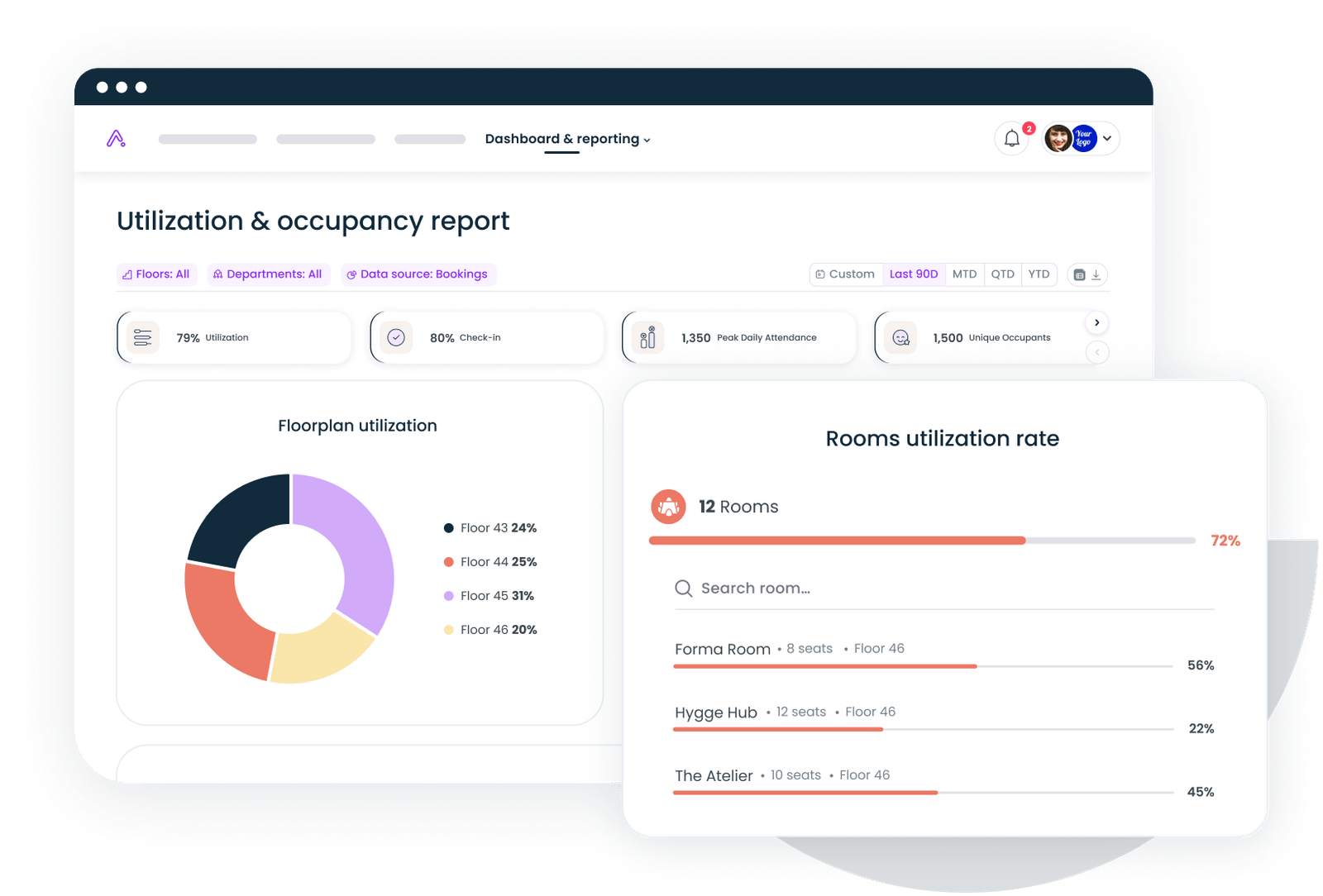
Wellness rooms, meeting rooms, desks; manage them all from one platform with real-time availability and utilization insights.
Learn more
Common mistakes that kill wellness room adoption
Treating it as a nice-to-have afterthought. If the wellness room is a converted closet with a beanbag and a "namaste" poster, employees will read the message loud and clear: this isn't a priority. Invest in it like you'd invest in a client-facing conference room.
No launch plan. You wouldn't ship a product without telling anyone. Walk teams through the space, explain the booking process, and have leadership visibly use it in the first few weeks. If the CEO books a session, it normalizes the behavior faster than any email campaign.
Letting it become a phone booth. Without clear no-work policies, wellness rooms inevitably get co-opted for "quick calls" and "just checking email." Once that norm sets in, it's very hard to reverse. Enforce the boundary early.
Ignoring maintenance. A wellness room with dead plants, an empty diffuser, and stained cushions is worse than no wellness room. Assign someone to check it weekly. It doesn't need to be a full-time job; it needs to be someone's job.
Forgetting about multi-location consistency. If you have offices in multiple cities, the wellness room experience should be roughly equivalent everywhere. Employees at your satellite office shouldn't get a folding chair while headquarters gets a meditation pod. For teams managing multiple locations, standardizing wellness room specs across sites prevents resentment.
Your wellness room launch checklist
Here's the sequence that works, in order:
Week 1-2: Plan
- Survey employees on what they'd use (meditation, movement, quiet time, nursing)
- Identify candidate spaces on your floor plan
- Set a budget (expect $2,000 to $10,000 for a single room, depending on size and finishes)
- Define policies: session length, booking limits, usage rules
Week 3-4: Design and build
- Install soundproofing, dimmable lighting, and fresh paint
- Order furniture and sensory equipment
- Set up the booking system and test it with a small group
- Install door lock and occupancy indicator
Week 5: Soft launch
- Open to a pilot group (one team or floor) for feedback
- Collect initial impressions and adjust layout or policies
- Fix any booking friction before the full rollout
Week 6: Full launch
- Company-wide announcement with photos and booking instructions
- Leadership walkthrough or demo
- Add the room to your workplace experience communications
Ongoing: Measure and iterate
- Monthly utilization review
- Quarterly employee feedback survey
- Refresh supplies and decor seasonally
- Evaluate whether to add capacity or new room types based on data
Making wellness rooms part of your workplace strategy, not a side project
The offices that get the most out of wellness rooms are the ones that treat them as infrastructure, not perks. They're part of how you design space, how you think about employee experience, and how you measure whether your workplace is actually working.
The design ideas in this guide will get you started. The policies will keep the room functional. But the real differentiator is whether you commit to measuring what happens after you open the door. Track the data, listen to employees, and iterate. A wellness room that evolves with your team's needs will outlast any trend.
From wellness rooms to conference rooms to hot desks, Gable gives you booking, utilization data, and employee experience tools in one platform.
Get a demo