.svg)


.svg)
- Vendor onboarding has five phases: legal, access, training, handoff, and check-ins
- Assign one internal owner or the process stalls at every handoff
- Timelines vary wildly by vendor type; cleaning takes days, IT takes weeks
- Missed insurance renewals are the most common (and most expensive) failure mode
- 30/60/90-day reviews catch SLA drift before it becomes a real problem
Workplace vendor onboarding is the operational process of moving a new vendor, whether cleaning, AV, catering, IT, or security, from signed contract to fully functioning on-site partner. It covers five phases: legal and compliance setup, system and building access, training on site-specific standards, operational handoff to internal stakeholders, and structured 30/60/90-day performance reviews.
Why a structured vendor onboarding process matters
Most workplace ops teams have a decent procurement process. The contract gets signed, the PO gets issued, and then... things get fuzzy. The vendor shows up on day one and nobody's sure who's supposed to give them badge access, where the supply closet keys are, or which Slack channel to use for urgent requests.
That gap between "contract signed" and "vendor fully operational" is where money disappears. Manual onboarding costs over $35,000 per supplier when you factor in the back-and-forth emails, duplicated effort, and delayed start dates. Automated, structured onboarding brings that below $2,500.
The risk isn't just financial. 30% of data breaches in 2024 involved a third-party vendor, double the rate from the year before. For workplace ops, that means every vendor with network access, building system credentials, or access to employee data is a potential exposure point. A structured onboarding process isn't bureaucracy. It's risk management.
If you're building out your broader office operations function, vendor onboarding is one of the first processes to formalize. It touches compliance, security, facilities, and finance simultaneously.
Phase 1: Legal and compliance setup
This is the foundation. Nothing else happens until the paperwork is clean.
Master Service Agreement (MSA). If your legal team hasn't already finalized this during procurement, it needs to be fully executed before onboarding begins. The MSA defines scope of work, liability, termination clauses, and data handling obligations. Don't let a vendor start work on a handshake while legal "finalizes the redlines."
Certificate of Insurance (COI). Request the vendor's COI and verify it meets your minimums for general liability, workers' compensation, and (if applicable) professional liability. Log the expiration date somewhere you'll actually check it. More on this in the failure modes section.
W-9 or tax documentation. Accounts payable needs this before they can issue a first payment. Collect it now so you're not chasing it when the first invoice arrives.
SOC 2 review (for technology vendors). Any vendor touching your network, building management system, or employee data should provide evidence of a SOC 2 Type II audit or equivalent security certification. If they can't, escalate to your InfoSec team for a risk assessment before granting access.
NDA and data handling addendum. Cleaning vendors probably don't need one. Your IT managed services provider absolutely does. Match the documentation requirements to the vendor's access level.
For a deeper dive on building out your compliance documentation framework, the compliance management guide covers the broader program structure.
Phase 1 sign-off checklist:
- [ ] MSA fully executed
- [ ] COI received and expiration date logged
- [ ] W-9 or equivalent tax form collected
- [ ] SOC 2 or security attestation reviewed (tech vendors)
- [ ] NDA executed (where applicable)
- [ ] All documents stored in a central, accessible location
Phase 2: System access and building access
This is where onboarding gets physical. Your vendor needs to actually get into the building, access the right rooms, and (in some cases) connect to your network.
Badge access. Work with your security team or building management to provision badges for every vendor employee who'll be on-site. Define the access scope carefully: a cleaning crew needs after-hours access to every floor, but your AV vendor only needs access to conference rooms during business hours. Your workplace security policies should already define vendor access tiers; if they don't, this is a good time to create them.
Building access protocols. Badge access is one thing. Knowing which entrance to use, where to park, where the loading dock is, and how to reach the freight elevator is another. Create a one-page site access guide for each vendor type. It saves you from answering the same questions every Monday morning.
Network access (IT vendors only). If the vendor needs network access, coordinate with IT to provision a segmented VLAN or guest network. Never give a vendor access to your production network. Document the access scope, the credentials issued, and the expected duration.
Scheduling system integration. If your vendor's work is recurring (cleaning, maintenance, catering for weekly events), their schedule needs to live somewhere your team can see it. Sync it with your workplace management platform so you know when vendors are on-site and can coordinate around employee schedules. Gable's office management software keeps desk and room bookings in one place — so when vendors are on-site, your team can coordinate around them in the same calendar view they already use.
Phase 2 sign-off checklist:
- [ ] Badges provisioned with correct access scope
- [ ] Site access guide provided (entrances, parking, loading dock)
- [ ] Network access provisioned on segmented network (IT vendors)
- [ ] Vendor schedule synced to workplace management system
- [ ] Emergency contact info collected for all on-site vendor staff
Phase 3: Training and site-specific standards
A signed contract tells a vendor what to do. Training tells them how you want it done, in your building, with your people, to your standards.
Site-specific safety briefing. Every vendor employee working on-site needs a safety orientation. Cover emergency exits, fire extinguisher locations, AED locations, evacuation procedures, and any site-specific hazards (chemical storage, server rooms, construction zones). This isn't optional; it's an OSHA expectation and a liability shield. Your workplace emergency plan should include a vendor-specific briefing template.
Brand and facility standards. This is where you set expectations that go beyond the contract's scope of work. For a cleaning vendor: which products are approved, what's the restocking protocol for supplies, how should conference rooms look after an evening clean. For a catering vendor: dietary labeling requirements, allergen protocols, setup and breakdown timelines. For AV: naming conventions for conference room systems, firmware update policies, escalation procedures for mid-meeting failures.
Communication protocols. Train the vendor's on-site lead on how your team communicates. Do you use Slack, Teams, email, or a ticketing system? What's the expected response time for routine requests versus urgent ones? Who do they contact for different issue types?
Walkthrough. Schedule a physical walkthrough of every space the vendor will service. Point out the things that aren't in the floor plan: the supply closet that sticks, the conference room AV cabinet that needs a specific key, the kitchen where the water shutoff is behind the refrigerator. Fifteen minutes of walking the space saves hours of confusion later.
Phase 3 sign-off checklist:
- [ ] Safety briefing completed and signed by all vendor staff
- [ ] Brand/facility standards document provided
- [ ] Communication protocols reviewed (channels, response times)
- [ ] Physical walkthrough completed with vendor's on-site lead
- [ ] Vendor confirms understanding of all site-specific requirements

Vendor onboarding touches dozens of compliance requirements. This checklist covers the 25+ items every workplace needs to have documented.
Read the guide
Phase 4: Operational handoff
This is the phase most teams skip, and it's the one that determines whether the vendor relationship actually works day-to-day.
Internal stakeholder introductions. Your cleaning vendor needs to know the facilities coordinator, not just the ops manager who signed the contract. Your AV vendor needs a direct line to the IT help desk. Your catering vendor needs to know the office manager and the EA who books executive lunches. Make these introductions explicitly, with names, roles, and contact info exchanged in both directions.
Single point of contact (both sides). Assign one person on your team as the vendor's primary contact. And get the name of one person on the vendor's side who owns your account. Over 80% of organizations detect supplier risks only after onboarding begins. A clear point of contact on each side means issues surface faster and get resolved before they compound.
Escalation paths. Document what happens when something goes wrong. If the cleaning crew doesn't show up, who does the vendor call? If the AV system fails during a board meeting, what's the 15-minute escalation path? Write it down. Put it in a shared document. Make sure both sides have it.
Communication cadence. Set a recurring check-in for the first 90 days. Weekly for the first month, biweekly after that. These don't need to be long; 15 minutes is enough to surface issues before they become patterns.
Phase 4 sign-off checklist:
- [ ] Internal stakeholders introduced to vendor's on-site lead
- [ ] Single point of contact designated (both sides)
- [ ] Escalation path documented and shared
- [ ] Recurring check-in cadence established
- [ ] Vendor added to relevant communication channels
Phase 5: 30/60/90-day check-ins
Onboarding doesn't end when the vendor starts work. It ends when you've confirmed they can sustain the expected performance level independently.
30-day review: Is the basics working?
Review the first invoice for accuracy. Does it match the contract terms? Are the line items clear? Facilities using structured documentation report 80% fewer invoice disputes because both parties work from the same record. Check that badge access is working correctly, that the vendor is following the agreed schedule, and that no safety or compliance issues have surfaced.
60-day review: Are SLAs being met?
Pull whatever performance data you have. For cleaning: inspection scores, complaint frequency, supply restocking compliance. For IT: ticket response times, resolution rates, uptime metrics. For catering: on-time delivery rate, dietary compliance, waste levels. Compare against the SLAs in the contract. If there's a gap, this is the conversation to have, not month six.
90-day review: Course-correct or confirm.
By now you have enough data to make a judgment. Is this vendor performing at the level you expected? Are there recurring issues that training or process changes could fix? Or is this a fundamental mismatch that needs to be addressed contractually? Document your findings. If the vendor passes the 90-day review, transition from onboarding mode to ongoing vendor management with quarterly reviews.
If you're managing expense tracking across multiple vendors, the 90-day mark is also a good time to validate that actual costs align with budgeted costs.
Phase 5 sign-off checklist:
- [ ] 30-day: First invoice reviewed and approved
- [ ] 30-day: Badge access and schedule compliance confirmed
- [ ] 60-day: SLA performance reviewed against contract terms
- [ ] 60-day: Any issues documented with corrective action plan
- [ ] 90-day: Formal performance assessment completed
- [ ] 90-day: Transition to quarterly review cadence (or corrective action)
Vendor performance is one input. Occupancy, attendance, and space utilization are the others. See how to bring them together.
Learn more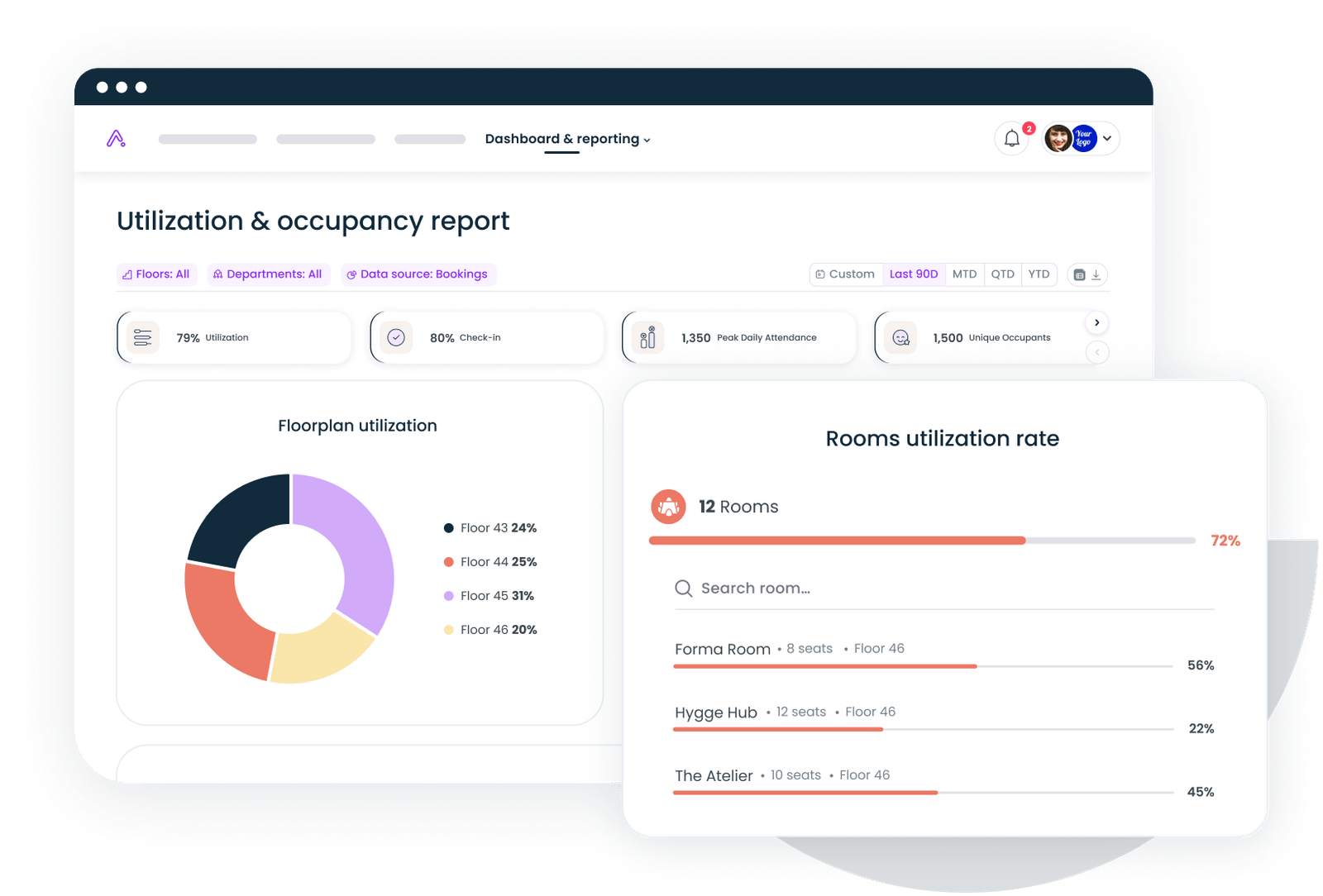
Onboarding timelines by vendor type
Not every vendor needs the same onboarding depth. A cleaning crew and an IT managed services provider have very different risk profiles, access requirements, and ramp-up periods. Here's what realistic timelines look like:
Cleaning and janitorial (5 to 8 business days)
Low complexity. The main bottleneck is badge provisioning and the site walkthrough. Legal is usually straightforward (standard MSA, COI, W-9). Training focuses on product standards, restocking protocols, and after-hours access procedures. Most cleaning vendors can be fully operational within a week.
Catering and food service (7 to 10 business days)
Medium complexity. Adds health department certifications, allergen protocols, and kitchen/pantry access. If you're doing recurring service (daily lunch, weekly events), you'll need to integrate their delivery schedule with your space booking system. The walkthrough is critical: kitchen layout, equipment access, waste disposal, loading dock timing.
AV and conference room technology (10 to 15 business days)
Medium-high complexity. These vendors need network access (segmented), physical access to AV closets and server rooms, and detailed training on your room naming conventions and booking systems. Firmware update policies and remote access protocols add time. The 30-day review is especially important here because AV issues tend to surface only when specific room configurations are tested.
IT managed services and security (15 to 20 business days)
High complexity. Full SOC 2 review, NDA, data handling addendum, network segmentation, and potentially background checks for on-site staff. These vendors touch your most sensitive systems. The legal and compliance phase alone can take a week. Don't rush it. FMs can reduce asset spending by 75% by hiring vendors that are responsive to warranty obligations, but that responsiveness starts with a thorough onboarding that sets clear expectations from day one.
Security and access control (10 to 15 business days)
Medium-high complexity. Similar to IT in terms of background checks and system access, but with additional physical security protocols. These vendors need to understand your badge access control systems, visitor management procedures, and emergency response integration. Coordinate closely with your building management team.
Common failure modes (and how to prevent them)
After running dozens of vendor onboardings, the same problems keep showing up. Here are the ones that cause the most damage.
No internal champion. The contract gets signed by procurement. The vendor shows up and reports to... nobody specific. Without a single internal owner who's accountable for the vendor relationship, issues bounce between departments and nothing gets resolved. Fix: assign an owner before the vendor's first day. Put their name in the onboarding file.
Undefined or vague SLAs. "Keep the office clean" isn't an SLA. "Restrooms inspected and restocked by 10am and 2pm daily, with inspection log submitted weekly" is an SLA. If you can't measure it, you can't manage it. Fix: write measurable SLAs into the contract and review them at the 60-day check-in.
Missed COI renewals. This is the most common compliance failure in vendor management, and it's entirely preventable. A vendor's insurance expires, nobody notices, and six months later there's an incident with no coverage. Fix: log every COI expiration date in a calendar with 60-day and 30-day reminders. Review insurance status at every quarterly check-in.
No communication handoff. The ops manager who onboarded the vendor goes on leave or changes roles. Nobody else knows the vendor's escalation contact, the agreed-upon schedule, or the history of past issues. Fix: store all vendor information in a shared system, not in someone's inbox. If you're managing multiple office locations, this becomes even more critical because vendor relationships can't live in one person's head.
Skipping the walkthrough. It seems minor. It's not. Every building has quirks that don't show up in floor plans or contracts. The vendor who doesn't get a walkthrough will figure things out eventually, but "eventually" means weeks of subpar service and frustrated employees.
Treating all vendors the same. A cleaning vendor and an IT security vendor have fundamentally different risk profiles. Applying the same onboarding depth to both wastes time on the low-risk vendor and under-prepares the high-risk one. Use the tiered timelines above to calibrate your process.
Vendor onboarding checklist template
Here's a consolidated checklist you can adapt for your team. Copy it into your project management tool or shared drive and customize the details for each vendor type.
Pre-onboarding (before vendor's first day)
- [ ] Internal owner assigned
- [ ] MSA fully executed
- [ ] COI received, verified, expiration date logged
- [ ] W-9 or tax documentation collected
- [ ] SOC 2 / security attestation reviewed (if applicable)
- [ ] NDA executed (if applicable)
- [ ] Badge access requested
- [ ] Network access requested (if applicable)
- [ ] Site access guide prepared
- [ ] Internal stakeholders notified
Week 1 (vendor's first days on-site)
- [ ] Badge access confirmed working
- [ ] Safety briefing completed and signed
- [ ] Physical walkthrough completed
- [ ] Brand/facility standards document reviewed
- [ ] Communication channels established
- [ ] Vendor schedule synced to workplace system
- [ ] Internal stakeholder introductions made
- [ ] Escalation path documented and shared
- [ ] Recurring check-in scheduled
30-day review
- [ ] First invoice reviewed for accuracy
- [ ] Badge access and schedule compliance verified
- [ ] Initial performance observations documented
- [ ] Any issues flagged with corrective action
60-day review
- [ ] SLA performance measured against contract
- [ ] Vendor feedback collected from internal stakeholders
- [ ] Corrective action plan (if needed) documented
90-day review
- [ ] Formal performance assessment completed
- [ ] COI renewal date re-confirmed
- [ ] Decision: continue, adjust, or escalate
- [ ] Transition to quarterly review cadence
Pulling it all together
Vendor onboarding isn't glamorous work. It doesn't make the company all-hands deck or the quarterly board update. But it's the operational backbone that determines whether your workplace actually runs smoothly or just looks like it does on paper.
The five-phase framework, legal, access, training, handoff, and check-ins, works because it forces you to be deliberate about each transition point. Most vendor relationships don't fail because of bad vendors. They fail because of incomplete handoffs, undocumented expectations, and the slow drift that happens when nobody's checking performance against the original agreement.
Start with the checklist. Assign an owner. Log the COI expiration dates. And treat the 90-day review as the real end of onboarding, not the vendor's first day on-site.
Desk and room booking, visitor management, attendance data, occupancy analytics — in one platform. The operational backbone for workplace ops.
Get a demo