


.svg)


.svg)
- Non-compliance fines start at $2,500 per violation and climb fast
- Your checklist should cover five categories: safety, accessibility, fire, data privacy, and cybersecurity
- Monthly self-inspections catch problems before auditors do
- Hybrid and multi-location offices face extra compliance complexity in 2026
- Digital tools turn one-time audits into continuous compliance
An office compliance checklist is a structured document that maps every regulatory requirement your workplace must meet, from OSHA safety standards to ADA accessibility to data privacy laws. If you're managing one office or ten, the checklist is how you prove you're not just hoping for the best. It's how you know.
This guide walks through 25+ checklist items across five compliance categories, explains why each matters, and shows you how to build an inspection cadence that actually holds up under scrutiny.
Why an office compliance checklist matters more in 2026
Compliance isn't getting simpler. 48 state-specific HR changes took effect in 2026 alone, covering everything from pay transparency to workplace safety. If you operate across multiple states, you're navigating a patchwork of overlapping rules that didn't exist three years ago.
The financial stakes are real. OSHA's willful violation fines hit $156,259 per violation, and that's per incident, not per inspection. On the data privacy side, CCPA fines reach $7,500 for each intentional violation. A single audit gone wrong can cost more than a year of proactive compliance work.
Beyond fines, there's the operational disruption. Failed inspections trigger follow-up visits, mandatory remediation timelines, and sometimes temporary closures. For hybrid teams that rely on the office for collaboration days, losing access to a floor because of a fire code violation isn't just inconvenient. It breaks the rhythm of how your team works.
The good news: most compliance failures are preventable. They come from gaps in documentation, missed inspection cycles, or simply not knowing which rules apply. A structured checklist eliminates the guesswork. Compliance monitoring is a core pillar of modern workplace management, and treating it as an afterthought is how organizations end up writing large checks to regulators.
Category 1: OSHA And workplace safety (8 checklist items)
OSHA standards apply to nearly every employer in the United States, regardless of size. Here's what your checklist should cover.
1. Hazard communication program. You need a written program, safety data sheets (SDS) for every chemical on-site (yes, even cleaning supplies), and employee training on how to read them.
2. Electrical safety. Inspect cords, outlets, and panels quarterly. No daisy-chained power strips. No frayed cables tucked behind desks.
3. Ergonomic assessments. Document workstation evaluations for employees who request them. This matters even more in hot-desking environments where people don't have a permanent setup.
4. Slip, trip, and fall prevention. Walk your floors monthly. Look for loose carpet edges, wet entryways without mats, and cables crossing walkways. These are the most common office injuries.
5. First aid supplies. Stock and inspect kits quarterly. Check expiration dates on medications and ensure kits are accessible on every occupied floor.
6. Injury and illness recordkeeping. Maintain OSHA 300 logs. Post the annual summary (Form 300A) from February 1 through April 30 every year.
7. Personal protective equipment (PPE). If any role requires PPE (even safety glasses in a server room), document the hazard assessment and provide the equipment at no cost.
8. Emergency action plan. OSHA requires a written plan covering evacuation procedures, reporting procedures, and employee alarm systems. This overlaps with fire safety, which we'll cover next.
For a deeper dive into building a safety culture beyond the checklist, our guide on workplace safety tips covers the behavioral side of keeping people safe.
Category 2: ADA Accessibility and accommodations (5 checklist items)
ADA compliance applies to employers with 15 or more employees, but physical accessibility standards apply to commercial buildings regardless of headcount.
9. Entrance accessibility. At least one building entrance must be wheelchair-accessible, with automatic doors or doors that require no more than 5 pounds of force to open.
10. Accessible routes. Hallways must be at least 36 inches wide. Doorways must clear 32 inches. If your office has been reconfigured for hybrid use (adding phone booths, collaboration pods, or extra furniture), re-measure your routes.
11. Restroom compliance. At least one restroom per floor must meet ADA standards: grab bars, clearance for wheelchair turning radius, accessible sink height.
12. Reasonable accommodation documentation. When an employee requests an accommodation, document the interactive process. Keep records of what was requested, what was discussed, and what was provided. This protects both the employee and the organization.
13. Emergency evacuation for people with disabilities. Your evacuation plan must include procedures for employees who can't use stairs. Assign evacuation buddies, identify areas of refuge, and practice during drills.
Space planning intersects directly with accessibility. If you're redesigning your office layout, our office space planning guide covers how to balance density, collaboration zones, and compliant egress routes.

Your emergency action plan is the backbone of both OSHA and fire safety compliance. Here's how to build one that holds up during an actual inspection.
Read the guide
Category 3: Fire safety and emergency preparedness (5 checklist items)
Fire safety violations are among the most common findings during building inspections. 62% of facilities have at least one life-safety violation during their annual inspection. Most are easy to prevent.
14. Fire alarm and detection systems. Test monthly. Have a licensed contractor perform annual inspections. Keep certificates on file.
15. Sprinkler systems. Visual inspections quarterly, full flow tests annually. Don't stack boxes within 18 inches of sprinkler heads. This is the violation inspectors find most often.
16. Exit routes and signage. All exit paths must be clearly marked, illuminated, and unobstructed. Walk them monthly. It's remarkable how quickly storage creeps into stairwells.
17. Fire extinguishers. Inspect monthly (check the pressure gauge and pin), professional service annually, hydrostatic testing on schedule. Mount them within 75 feet of any point on the floor.
18. Evacuation drills. Conduct at least two per year. Document the date, duration, number of participants, and any issues identified. If you have multiple shifts or anchor days, run drills on different days to cover everyone.
For offices using mass notification systems, integrate your fire alarm triggers with your digital notification platform so remote and in-office employees both receive alerts.
Category 4: Workplace data privacy (5 checklist items)
This is where compliance gets complicated fast, especially for hybrid workplaces that collect occupancy data, badge swipes, and booking patterns.
19. Privacy policy for employee data. Document what data you collect, why you collect it, how long you retain it, and who has access. This applies to badge logs, desk booking records, WiFi connection data, and visitor sign-in information.
20. GDPR compliance (if applicable). If you have employees or offices in the EU, you need a lawful basis for processing employee data, data protection impact assessments for new workplace technology, and a process for handling data subject access requests. GDPR fines reached €2.1 billion in 2023, and many penalties were tied to improper handling of employee data.
21. CCPA/CPRA compliance (if applicable). California employees have the right to know what personal information you collect and to request deletion. You need opt-out mechanisms and a documented process for handling requests within 45 days.
22. Visitor data retention policy. Don't keep visitor sign-in data indefinitely. Define retention periods, automate deletion where possible, and ensure your visitor management system supports compliance. Our guide on visitor data retention walks through the specific policies you need.
23. Employee monitoring disclosure. If you track occupancy through sensors, badge data, or booking systems, employees need to know. Transparency isn't just good practice; in many jurisdictions, it's the law. For a full breakdown, see our piece on desk booking data privacy.
Category 5: Cybersecurity and physical security (5 checklist items)
Office security isn't just cameras and locks anymore. It's the intersection of physical access, network security, and the data flowing between them.
24. Access control systems. Badge access should be role-based, with automatic deactivation for terminated employees. Audit access logs quarterly to catch anomalies. If you're evaluating systems, our guide on badge access control covers what to look for.
25. Visitor management and screening. Every visitor should be logged digitally, matched to a host, and issued a temporary credential. Paper logbooks don't create searchable audit trails, and they don't integrate with your access control system.
26. Network security in shared spaces. If you offer guest WiFi, segment it from your corporate network. In hot-desking environments, ensure workstations lock automatically and don't cache credentials between users.
27. Data breach response plan. Document your incident response procedure: who to notify, within what timeframe, and how to preserve evidence. GDPR requires notification within 72 hours. Most state breach notification laws require notification within 30 to 60 days.
28. Clean desk policy. Sensitive documents left on desks overnight are a compliance risk. In shared or hoteling environments, this is even more critical because the person sitting there tomorrow isn't the person who left the file.
For a comprehensive look at physical and digital security integration, our office security guide covers the full picture.
Gable's [office management software](https://www.gable.to/office-management-software) creates the digital audit trails you need for compliance, from visitor sign-ins to real-time occupancy records.
Learn more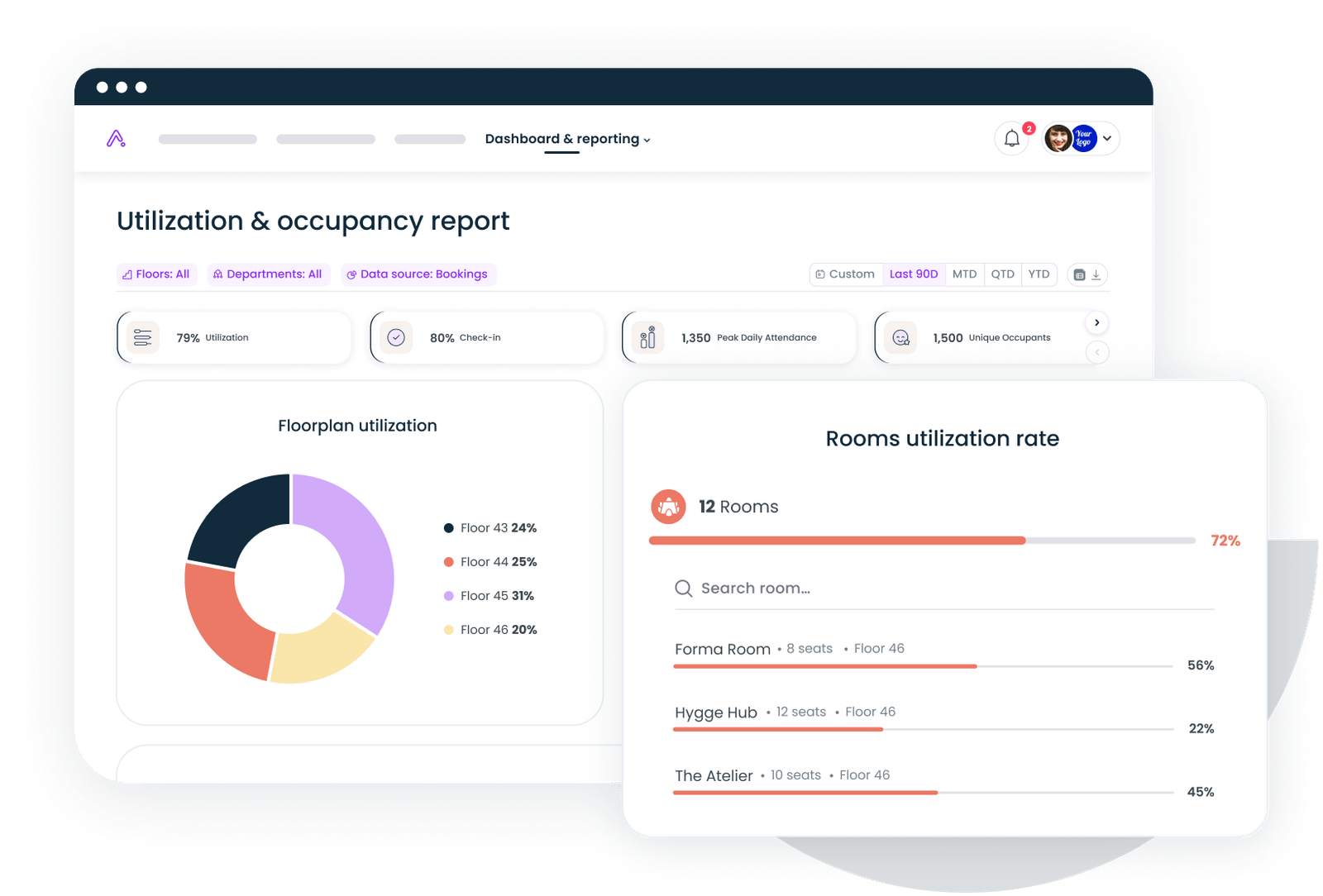
How to conduct a compliance audit (step by step)
Having the checklist is step one. Using it consistently is where most organizations fall short.
Step 1: Assign ownership. Every checklist category needs a named owner. Safety might sit with facilities, data privacy with legal or IT, accessibility with HR. If nobody owns it, nobody does it.
Step 2: Set your inspection cadence. Not everything needs monthly attention. Here's a practical schedule:
- Monthly: Fire extinguisher visual checks, exit route walkthroughs, slip/trip/fall inspections, alarm tests
- Quarterly: Electrical safety, first aid kit inventory, access log audits, ergonomic spot checks
- Annually: Full ADA accessibility review, fire system professional inspection, privacy policy updates, emergency drill evaluation, third-party compliance audit
Step 3: Document everything digitally. Paper checklists get lost. Spreadsheets get stale. Use a system that timestamps inspections, assigns remediation tasks, and creates an audit trail. When an inspector asks for your records, you want to pull them up in seconds, not dig through a filing cabinet.
Step 4: Create remediation timelines. When you find a violation, document it, assign an owner, set a deadline, and track it to completion. The finding itself isn't the problem. Leaving it unresolved is.
Step 5: Review and update quarterly. Regulations change. Your office layout changes. New technology gets deployed. Your checklist should be a living document, not something you created once and forgot about.
Making compliance continuous, not annual
The biggest mistake organizations make is treating compliance as an annual event. You do the audit, fix the findings, file the paperwork, and forget about it until next year. Then next year's audit finds the same problems.
Continuous compliance means building checks into your daily operations. Occupancy data from your booking system can flag when a floor exceeds fire code capacity. Visitor management logs can auto-archive after your defined retention period. Access control integrations can automatically revoke credentials when HR processes a termination.
This is where workplace technology earns its keep. The right workplace analytics platform doesn't just tell you how many desks were used last Tuesday. It tells you whether your occupancy patterns create compliance risks you haven't noticed yet.
For multi-location companies, the challenge multiplies. Each office may fall under different local fire codes, different state privacy laws, and different ADA enforcement priorities. A centralized system that applies consistent standards across locations while flagging jurisdiction-specific requirements is the difference between manageable compliance and constant firefighting.
The bottom line on office compliance
Compliance isn't glamorous work. Nobody got promoted for having a well-organized OSHA 300 log. But the absence of compliance creates problems that are very visible: fines, lawsuits, failed inspections, and the operational chaos that follows.
The 25+ items in this checklist cover the five categories that matter most for office environments in 2026: workplace safety, accessibility, fire preparedness, data privacy, and security. Start with the items that carry the highest penalties (OSHA willful violations and GDPR fines top the list), then build out your cadence for everything else.
The organizations that do this well aren't the ones with the biggest compliance teams. They're the ones that built compliance into their operating rhythm, so it happens automatically instead of heroically.
From visitor audit trails to real-time occupancy tracking, Gable gives you the data infrastructure that makes continuous compliance possible.
Get a demo


