.svg)


.svg)
The regulatory landscape has never been more complex. From the General Data Protection Regulation (GDPR), which governs how you handle European customer data, to OSHA requirements for workplace safety, organizations face an ever-growing web of legal regulations and industry standards. And the consequences of getting compliance wrong are steep. According to IBM's 2024 Cost of a Data Breach Report, the average data breach now costs organizations $4.88 million, a 10% increase from the previous year.
Compliance management is the systematic process organizations use to ensure compliance with applicable regulations, legal requirements, and internal policies. But effective compliance management goes beyond simply avoiding fines. It's about building trust with customers, protecting sensitive data, and creating a workplace where employees and visitors feel secure.
This guide covers everything you need to know about compliance management, from understanding key regulations to implementing a compliance management system that actually works for your organization.
What is compliance management?
Compliance management is the ongoing process of monitoring, assessing, and tracking business operations to ensure adherence to regulatory requirements, industry standards, and internal policies. It encompasses everything from data security protocols to workplace safety measures to how you welcome and track visitors at your facilities.
A compliance management program typically includes risk assessments to identify potential compliance risks, policies and procedures that outline compliance responsibilities, compliance training for employees, and ongoing compliance monitoring to catch and address compliance issues before they become violations.
At its core, compliance management plays a critical role in protecting organizations from financial penalties while maintaining the trust of customers, employees, and partners. When implemented effectively, an effective compliance management system becomes a competitive advantage rather than a burden.
Why compliance management is important
Understanding why compliance management matters helps organizations prioritize the necessary investments in people, processes, and technology. The stakes are high across multiple dimensions.
Financial penalties are substantial and growing
Regulatory bodies have demonstrated increasing willingness to impose significant fines for non-compliance. Under the California Consumer Privacy Act (CCPA), businesses face penalties of up to $7,500 per violation. OSHA can assess fines up to $165,514 for willful or repeated violations as of 2025. And GDPR fines have reached record levels, with cumulative penalties exceeding €5.88 billion since enforcement began in 2018.
These aren't just theoretical risks. Real organizations face real consequences daily for compliance failures, from small businesses hit with OSHA citations to tech giants paying hundreds of millions for data protection violations.
Data breaches devastate organizations
Beyond regulatory penalties, the cost of security breaches continues to climb. Healthcare organizations now face average breach costs of $9.77 million, the highest of any industry. But the financial impact extends beyond immediate costs: organizations that suffer breaches lose customer trust, face reputational damage, and often see business disruption lasting more than 100 days.
The connection between compliance and breach prevention is clear. Organizations with strong compliance programs implement access control systems, employee training, and monitoring and auditing processes that help prevent breaches in the first place. When breaches do occur, organizations that detect them internally rather than learning about them from attackers save nearly $1 million in costs.
Compliance builds competitive advantage
While compliance requirements may feel burdensome, meeting high standards signals trustworthiness to customers, partners, and investors. Companies with demonstrable compliance programs often win contracts, particularly in regulated industries such as healthcare and financial services. Strong compliance also supports employee retention, as workers increasingly want to be part of organizations that operate ethically and protect stakeholder interests.

A clear workplace visitor policy helps you meet regulatory requirements while creating a positive experience for guests. Learn how to build one that works.
Read the guide
Key compliance standards every workplace should know
The specific regulatory requirements your organization faces depend on your industry, location, and the type of data you handle. However, several key frameworks apply broadly to workplaces.
Health Insurance Portability and Accountability Act (HIPAA)
HIPAA governs how healthcare providers and their business associates handle protected health information (PHI). The regulation includes requirements for how organizations store, process, and transmit electronic health records and other sensitive data.
HIPAA compliance requires implementing administrative, physical, and technical safeguards. Physical safeguards include controlling who can access facilities where PHI is stored or processed, making visitor management and badge access control systems particularly relevant. Violations can result in fines ranging from $100 to $50,000 per violation, with an annual maximum of $1.5 million.
General Data Protection Regulation (GDPR)
The GDPR applies to any organization handling personal data of EU citizens, regardless of where the organization is located. It requires explicit consent for data collection, gives individuals rights to access and delete their data, and mandates notification of data breaches within 72 hours.
For workplace teams, GDPR affects how you collect and store visitor information, employee data, and any customer information processed at your facilities. Organizations must implement appropriate data protection laws, ensure data security standards, and maintain clear audit trails of data processing activities.
California Consumer Privacy Act (CCPA)
Similar to GDPR but focused on California residents, CCPA gives consumers the right to know how their data is used, to request deletion, and to opt out of data sales. Any business that collects personal data from California residents must comply, regardless of its location.
Occupational Safety and Health Administration (OSHA) regulations
OSHA sets and enforces workplace safety standards affecting virtually all employers. Requirements cover everything from hazard communication to emergency procedures to maintaining safe working environments. The 10 most cited OSHA violations in 2024 included fall protection, hazard communication, and respiratory protection failures.
Workplace compliance with OSHA involves conducting risk assessments, providing employee compliance training, maintaining incident logs, and ensuring facilities meet safety requirements. Effective compliance management tools help track these requirements and document compliance efforts.
SOC 2
While not a regulation, SOC 2 certification has become an industry standard for organizations handling customer data. The framework evaluates controls around five trust principles: security, availability, processing integrity, confidentiality, and privacy.
Achieving SOC 2 compliance requires documented internal controls, regular internal audits, and maintaining evidence of compliance. For many organizations, visitor logs and facility access records form part of their SOC 2 documentation.
Elements of an effective compliance management system
Building an effective compliance management program requires several key elements working together. Organizations that treat compliance as a checklist exercise often fail; those that build compliance into their operations and culture succeed.
Governance and leadership commitment
Compliance starts at the top. Whether through a dedicated chief compliance officer or distributed compliance responsibilities, someone must own the compliance program and have the authority to enforce compliance policies. Leadership commitment signals to the entire organization that compliance matters.
A compliance team should have clear reporting lines, adequate resources, and visibility into all areas of the business. They need authority to investigate compliance issues and implement corrective actions without organizational barriers.
Comprehensive risk assessments
You cannot manage risks you don't understand. Regular risk assessments help identify potential compliance risks across regulatory compliance, operational compliance, and security standards. Assessments should evaluate both the likelihood and potential impact of various compliance failures.
Risk assessments inform where to focus compliance efforts. Not all compliance risks are equal; resources should focus on the areas with the greatest potential impact. Assessments should be updated whenever regulations change, business processes evolve, or emerging risks appear.
Clear compliance policies and procedures
Written compliance policies translate regulatory requirements into specific, actionable guidance for employees. Procedures should be clear enough that any employee can follow them and detailed enough to ensure consistent compliance across the organization.
Policies should cover data handling, visitor and access management, incident reporting, and all applicable regulations affecting your business. They should be accessible to all employees and reviewed regularly to ensure they remain current.
Ongoing training and communication
Even the best policies fail without employee training. Compliance training should cover not just what employees must do, but why compliance matters. Regular training keeps compliance top of mind and addresses emerging compliance issues as they develop.
Training should be role-appropriate. A receptionist managing visitor check-ins needs different compliance knowledge than an IT administrator managing data security. Effective training programs adapt content to different audiences while ensuring everyone understands their compliance responsibilities.
Monitoring, auditing, and continuous improvement
Compliance requires ongoing compliance monitoring and regular internal audits to verify that policies are followed and controls are working. Manual compliance processes often fail to catch issues in time; compliance management software can provide continuous monitoring and real-time alerts when problems arise.
Audit trails document compliance activities and provide evidence during regulatory examinations. Organizations should maintain records of training completion, policy acknowledgments, visitor logs, access control events, and any compliance incidents.
When monitoring reveals compliance issues, organizations must address compliance issues promptly and adjust controls to prevent recurrence. This continuous monitoring approach treats compliance as an ongoing process rather than a one-time achievement.
Gable Visitor Management helps you track visitors, maintain compliance logs, and ensure every guest meets your security requirements, all from a single platform.
Learn more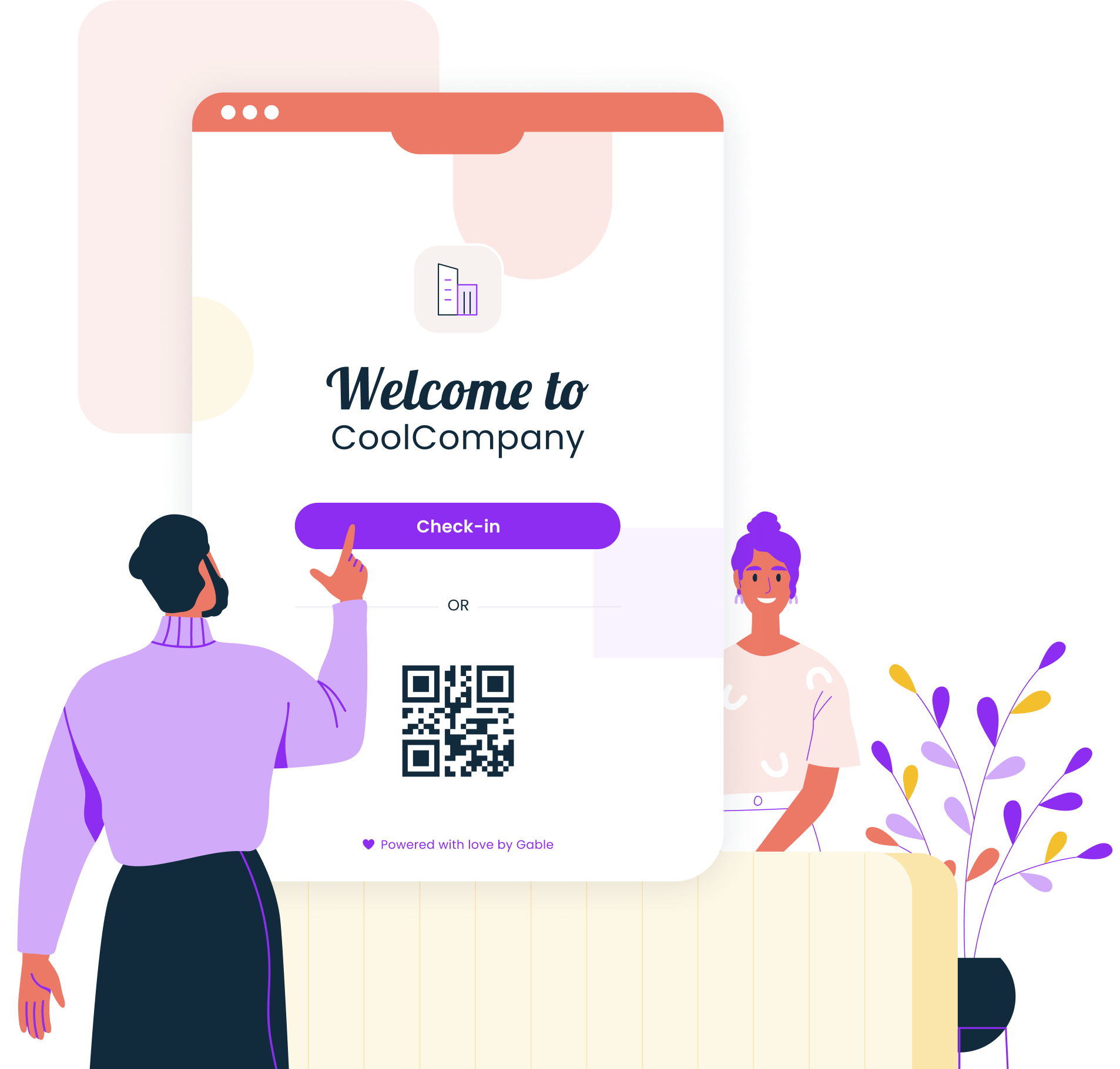
How visitor management supports compliance
For organizations managing physical facilities, visitor management is a critical but often overlooked element of compliance. Who enters your building, when, and why matters for security standards, regulatory compliance, and operational efficiency.
Modern visitor management systems replace paper logs with digital solutions that capture visitor information, verify identities, manage access permissions, and maintain comprehensive audit trails. This matters for compliance in several ways.
Maintaining accurate access records
Regulations from HIPAA to SOC 2 require organizations to track who accesses facilities where sensitive data or operations reside. Paper visitor logs are easily lost, illegible, or incomplete. Digital visitor management provides reliable, searchable records that satisfy audit requirements and support compliance workflows.
These records become invaluable during compliance audits or incident investigations. Rather than sorting through paper logs, compliance teams can quickly pull visitor records by date, host, or visitor type.
Enforcing access policies consistently
Compliance requires consistent application of policies. Visitor management systems ensure every visitor follows the same check-in process, signs required documents, and only accesses areas appropriate to their visit purpose.
For organizations handling sensitive information, access control systems integrated with visitor management can automatically provision appropriate access levels based on visitor type. Contractors might receive different access than clients; visitors in manufacturing areas might need different safety acknowledgments than office visitors.
Supporting emergency preparedness
Workplace security includes knowing who is in your building during emergencies. California's SB 553, for example, requires employers to maintain workplace violence prevention plans that include emergency notification capabilities. Modern visitor management provides real-time visibility into who is on-site and enables emergency notifications to all affected individuals.
Streamlining compliance documentation
The documentation burden of compliance is significant. Organizations must prove they followed proper procedures, collected required information, and maintained appropriate records. Visitor management systems automatically generate the compliance data organizations need, reducing manual effort while improving accuracy.
How to implement compliance management effectively
Building an effective compliance management process requires thoughtful planning and sustained commitment. The following approach helps organizations move from reactive compliance to proactive risk management.
Step 1: Assess your compliance landscape
Start by identifying all applicable regulations and standards affecting your organization. Consider federal and state laws, industry-specific requirements, and any contractual compliance obligations from customers or partners.
Map these requirements to specific business processes. Which departments handle regulated data? Which facilities require controlled access? Where do compliance responsibilities live?
Step 2: Conduct thorough risk assessments
Evaluate your current compliance posture against requirements. Where are the gaps? What compliance controls exist, and are they effective? What potential compliance risks could result in violations, breaches, or harm?
Prioritize risks by potential impact and likelihood. You cannot address everything at once, so focus on the most significant exposures first.
Step 3: Build your compliance framework
Develop or update compliance policies to address identified requirements and risks. Assign clear compliance responsibilities and ensure adequate resources for compliance activities. Establish governance structures, including reporting relationships and escalation procedures.
Step 4: Implement compliance controls
Deploy the technical, administrative, and physical controls needed to meet compliance requirements. This might include access control systems, data security measures, safety equipment, or compliance management tools.
Step 5: Train employees
Roll out compliance training appropriate to each role. Ensure employees understand both what they must do and why it matters. Document training completion and establish refresher requirements.
Step 6: Monitor and improve continuously
Establish ongoing compliance monitoring to catch issues early. Conduct regular internal audits to verify control effectiveness. When you identify issues, address them promptly and adjust controls to prevent recurrence.
Compliance requirements evolve constantly. Build processes to track regulatory changes and assess their impact on your compliance program. Treating compliance as an ongoing process rather than a destination helps organizations stay ahead of changing requirements.
Learn how Gable Visitor Management can help your organization meet compliance requirements while streamlining operations for office and visitor management.
Request a demo