.svg)


.svg)
- Recharge days are scheduled, company-wide, and stigma-free; mental health days aren't
- Collective time off prevents the "return to an overflowing inbox" problem
- Pair recharge days with no-meeting norms and async workflows or they won't stick
- Measure success through engagement and retention, not that quarter's output
- Every dollar spent on employee wellness returns roughly six dollars
A recharge days policy is a structured, company-wide approach to recovery that gives every employee the same scheduled day (or days) off. Unlike individual mental health days, which are reactive, stigmatized, and coded as sick leave, recharge days are proactive, collective, and designed to prevent burnout before it takes hold. The distinction matters more than most workplace leaders realize, and the companies getting it right are seeing measurable gains in engagement and retention.
The burnout numbers are too big to ignore
Let's start with the scale of the problem. Nearly 72% of U.S. employees face moderate to very high stress at work, with Gen Z now the most burned-out generation at 74%. That's not a wellness trend. It's a structural failure.
Meanwhile, 68% of employees struggle with work pace and volume, according to Microsoft's Work Trend Index. Communication alone consumes 60% of the average workday, leaving only 40% for actual creative work. Employees face roughly 275 interruptions daily. One every two minutes.
The traditional response has been to offer mental health days: individual, unscheduled, taken when someone is already at the breaking point. But that model has a fundamental design flaw. It puts the burden on the person who's struggling to raise their hand, explain their absence, and return to a pile of work that accumulated while they were gone. Most people just don't take them. Or they take them and lie about why.
Companies serious about employee experience strategy are moving past this reactive model entirely.
What makes recharge days different from mental health days
The distinction isn't semantic. It's structural.
Mental health days are individual. You take one when you're already burned out, often with a vague excuse about a "doctor's appointment." Your inbox fills up. Your teammates cover for you without context. You come back to more stress than you left.
Recharge days flip every part of that equation. They're scheduled in advance, so there's no stigma in taking them. They're collective, so nobody's inbox fills up because everyone's off. And they're proactive, designed to prevent burnout rather than treat it after the fact.
Think of it this way: a mental health day is an emergency room visit. A recharge day is a regular checkup. Both have value, but only one keeps you from needing the other.
Companies like IHG now offer three paid recharge days annually, while ServiceNow provides six additional wellbeing days. AMD runs company-wide recharge days to ensure collective unplugging. These aren't perks. They're infrastructure.
The shift matters for employee engagement strategies because it removes the single biggest barrier to recovery: guilt.
Three pillars of an effective recharge days policy
Not all recharge day programs work equally well. The ones that deliver results share three characteristics.
Pillar 1: Collective over individual. When the whole company takes the same day off, nobody returns to 200 unread emails. Nobody feels guilty for being unavailable. Nobody's covering for someone else while quietly resenting it. Company-wide days off eliminate the coordination tax that makes individual wellness days backfire.
This is the hardest pill for some leaders to swallow. Shutting down operations for a day feels expensive. But the alternative, a workforce running at 60% capacity because everyone's chronically depleted, costs more. You just can't see it on a single line item.
Pillar 2: Calendar hygiene as the backbone. A recharge day surrounded by back-to-back meetings on either side isn't recovery. It's a speed bump. Effective policies pair recharge days with no-meeting zones, async communication norms, and clear expectations about disconnecting.
Research backs this up. Reducing meetings by 40% led to 71% higher productivity and 75% lower stress in an MIT Sloan study. When organizations moved to three meeting-free days per week, cooperation rose 55% and micromanagement dropped 68%. Recharge days work best when they're part of a broader hybrid work model that respects people's time and attention every day, not just on designated wellness days.
Pillar 3: Outcomes-focused measurement. If you evaluate recharge days by looking at that quarter's output, you'll kill the program before it has a chance to work. Recovery compounds over time. The right metrics are engagement scores, voluntary turnover rates, sick day usage, and pulse survey sentiment. Not whether the team shipped one fewer feature in Q3.

Recharge days are one piece of a broader experience framework. Here's how to design the full system.
Read the guide
How to design and implement a recharge days policy
Implementation is where most programs fail. The concept is easy to endorse; the logistics are where things get messy.
Step 1: Choose your model. Options range from quarterly company-wide days off (four per year) to monthly half-days (Friday afternoons) to annual recharge weeks. There's no single right answer, but the collective element is non-negotiable. If it's optional, it won't work. People will skip it out of fear, ambition, or habit.
Step 2: Synchronize calendars and communication. Everyone needs to see the recharge day on their calendar, with auto-decline enabled for meeting requests. Teams need shared visibility into who's off and when coverage resumes. This is where coordination tools earn their keep. Gable's workplace platform lets teams block recharge days across the organization, sync calendars, and set team-wide notifications so there's no ambiguity about expectations.
Step 3: Build async fallbacks. Before each recharge day, teams should post status updates, document open items in shared docs, and set auto-responders. The goal is zero synchronous communication during the recharge period. Not "minimal." Zero.
Step 4: Leadership goes first. If the CEO sends a Slack message on a recharge day, the policy is dead. Visible participation from senior leaders isn't optional. It's the single strongest signal that the company means it.
Step 5: Communicate the "why" clearly. Don't frame recharge days as a perk or a reward. Frame them as a performance strategy. Recovery enables sustained output. Rest isn't the opposite of productivity; it's a prerequisite for it.
For teams navigating workplace change management, the communication piece is especially critical. People need to understand that taking the day off isn't just allowed; it's expected.
Why you shouldn't measure recharge days by short-term productivity
This is the counterargument you'll hear from every skeptic in the C-suite: "We can't afford to lose a day of productivity."
Here's the reframe. You're not losing a day. You're investing one day to get better performance across the other 250.
Every dollar spent on wellness returns $3.27 in reduced medical costs and $2.73 in lower absenteeism, according to research cited by Harvard Business Review. That's a six-to-one return. And that calculation doesn't even include the harder-to-quantify gains in creativity, collaboration quality, and institutional knowledge retained when people don't quit.
The metrics that actually matter for a recharge days policy:
- Employee engagement scores (quarterly pulse surveys, not annual reviews)
- Voluntary turnover rate (track the 6-12 months after implementation)
- Unplanned sick days (a leading indicator of burnout)
- Participation rates (if people aren't taking recharge days, something's wrong with the culture, not the policy)
- Return-to-work sentiment (a simple "How rested do you feel?" question tells you more than any productivity dashboard)
If you're building a measurement framework, the principles in how to measure productivity apply here, with one critical adjustment: you're measuring recovery's downstream effects, not same-day output.
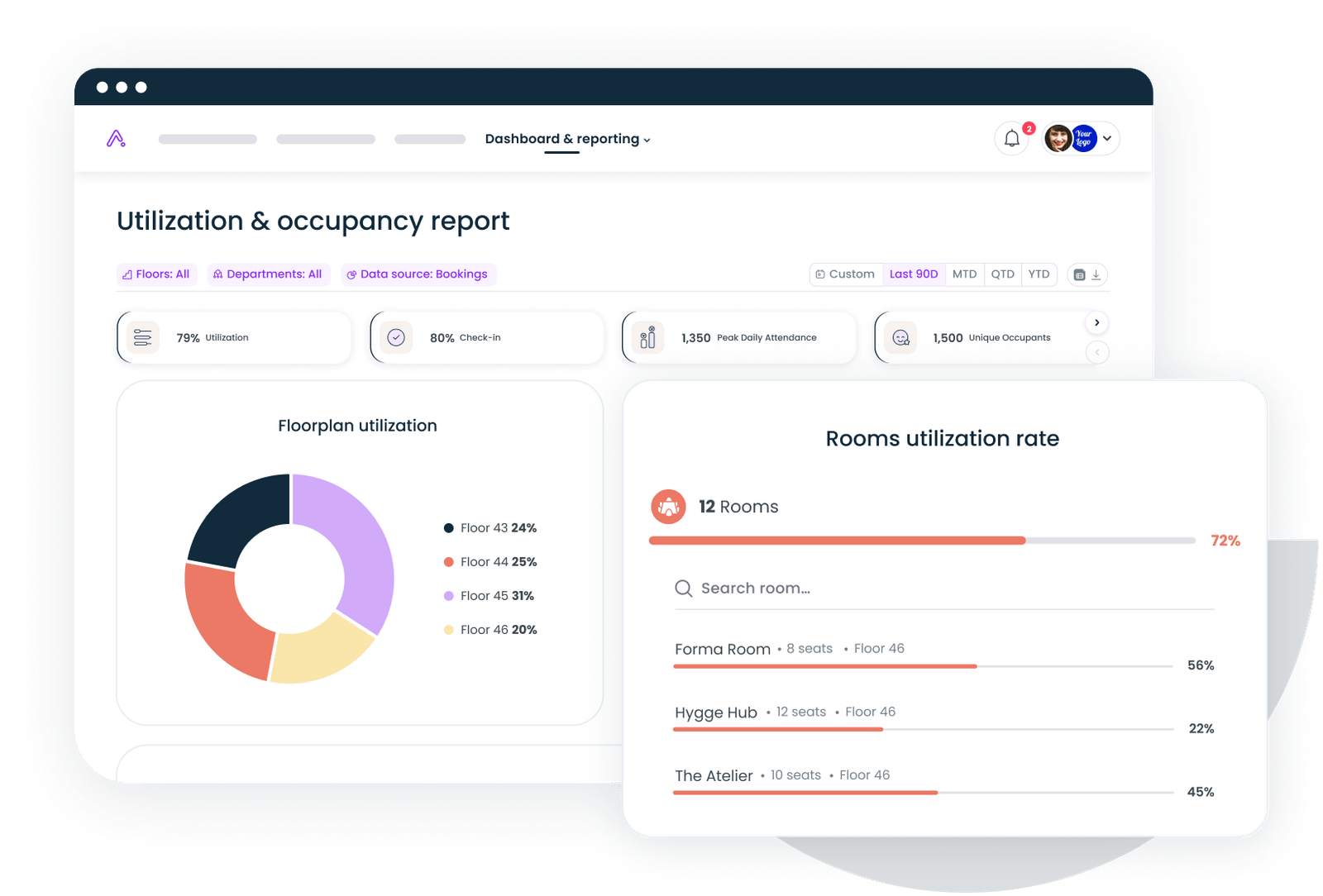
Track engagement, space usage, and team coordination patterns from a single dashboard.
Learn more
No-meeting days as force multipliers
Recharge days don't exist in a vacuum. They work best as the anchor of a broader recovery-first calendar strategy.
No-meeting days are the most powerful complement. When organizations designate one to three days per week as meeting-free, the effects are dramatic. The MIT Sloan research found that three no-meeting days per week produced 73% productivity gains and an 88% increase in perceived autonomy. Those aren't marginal improvements. They're transformational.
The logic is straightforward. Meetings fragment attention. Fragmented attention creates the feeling of being busy without being productive. That feeling, sustained over months, is what we call burnout. Recharge days treat the symptom. No-meeting days treat the cause.
Practical implementation looks like this: designate Tuesday and Thursday as meeting days. Monday, Wednesday, and Friday are for focused work, async collaboration, and (on designated dates) full recharge. Auto-decline any meeting request that lands on a no-meeting day. No exceptions for "quick syncs" or "just 15 minutes."
This pairs naturally with commuter benefits in hybrid work environments, where employees can align their in-office days with meeting days and protect remote days for deep work and recovery.
Building a recovery-first culture beyond recharge days
A recharge days policy is a tool, not a culture. The tool works only if the culture supports it.
Recovery-first culture means leadership consistently communicates that rest enables performance. It means managers don't reward the person who answers emails at midnight. It means promotion decisions account for sustainable output, not heroic sprints followed by quiet burnout.
Some practical elements of this culture:
Wellness infrastructure. Recharge days should connect to your broader benefits ecosystem: EAPs, fitness stipends, mental health resources, wellness room design. Isolated interventions don't compound. Integrated ones do.
Cross-functional alignment. HR can't own this alone. Workplace operations, IT (for calendar tooling and notification management), and department leads all need to be aligned. The policy needs teeth, which means someone has to enforce the no-communication expectation.
Flexibility within structure. Customer-facing teams may need to stagger recharge days rather than take them simultaneously. That's fine. The principle (collective, scheduled, proactive) stays the same even if the specific dates vary by department. Communicate with clients in advance, set auto-responders, and ensure emergency coverage is explicit.
Regular review. Run a retrospective after each recharge day. What worked? Did people actually unplug? Did the async fallbacks hold? Adjust the model quarterly based on real feedback, not assumptions.
The real risk isn't taking recharge days; it's not taking them
Here's the position I'll stake out clearly: the companies that don't adopt some version of a recharge days policy in the next two years will pay for it in turnover, disengagement, and declining output. The burnout numbers aren't trending in a direction that individual coping strategies can fix.
The counterargument, that businesses can't afford downtime, assumes that burned-out employees working through exhaustion are actually productive. They're not. They're present. There's a difference.
Collective, scheduled, outcomes-focused recovery isn't a soft benefit. It's a hard-nosed retention and performance strategy disguised as a day off. The companies figuring this out are building workplace experiences that attract and keep the people everyone else is losing.
The math isn't complicated. One day of collective rest, properly supported by calendar hygiene and async norms, returns weeks of sustained, higher-quality work. The only question is whether you'll design the policy intentionally or wait until your best people design their own version by quitting.
From calendar blocking to team coordination, get the tools that make wellness policies actually work.
Get a demo