.svg)


.svg)
- Office capex covers anything that extends an asset's life or adds new capability
- Three common misclassifications waste tax deductions or trigger audits
- Fit-out costs average $149/sqft in the Americas; plan by category, not lump sum
- Lease incentives can replace capex dollars if you negotiate before signing
- Occupancy data turns capex requests from guesses into defensible business cases
Office capex is every dollar you spend on physical workplace assets that last longer than a year: build-outs, furniture, AV systems, security infrastructure, and smart-building technology. It matters because it hits your balance sheet, not your P&L, which means your CFO evaluates it differently than operating expenses. Get the categorization wrong and you'll either overstate earnings or leave tax deductions on the table.
Capex vs. opex: The distinction that trips up workplace teams
The IRS draws a clear line. If an expense improves an asset beyond its original condition, adapts it to a new use, or restores it to like-new condition, it's capex. Everything else, routine maintenance, cleaning, minor repairs, is opex. The formal framework is the BAR test (Betterment, Adaptation, Restoration), and it's the lens your tax team will use to evaluate every line item you submit.
IRS Publication 535 also provides a de minimis safe harbor: expenses under $2,500 per invoice can be expensed immediately, regardless of whether they'd otherwise qualify as capex. That's useful for small purchases like individual monitors or desk lamps. But it doesn't help with the three misclassifications that actually cause problems.
Misclassification #1: Treating tenant improvement allowance as company-owned capex. When a landlord funds your build-out through a TIA, those dollars aren't your capital expenditure. Under ASC 842, TIA reduces your right-of-use asset. Booking it as your own capex inflates your asset base and distorts depreciation schedules. If you're navigating TIA negotiations, get your accounting team involved early.
Misclassification #2: Forgetting to capitalize soft costs. Design fees, permit costs, project management, and commissioning are all capitalizable when they're directly tied to a capex project. Most workplace teams remember to capitalize the furniture but expense the architect. That's a missed deduction spread over the asset's useful life.
Misclassification #3: Using the wrong depreciation period for leasehold improvements. Leasehold improvements get depreciated over the shorter of the lease term or the improvement's useful life. Not the 39-year MACRS building class. If your lease has 7 years left and you install new flooring, you depreciate over 7 years. Getting this wrong delays your deductions by decades.
The 5 categories of office capex (with 2026 cost ranges)
Lumping all capex into one budget line is how you lose the CFO's attention. Break it into categories with defensible ranges, and suddenly you're speaking finance's language.
Category 1: Fit-out and build-out
This is the big one. Wall construction, partitions, flooring, ceilings, MEP (mechanical, electrical, plumbing) work, and interior finishes. Cushman & Wakefield's 2026 data puts the Americas average at $149 per square foot, but that's a blended number. A basic refresh in a secondary market might run $90/sqft. A Class A build-out in Manhattan or San Francisco can exceed $295/sqft.
If you're planning a full office reorganization, fit-out will likely represent 50 to 60% of your total capex budget.
Category 2: FF&E (furniture, fixtures, and equipment)
Workstations, conference tables, task chairs, built-in cabinetry, and lighting fixtures. Individual workstation setups typically run $1,500 to $3,000 per seat. Conference room furniture ranges from $2,500 to $8,000 per room depending on size and finish level. Ergonomic chairs alone can be $800 to $1,200 each at commercial grade.
The key question: do you own it or lease it? Owned furniture is capex, depreciated over 5 to 7 years. Month-to-month leased furniture is opex. That distinction matters for your cost per desk calculations.
Category 3: AV And IT infrastructure
Structured cabling, network switches, video conferencing systems, digital signage, and building automation controls. Budget $10 to $50 per square foot depending on how much smart-building integration you're doing. A basic conference room AV setup runs $15,000 to $40,000. Enterprise-grade video walls and immersive collaboration rooms can push past $100,000.
Category 4: Security systems
Access control hardware, camera infrastructure, alarm systems, and visitor management kiosks. Expect $5 to $20 per square foot. Badge readers run $1,500 to $3,000 per door. Camera systems vary wildly based on coverage requirements, but a typical 20,000 sqft office might spend $25,000 to $60,000 on a complete security build-out.
Category 5: Smart-building sensors and controls
Occupancy sensors, HVAC automation, lighting controls, air quality monitors, and energy management systems. This category barely existed five years ago. Now it runs $8 to $30 per square foot and is often the hardest line item to defend because the ROI is indirect.
The argument that works: sensors generate the utilization data that prevents you from over-investing in every other category. If you know that 40% of your desks sit empty on any given day, you can right-size your next fit-out instead of building for peak theoretical headcount. Gable's office management software turns booking and occupancy data into the utilization benchmarks that make this case concrete, showing exactly which spaces earn their keep and which don't.
Soft costs (design, permitting, project management, testing) typically add 10 to 15% on top of hard costs across all five categories. Capitalize them.

TIA can offset a significant portion of your fit-out capex. Here's how to negotiate the right amount before you sign.
Read the guide
Per-headcount capex benchmarks by company size
Cost-per-square-foot is how contractors think. Cost-per-employee is how your CFO thinks. Bridge the gap.
JLL's global fit-out data puts medium-quality corporate office fit-out at roughly $205 per square foot globally. Multiply that by your square feet per employee, and you get a per-headcount number you can benchmark against peers.
Here's how the math works at different scales, assuming 150 to 200 usable square feet per employee (the range most hybrid offices target):
Early-stage companies (under 100 employees): $8,000 to $15,000 per employee. Higher per-head costs because you're building from scratch, often in a raw or second-generation space. You're buying everything at once.
Mid-market (100 to 500 employees): $5,000 to $9,000 per employee. You've got some existing infrastructure. Capex is more targeted: refreshing a floor, adding collaboration zones, upgrading AV.
Enterprise (500+ employees): $3,500 to $7,000 per employee. Scale advantages on procurement. More of your capex goes to refresh cycles and technology upgrades rather than net-new build-out.
A concrete example: a 200-person company leasing 30,000 square feet at $149/sqft fit-out cost spends roughly $4.47 million, or about $22,350 per employee. That's on the high end, which tells you either the space is overbuilt for the headcount or the market is expensive. Knowing your office occupancy rate helps you determine which.
These benchmarks assume you're building for actual occupancy, not theoretical headcount. If your hybrid policy means only 60% of employees are in on any given day, you should be sizing (and capitalizing) for 60% of headcount, not 100%.
The two capex planning cycles you need to manage
Most companies run one annual budget cycle. Office capex requires two.
Cycle 1: The annual budget (Q3 to Q4 planning for next fiscal year). This covers predictable capex: furniture replacement schedules, technology refresh cycles, minor renovations. Build a rolling three-year forecast and update it annually. Include aging schedules for major assets so you can predict when HVAC systems, flooring, or AV equipment will need replacement rather than getting surprised.
Set approval thresholds by dollar amount. Anything under $25,000 might need only a VP sign-off. $25,000 to $100,000 goes to the CFO. Over $100,000 hits the board or executive committee. These thresholds vary by company, but having them prevents bottlenecks.
Cycle 2: The lease-renewal trigger (18 to 24 months before lease expiration). This is where the big capex decisions happen. Are you renewing and refreshing? Relocating and building out from scratch? Consolidating two offices into one? Each scenario has a completely different capex profile.
Start this cycle early. If you wait until 6 months before lease expiration, you've lost your negotiating leverage on TIA and you'll be rushing procurement, which means paying premium prices. Your CRE strategy should map lease expirations to capex forecasts at least two years out.
When to ask for higher TIA instead of capex budget
Here's a question most workplace leaders don't ask often enough: should this come from our capex budget, or should the landlord pay for it?
Tenant improvement allowances typically range from $15 to $65 per square foot depending on market, lease term, and tenant creditworthiness. In competitive markets where landlords are fighting for tenants, TIA can go higher. The trade-off is usually a higher base rent spread over the lease term.
When TIA makes more sense than capex:
You're cash-constrained. TIA preserves your cash for revenue-generating investments. Yes, you'll pay more in rent over time, but the time value of that cash may be worth it.
Your lease term is short. If you're signing a 3-year lease, spending $500,000 of your own capex on a build-out you'll walk away from is painful. Better to negotiate TIA and let the landlord absorb the risk.
The improvements are standard. Landlords are more willing to fund generic improvements (flooring, lighting, HVAC) that benefit the next tenant. Highly specialized build-outs (recording studios, lab space) are harder to get funded through TIA.
When capex makes more sense than TIA:
Your lease term is long (7+ years). The higher rent from TIA compounds over time. Paying capex upfront and keeping rent lower often wins the NPV analysis on longer leases.
You want full control over specifications. TIA often comes with landlord approval requirements and preferred contractor lists. Your own capex, your own choices.
You're comparing lease vs. flex space economics. If you're evaluating whether to lease at all, understanding the true capex burden of a traditional lease (even with TIA) is essential to an honest comparison.
The common error: booking landlord-funded TIA as your own capex on the balance sheet. Under ASC 842, TIA received from a landlord reduces your right-of-use asset. It's not your capital expenditure. Getting this wrong inflates your asset base and creates audit risk.
Occupancy data shows which spaces justify investment and which don't. See how Gable turns booking data into capex intelligence.
Learn more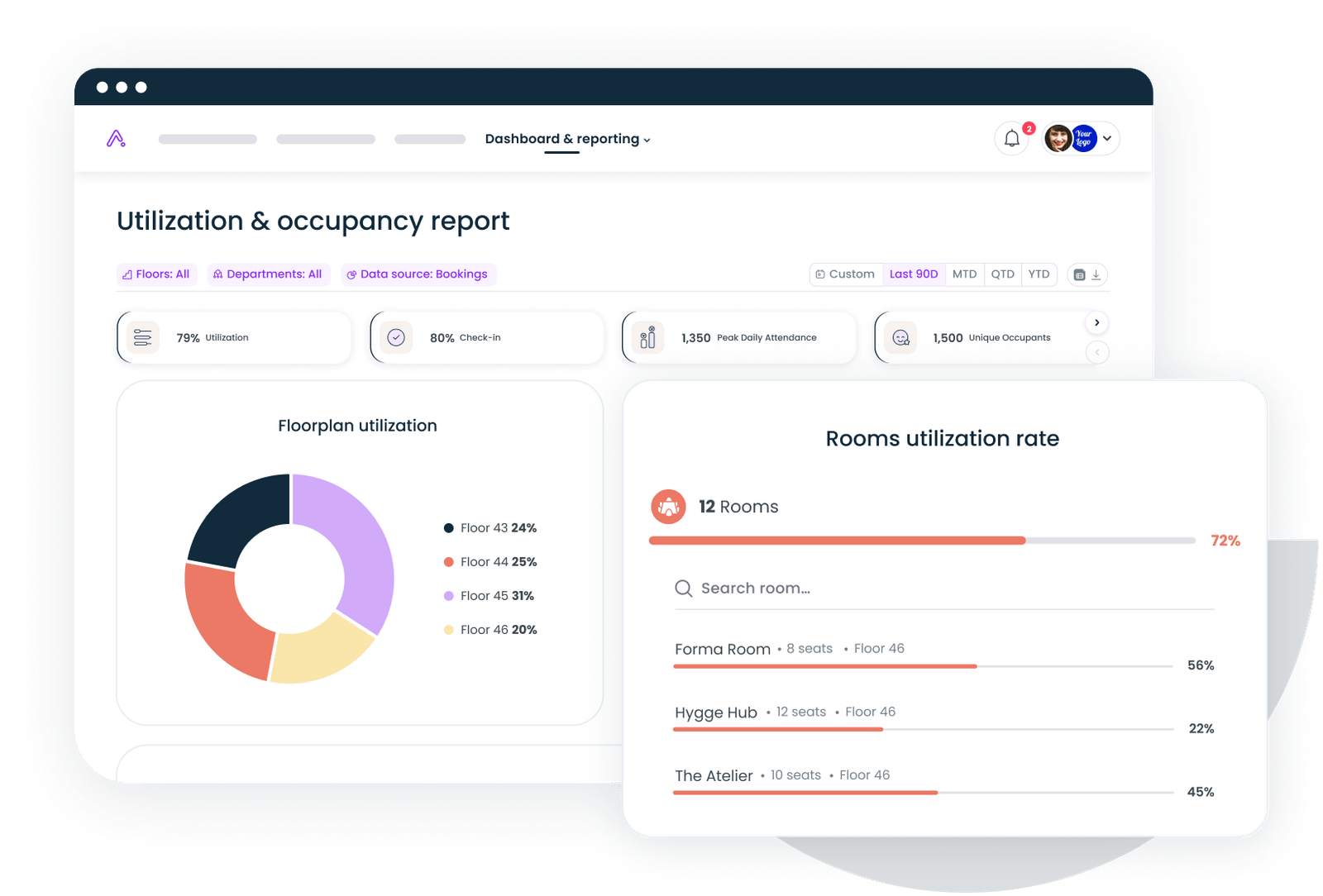
How to defend your capex request to the CFO
Your CFO doesn't care about furniture catalogs. They care about four things: payback period, impact on earnings, cash flow timing, and risk.
Frame capex in terms of avoided cost. A $200,000 investment in occupancy sensors that prevents a $1.2 million over-build on your next floor has a clear payback. Lead with the number you're not spending.
Show utilization data. Nothing kills a capex request faster than "we think we need more space." Nothing strengthens one faster than "our booking data shows 87% peak utilization on Tuesdays and Wednesdays, and we're turning away meeting room requests." If you're tracking workplace analytics, you already have this data.
Componentize the request. Don't submit one $3 million capex request. Submit five categorized requests with individual justifications. The CFO can approve the urgent ones and defer the rest. That's easier to say yes to than an all-or-nothing number.
Tie it to the lease cycle. If your lease renewal is in 18 months, frame the capex as preparation for a negotiation that will determine your real estate costs for the next 5 to 10 years. That context changes the conversation from "spending money" to "investing ahead of a major commitment."
Benchmark against peers. Use the per-headcount ranges above. If your capex request puts you at $6,000 per employee and the industry range for your size is $5,000 to $9,000, you're in the middle of the pack. CFOs love being in the middle of the pack.
Making capex decisions with better data
Office capex has always involved some guesswork. How many people will actually use the new collaboration zone? Will the second-floor conference rooms justify the AV investment? Is it worth building out the fourth floor now or waiting until headcount grows?
The companies that get capex right in 2026 aren't the ones with the biggest budgets. They're the ones with the best data. They know which spaces are used, which are empty, and which are booked but abandoned. They can show the CFO exactly where the last round of capex delivered returns and where it didn't.
That's the shift. Office capex used to be a facilities exercise: pick finishes, get bids, build it out. Now it's a strategic investment decision that requires the same rigor as any other capital allocation. The workplace leaders who treat it that way, with real utilization data, clear categorization, and honest benchmarking, are the ones who get their budgets approved. And more importantly, they're the ones who don't waste them.
From desk booking to utilization analytics, Gable gives you the data to justify every capex dollar.
Get a demo