


.svg)


.svg)
- The chief workplace officer sits at the intersection of HR, real estate, and workplace tech
- Hybrid complexity and AI adoption created the need for this role
- Only 22% of CPOs currently operate at enterprise level; CWOs fill the gap
- The role succeeds or fails based on unified data across people and places
- Not every company needs one, but most mid-to-large hybrid orgs do
The chief workplace officer is the person responsible for connecting how your company manages people with how it manages physical space, technology, and the employee experience across all of it. It's not a rebranded facilities director. It's not a Chief People Officer with a new title. It's a distinct leadership role that emerged because hybrid work made the old org chart inadequate, and someone needs to own the full picture.
Why the chief workplace officer role is emerging now
Three years ago, most companies were still debating whether hybrid work would stick. That debate is over. 70% of remote-capable employees prefer hybrid or fully remote arrangements, and the organizations that figured this out early have moved on to a harder question: who actually owns the strategy that ties people, places, and budgets together?
Traditionally, that ownership was split. HR handled culture and engagement. Facilities managed the building. Finance tracked the lease. IT deployed the tools. Nobody had a unified view. That worked fine when everyone showed up Monday through Friday. It doesn't work when you're running a headquarters at 40% occupancy, supplementing with flex space in three cities, and trying to figure out whether your collaboration patterns justify the real estate you're paying for.
The chief workplace officer role exists to close that gap. It's a response to a structural problem: hybrid work created interdependencies between functions that used to operate independently, and someone needs to sit at the center.
AI is accelerating this. AI is reshaping the CPO's, from writing job descriptions to redesigning performance management to challenging traditional workforce planning. When the nature of work itself is shifting, you need a leader who can navigate both the human side and the operational infrastructure that supports it.
What a chief workplace officer actually does (and doesn't do)
Let's be specific. The CWO isn't a super-admin who handles office snacks and badge access. The role covers four domains that used to live in separate silos.
People strategy meets space strategy. The CWO develops flexible workplace policies, but also ensures the physical environment supports them. That means understanding which teams need dedicated space, which can thrive on hot desking, and where on-demand flex space makes more financial sense than a long-term lease.
Workplace technology. From desk booking to visitor management to workplace analytics, the CWO owns the tech stack that makes hybrid work functional. They're the person who decides whether your tools are integrated or fragmented, and that decision has downstream effects on everything from employee experience to data quality.
Real estate optimization. The CWO works with finance and real estate teams to right-size the portfolio. They use occupancy data, booking patterns, and space utilization metrics to make decisions about which offices to keep, which to consolidate, and where flex space fills the gaps.
Culture and engagement through environment. This is where the role overlaps with the CPO, but the CWO's lens is different. They're asking: does our physical and digital workplace reinforce the culture we say we want? Are people actually gathering, collaborating, and connecting, or are they just booking desks to satisfy an attendance policy?
Chief workplace officer vs. chief people officer: The real distinction
The CPO title took off in the early 2000s when companies started rebranding HR as "People Operations." It signaled a shift from policy administration to employee experience. That was meaningful. But the CPO's mandate is fundamentally about people: talent acquisition, development, engagement, culture.
The CWO's mandate is about the system people work within.
Think of it this way. The CPO asks, "Are our people engaged and developing?" The CWO asks, "Does our workplace, physical and digital, enable engagement and development?" One focuses on the experience. The other focuses on the infrastructure that shapes it.
In practice, only 22% of CPOs currently operate at what Heidrick & Struggles calls "enterprise level," meaning they shape business strategy beyond traditional HR. The CWO role picks up the operational and spatial dimensions that most CPOs don't have bandwidth or expertise to cover.
Some organizations combine both roles. That can work at smaller companies. But once you're managing multiple locations, a distributed workforce, and a real estate portfolio that represents one of your top three expenses, the complexity demands dedicated leadership.
The data problem at the center of the CWO's job
Here's the uncomfortable truth about most workplace operations in 2026: the data exists, but it lives in six different systems that don't talk to each other.
Desk booking data sits in one tool. Badge access data sits in another. Visitor logs are somewhere else. Employee engagement surveys live in the HRIS. Real estate spend is tracked in finance's spreadsheets. Event attendance is in yet another platform.
A CWO without unified data is just a senior person with opinions. The role's value comes from connecting these data streams to answer questions that no single function can answer alone. Questions like: which offices are worth keeping? Are our hybrid work policies actually driving collaboration, or just compliance? Where should we invest in space for the team that's growing fastest?
This is where a unified workplace platform becomes essential. Gable consolidates desk and room booking, visitor management, on-demand space access, events, and analytics into a single layer, giving CWOs the integrated view they need to make decisions that aren't based on gut feel or last quarter's badge swipe data.
61% of HR leaders cite talent attraction and retention as their biggest concern. The CWO translates that concern into spatial and operational decisions: better collaboration spaces, smarter office design, flexible policies that actually flex.

If you're defining or refining the CWO function, start with a strategy framework that connects people, places, and policy.
Read the guide
The top challenges facing chief workplace officers in 2026
Proving ROI on workplace investments. Every dollar spent on office space, flex memberships, or team events needs justification. CWOs who can't tie workplace ROI metrics to business outcomes (retention, productivity, collaboration frequency) will lose budget battles to leaders who can quantify their impact.
Navigating the AI mandate. CEOs are pushing AI adoption to increase productivity, and some are reducing headcount in the process. The CWO sits in the middle: they need to redesign workspaces for a workforce that's changing shape, while also deploying AI tools within their own function to forecast space demand and optimize utilization.
Balancing flexibility with connection. Employees want flexibility. Leaders want collaboration. These aren't inherently in conflict, but they require intentional design. The CWO has to build systems where teams can find each other, book space together, and gather with purpose, without resorting to rigid mandates that erode trust.
Managing a portfolio, not just an office. The modern workplace isn't one building. It's a headquarters, satellite offices, flex spaces, home offices, and event venues. The CWO needs visibility across all of it, which means moving beyond tools designed for a single-location world.
How to know if your organization needs a chief workplace officer
Not every company needs this title on the org chart. But most mid-to-large organizations with hybrid workforces are already doing the work of a CWO; they're just spreading it across three or four people who don't share a dashboard or a strategy.
You probably need a CWO (or someone functioning as one) if:
- You're managing more than two office locations plus flex space
- Your real estate spend is a top-three operating expense
- Nobody can tell you, in one view, how your space is actually being used
- Your hybrid policy exists on paper but isn't connected to booking, attendance, or engagement data
- Workplace decisions are made reactively (lease is up, so now we plan) rather than strategically
The title matters less than the mandate. What matters is that someone owns the intersection of people, places, technology, and data, and has the authority to make decisions across all four.
Gable Insights brings occupancy, booking, and spend data into a single dashboard so workplace leaders can make decisions with full visibility.
Learn more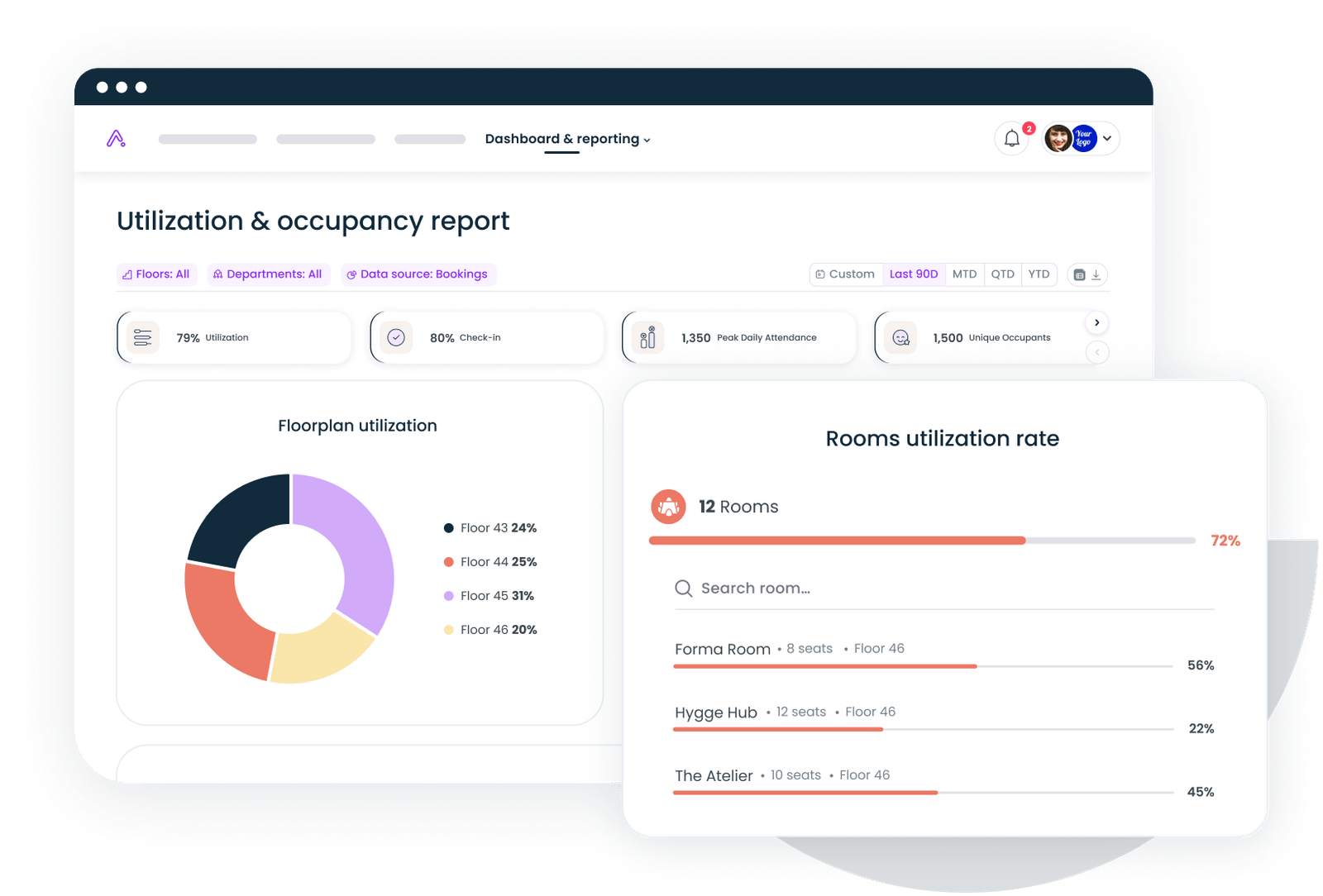
Building the CWO function: A practical starting point
If you're standing up this role (or stepping into it), here's where to start.
Step 1: Audit your current data landscape. Map every system that touches workplace operations. Identify what's connected and what isn't. The gaps in your data are the gaps in your strategy.
Step 2: Define the cross-functional mandate. The CWO needs a clear charter that spans HR, real estate, IT, and finance. Without it, you'll spend your first year in turf wars instead of building something useful. Workplace change management principles apply here; you're changing how the organization thinks about space, not just who manages it.
Step 3: Consolidate your tech stack. Fragmented tools produce fragmented insights. Prioritize platforms that integrate booking, visitor management, flex space access, and analytics. The goal is a single source of truth, not another dashboard to check.
Step 4: Establish baseline metrics. You can't improve what you don't measure. Start with occupancy rates, cost per desk, collaboration frequency, and employee satisfaction with the physical workplace. Track them monthly.
Step 5: Connect workplace data to business outcomes. This is the step most organizations skip. Retention improved after you redesigned the collaboration spaces? Document it. Teams that gather in person quarterly outperform those that don't? Quantify it. The CWO's long-term credibility depends on proving that workplace strategy isn't a cost center; it's a lever.
The chief workplace officer isn't a trend; it's a structural response
Every few years, a new C-suite title emerges and people debate whether it's real or just corporate theater. The CWO is different because it responds to a structural shift, not a branding exercise. Hybrid work permanently broke the assumption that people, places, and technology could be managed in separate silos.
The organizations that figure this out will spend less on space, get more from the space they keep, and build workplaces where people actually want to show up. The ones that don't will keep paying for empty desks, running engagement surveys that go nowhere, and wondering why their hybrid policy isn't working.
The chief workplace officer is the person who connects those dots. Whether you call them CWO, VP of Workplace, or Head of Workplace Strategy, the function is the same: unified ownership of how work happens, where it happens, and whether the infrastructure supports the outcomes you're after.
From desk booking to analytics to on-demand space, Gable gives chief workplace officers the unified platform they need to lead with data.
Get a demo


