.svg)


.svg)
- On-demand workspace means paying for space only when someone uses it
- 55% of global occupiers already use flexible office solutions
- Best fits: distributed teams, satellite cities, and travel-heavy roles
- Budgets, booking permissions, and usage data separate programs from perks
- Start with your three busiest cities and expand from the data
An on-demand workspace is an office, desk, or meeting room your team books by the day or hour through a booking platform, paying only for what gets used. For hybrid and remote teams, it replaces the fixed lease in cities where headcount can't justify one. The model has moved well past early adopters: 55% of global occupiers now use flexible office solutions, per Cushman & Wakefield, and 17% plan to increase their use.
What an on-demand workspace is and how it works
The mechanics are closer to booking a hotel than leasing an office. A company connects its team to a network of coworking spaces, private offices, and meeting rooms. An employee opens the app, searches by city or neighborhood, sees what's available with photos and amenities, and books a desk for Thursday or a meeting room for a quarterly planning day. They check in, work, and leave. The company gets one invoice and a record of who used what.
Behind that simple flow, a coworking booking platform handles the parts that used to make flexible space painful at company scale:
- Aggregated supply. One agreement covers thousands of spaces, so nobody negotiates day passes city by city.
- Payment consolidation. Usage rolls into a single monthly invoice instead of hundreds of expense reports.
- Booking controls. Admins set who can book which space types, in which locations, at what price caps.
- Usage data. Every booking feeds reporting, so the company sees demand by city, team, and space type.
The difference from a coworking membership matters here. Memberships commit you to one provider's locations and a monthly fee whether people show up or the space sits unused. On-demand workspace is pay-per-use across many providers, which moves flexible space from a fixed cost to a variable one.
Who on-demand workspace is built for
The model pays off in specific situations, and it's worth being honest about where those are.
- Distributed teams without offices. A 40-person remote company with clusters in Austin, Toronto, and Berlin can give everyone professional workspace without signing three leases.
- Hub-and-spoke companies. An HQ in San Francisco plus on-demand access everywhere else covers the 15 salespeople spread across eight cities that no lease ever will.
- Travel-heavy roles. Salespeople and consultants get a bookable desk or client-ready meeting room in whatever city the week demands.
- Teams that gather deliberately. Remote-first companies use on-demand meeting rooms for monthly team days, offsites, and onboarding weeks.
- Companies between leases. On-demand space absorbs headcount during a move, a market test, or a consolidation, before anyone commits to square footage.
The common thread is unpredictable or thin demand. Once a city has 30 people coming in three days a week, the math often flips toward a lease, and a good program's usage data tells you exactly when that happens.

We ran the cost comparison between on-demand flexible spaces and traditional office leases, city by city.
See the comparison
How on-demand workspace fits into a hybrid work strategy
Hybrid strategy usually starts with the office you have; on-demand workspace covers everyone the office doesn't reach. McKinsey found office visits have stabilized about 30% below pre-pandemic patterns, and its real estate research describes portfolios shifting from static leases toward elastic setups that flex with actual demand. In practice, companies blend three layers:
- The leased office carries predictable, concentrated demand: HQ teams, anchor days, and the equipment-heavy functions.
- On-demand workspace carries distributed and variable demand: remote employees, small-city clusters, and peak overflow when the office fills.
- Home carries focus work.
The flexibility layer also protects the retention gains that made hybrid worth adopting. Stanford research found hybrid arrangements cut resignations by 33% with no productivity cost, and remote employees who get workspace access when they want it stop being second-class citizens of the workplace program. With global office utilization at 53% per CBRE, the elastic layer is also what lets companies rightsize the leased one without betting wrong on peak days.
How companies manage on-demand workspace at scale
A dozen employees booking coworking passes is an expense line. Five hundred doing it is a program, and coworking space management at that scale runs on four controls:
- Permissions. Who can book what: desks for everyone, private offices for client-facing teams, meeting rooms by approval. Geo-fencing keeps bookings inside approved cities or radiuses.
- Budgets. Monthly caps per employee, team, or department, with spend tracked in real time. Finance gets predictable exposure even though usage varies.
- Approvals. Routine bookings go through instantly; exceptions (a premium space, an unusual city, a large room) route to a manager.
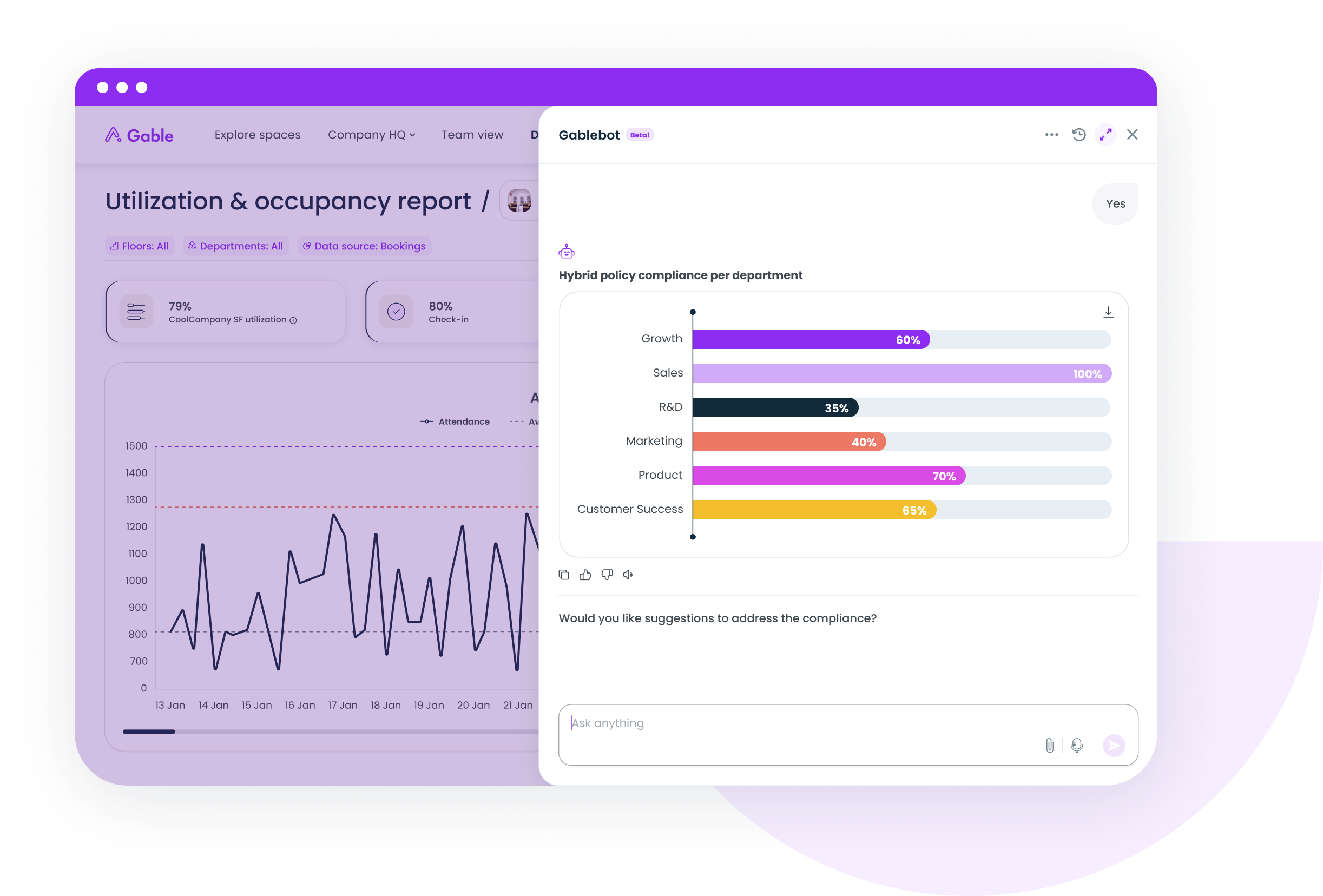
- Reporting. Usage by city, team, space type, and purpose. This is where program data starts driving real estate decisions: consistent heavy usage in one city is a lease signal, and scattered light usage confirms on-demand was the right call.
This control layer is what separates flexible workspace software from a stack of day passes, and it's where enterprise buyers should focus their evaluation. Our guide to corporate coworking program software compares the platforms built for exactly this. Cost discipline is the pressure behind it all: 84% of facilities leaders name rising operational costs as their top concern, per JLL, and uncontrolled flex spend lands in that same bucket fast.
Gable On-Demand connects your team to 20,000+ spaces in 900+ cities, with budgets, permissions, and usage data built in.
Learn more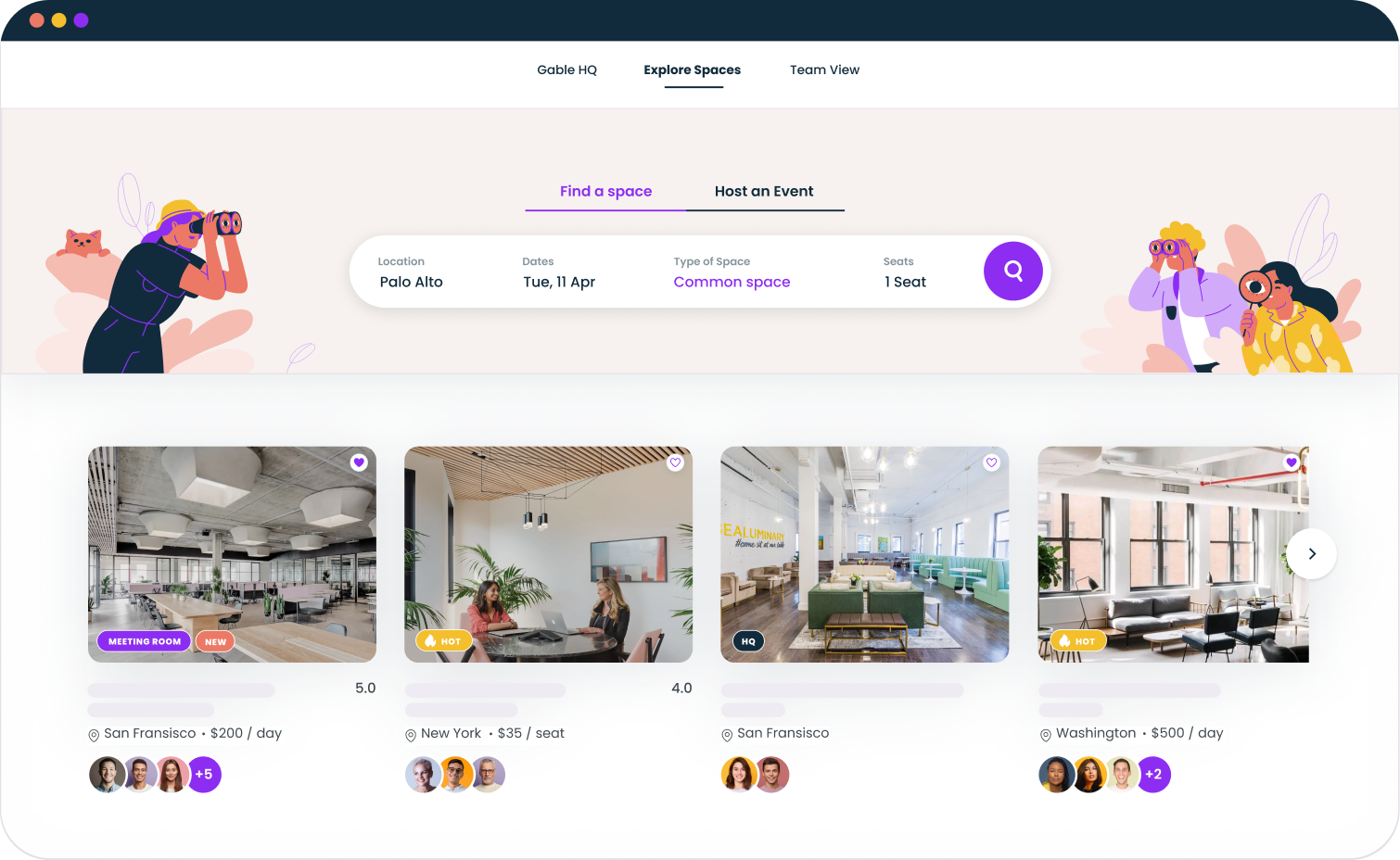
How to choose and run an on-demand workspace program
The decisions that determine whether a program works get made before anyone books a desk.
- Map your demand first. Pull team locations and travel patterns. Three cities with ten-plus people each is a program; two people in Lisbon is a stipend.
- Check network coverage against that map. Gable's network spans 20,000+ coworking spaces globally, and the right question for any provider is coverage in your cities, at the quality bar your team expects.
- Set the rules before launch. Budgets, space types, and booking permissions configured on day one prevent the awkward clawback conversation in month three.
- Launch to a pilot group. One region or department for a quarter surfaces the policy gaps while they're cheap to fix.
- Review usage quarterly. Expand cities with waitlists, trim ones with no demand, and watch for the utilization threshold where a lease becomes cheaper.
Run this way, the program stays aligned with how demand shifts, and workplace teams stop guessing which cities need space next year.
The office becomes a network
On-demand workspace turns workspace from an address into a capability: wherever the team grows, space is a booking away rather than a lease negotiation away. Companies that treat it as a managed program, with budgets, permissions, and quarterly usage reviews, get the flexibility without the runaway spend. The leased office keeps doing what it does best, and everyone outside its commute radius finally gets a real place to work.
Watch how Gable sets up booking controls, budgets, and usage reporting for distributed teams.
Get a demo