


.svg)


.svg)
- Gable is the top Robin alternative, uniting booking, visitors, and analytics in one platform.
- Teams switch over per-employee pricing, floor plan edit friction, and strict auto-cancel rules.
- Per-user pricing runs $2.50 to $4 monthly; Skedda charges per space instead.
- Officely is free for up to five users inside Slack or Teams.
- Export your Robin data and pilot with one team before cutting over.
Robin is capable desk and room booking software, but it's not the right fit for every hybrid team. This guide compares the 7 best Robin alternatives for 2026: what each one does, what it costs, and how to switch without losing your booking data. The stakes are higher than they were a year ago, with 52% of organizations now requiring three to four office days a week, according to JLL.
Why teams look for Robin Powered alternatives
Robin holds a 4.4 out of 5 rating across 211 reviews on G2, so most customers are satisfied. The teams searching for Robin Powered alternatives tend to cite one of three problems.
Pricing scales with headcount rather than usage
Robin's quote-based pricing is typically tied to total employee count rather than the number of people who book. For a company where half the staff comes in twice a week, that means paying for seats that rarely get used. Reviewers regularly describe the cost as high relative to what their teams use.
Floor plan changes can require vendor help
Reviewers note that editing floor plans takes longer than expected and sometimes needs assistance from Robin's team. For offices that reconfigure often, waiting on support for a layout change adds friction to routine admin work.
Check-in rules can work against employees
Robin's auto-cancel releases a reservation when someone misses the check-in window, so an employee arriving ten minutes late can lose their desk. Reviewers also mention that availability doesn't always refresh instantly during peak booking hours. Both are reasonable design choices that some teams find too strict in practice.
What Robin does well
Robin deserves credit for popularizing modern desk and room booking. Its interactive maps make finding a space fast, calendar integration keeps rooms in sync with Outlook and Google, and employees generally adopt it without training. If your only complaint is a feature gap on the margins, staying put may cost less than switching.

Robin and its competitors are one slice of a bigger category. Our roundup of the best workplace management software maps the whole field.
Read the guide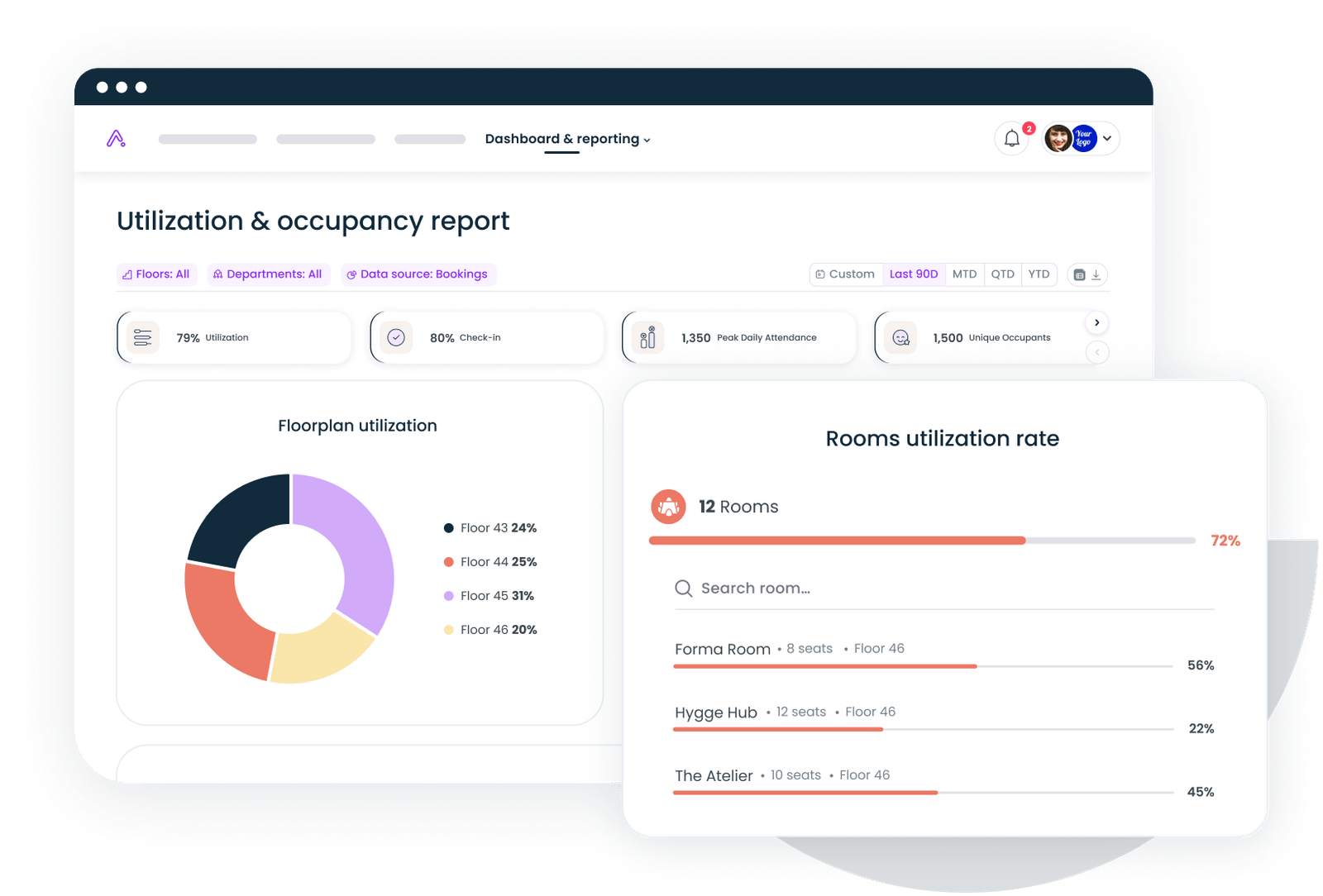
The 7 best Robin alternatives in 2026
We picked these seven based on fit for hybrid teams, integration depth, pricing transparency, and verified G2 reviews. Gable leads as the all-in-one option; the rest earn their spots for specific needs.
1. Gable
Gable is a workplace management platform that combines desk and room booking, visitor management, in-office day coordination, and utilization analytics with on-demand access to flexible workspaces. It fits hybrid companies with 200 to 5,000 employees that want one system instead of a stack of point tools. The platform is built around a pattern in its own data: 72% of bookings are for team gatherings, so coordination features sit beside booking rather than bolted on. The flex side matters too, since 55% of occupiers now use flexible office solutions, per Cushman & Wakefield.
- Desk and room booking with interactive floor plans and check-in
- Live team view showing who's coming in and when
- Visitor management, badge printing, and package delivery
- Budgets, permissions, and cross-site utilization analytics
- On-demand access to 20,000+ workspaces in 900+ cities
Pricing: Office Management from $2.50 per user per month; all-in-one plans are custom.
Pick Gable over Robin when you want transparent per-user pricing and one platform covering both your offices and flexible space.
2. Envoy
Envoy approaches the workplace from the front desk. It's best known for visitor management, with badge printing, document signing, and security workflows, and its desk and room booking sits on the same platform. That combination fits offices where reception, security, and compliance matter as much as seat assignments, such as regulated industries or companies with heavy guest traffic. On G2 it rates 4.4 across 163 reviews, level with Robin, so the choice comes down to feature mix rather than quality.
- Desk and room booking with interactive maps
- Visitor management with badges, NDAs, and security workflows
- Occupancy and space analytics across locations
Pricing: Workplace from about $3 per user per month, with modules priced separately.
Pick Envoy over Robin when the front desk experience and workplace security drive the purchase alongside booking.
3. Skedda
Skedda is the booking specialist of this list. It handles desks, rooms, and any bookable space through custom rules: time limits, user permissions, booking windows, and quotas that admins configure once and stop policing. Pricing is per space with unlimited users, which flips Robin's model, and it holds a 4.8 rating across 283 G2 reviews, the highest here. It's light on enterprise analytics, so large portfolios may outgrow it. Whether you run hot desking or hoteling, the rules engine covers both models without custom work.
- Rule-based booking for desks, rooms, and shared spaces
- Interactive floor plans with self-serve setup
- Per-space pricing with unlimited users
- Utilization reporting
Pricing: From $99 per month, billed annually.
Pick Skedda over Robin when headcount is high relative to desks and per-employee pricing stops making sense.
4. Kadence
Kadence starts with people rather than places. Employees see where their team plans to be and pick days that line up, then book desks and rooms on top of that coordination layer. That ordering suits companies whose real problem is an empty office on Tuesday and a packed one on Wednesday. It rates 4.5 across 143 G2 reviews. Like Robin, pricing is quote-based, so compare proposals side by side; the difference is that Kadence bills on active users, which favors teams with irregular attendance.
- Team-day visibility and scheduling
- Desk and room booking with visual office maps
- Visitor check-in and event coordination
- AI-assisted booking suggestions and alerts when preferred desks free up
Pricing: Quote-based, billed on active users annually.
Pick Kadence over Robin when balancing attendance across the week matters more than the booking experience itself.
5. Officely
Officely lives entirely inside Slack and Microsoft Teams. There's no separate app: people mark office days, book desks, and see who's coming in from the chat tool they already have open. That's the whole pitch, and it works, with a 4.6 rating across 157 G2 reviews and adoption rates standalone apps struggle to match. It skips visitor management and detailed analytics, so it suits smaller teams over complex portfolios.
- Office day coordination and desk booking inside Slack and Teams
- Parking, dog-friendly days, and team lunch coordination
- No separate app for employees to learn
- Free tier for small teams
Pricing: Free for up to five users; paid plans from $2.50 per user per month.
Pick Officely over Robin when your team lives in chat and adoption is the metric you care about most.
6. Tactic
Tactic bundles desk booking, room scheduling, visitor management, and wayfinding at one of the lowest per-seat prices in the category, with an AI assistant in its Pro tier. The modular structure lets you start with desks and switch on visitor management later, paying only for what you use. Desk zones group workspaces by floor or department, and booking limits keep access fair on busy days. Its 4.6 rating across 554 G2 reviews is the largest review base on this list, though setup takes longer than average because there's more to configure.
- Desk and room booking with colleague visibility
- Visitor management and wayfinding
- Modular pricing that grows with you
- AI assistant on the Pro tier
Pricing: Core from $3 per user per month; Pro from $4.
Pick Tactic over Robin when you want near-platform breadth without enterprise pricing.
7. OfficeSpace Software
OfficeSpace is built for facilities teams that manage space as a portfolio. Beyond desk and room booking, it covers scenario planning, move management, and stack planning on CAD-grade floor plans, which is where large real estate teams spend their weeks. It rates 4.7 across 126 G2 reviews. Pricing is quote-based and lands at the enterprise end, so it's a poor fit for a single office wanting lightweight booking. For a wider look at this end of the market, see our guide to the best desk sharing systems for large offices.
- Desk and room booking on detailed floor plans
- Move management and scenario planning
- Utilization analytics for portfolio and lease decisions
Pricing: Quote-based; budget for implementation time.
Pick OfficeSpace over Robin when floor plan management and moves are the job, rather than reservations alone.
Robin vs. the alternatives: quick comparison
| Tool | Best for | Standout feature | Starting price |
|---|---|---|---|
| Robin | Booking-led hybrid teams | Interactive maps with calendar sync | Quote-based |
| Gable | All-in-one workplace management | Offices plus 20,000+ on-demand spaces | $2.50/user/mo |
| Envoy | Security-conscious offices | Visitor management with booking | ~$3/user/mo |
| Skedda | Rule-heavy booking | Per-space pricing, unlimited users | $99/mo |
| Kadence | Team-day coordination | Who's-in-when visibility | Quote-based |
| Officely | Slack and Teams-native teams | Booking without a separate app | Free; $2.50/user/mo |
| Tactic | Breadth on a budget | Modular features, low per-seat cost | $3/user/mo |
| OfficeSpace | Enterprise space planning | Move and scenario planning | Quote-based |
For adjacent categories, see our roundups of the best hybrid office scheduling software and office space reservation systems.
Gable manages booking, visitor check-in, and utilization analytics across every site, with pricing that doesn't scale on employees who never come in.
Learn more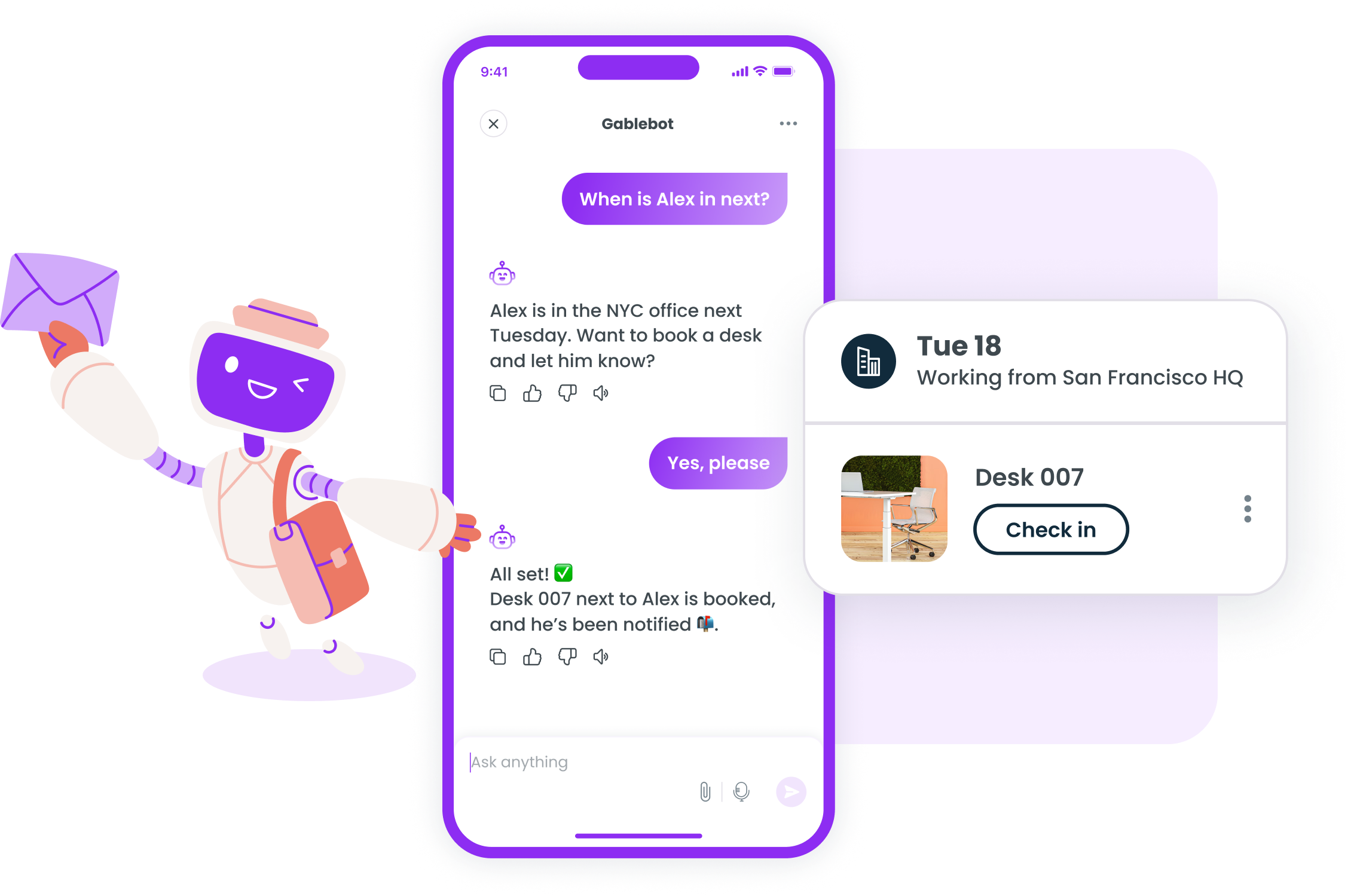
How to switch from Robin without disrupting your team
Most migration pain comes from sequencing rather than software. Four steps keep it orderly:
- Export your data before the contract lapses. Pull desk inventory, user lists, and booking history from Robin's admin tools. The history doubles as your utilization baseline for the new platform.
- Pilot with one team. Run the new tool with a single team or floor for two to four weeks while Robin stays live. You'll surface floor plan gaps and booking rule mistakes at pilot scale instead of company scale.
- Tell employees early, and meet them in chat. Announce the switch date and where to book at least two weeks out. Tools that work inside Slack or Teams cut retraining to nearly nothing.
- Set a hard cutover date. Running two systems indefinitely splits bookings and muddies your data. Switch check-in rules on from day one so utilization numbers start clean.
The bottom line on Robin alternatives
Choose by what pushed you to look. If it was pricing, Skedda's per-space model or Officely's free tier fixes the math. If it was admin friction, self-serve tools like Skedda and Tactic remove the vendor dependency. If you'd rather consolidate than swap one point tool for another, an all-in-one platform is the sturdier bet. The decision is worth the diligence: global office utilization reached 53% in 2026, up from 38% two years earlier, according to CBRE, and hybrid arrangements done well cut resignations by a third, per a Stanford study. The hybrid work statistics point the same way: the office is filling back up, and the tool coordinating it matters.
Book a demo and we'll walk through desk booking, visitor management, and analytics with your setup in mind.
Get a demo


