.svg)


.svg)
- Joan pairs elegant e-ink displays with booking, but hardware and subscription costs stack up.
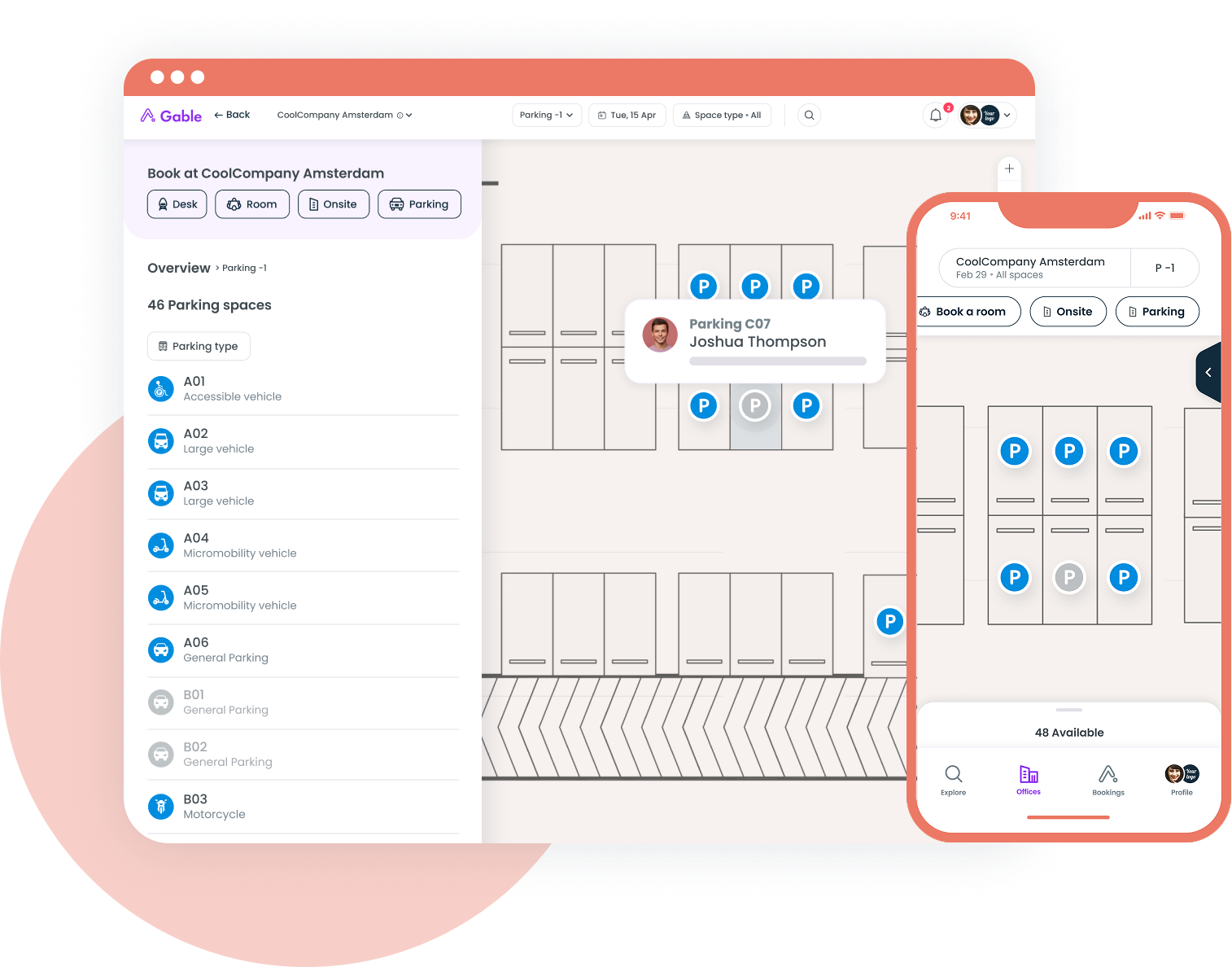
- Gable leads our list with room, desk, and visitor management in one platform.
- Every software tool here syncs with Outlook and Google Calendar.
- Entry prices run from $2.50 per user monthly to $999 per hardware panel.
- Match your pick to room count, existing hardware, and budget.
The best Joan alternatives give you conference room booking without tying every room to proprietary hardware. Joan earned its reputation on battery-powered e-ink meeting room displays, but the device-plus-subscription math pushes many teams to look elsewhere. We compared five options for 2026 and scored them on booking experience, integrations, total cost, analytics, and reviews.
Why teams look for a Joan alternative
Joan does what it promises. The e-ink panels run for weeks per charge, mount without cables, and show at a glance whether a room is free. Users rate it 4.5/5 on G2 across 254 reviews, and its customer support gets consistent praise.
The pressure is on the booking layer, though. Meeting room bookings surged 22% in the Americas and 24.5% in APAC, per Cushman & Wakefield, and 52% of organizations now require three to four office days a week, according to JLL. Hybrid employees average 2.3 office days, per Gallup, concentrated midweek, so rooms run out at the same hours everywhere.
Against that backdrop, three complaints come up repeatedly in Joan's Capterra reviews:
- Hardware plus subscription pricing. Plans start at 49 euros per month, and every screen adds a 9.99 euro monthly device license on top of the panel's purchase price, per Joan's pricing page. One reviewer notes the pricing model change "may increase costs for companies with fewer meeting rooms."
- Admin depth. Reviewers describe the management portal as "less intuitive and slightly cluttered," and teams running several offices tend to outgrow its reporting.
- Display quirks. The e-ink touch layer can lag, and several reviewers report battery life closer to 40 to 50 days than advertised.
None of this makes Joan a bad product. It does mean the fit depends on whether you're buying displays first or a workplace platform first.

We reviewed 10 meeting room booking tools for 2026, with features, analytics, integrations, and pricing side by side.
Read the guide
Our scoring methodology
We scored every tool on five weighted factors and applied them to every entry:
- Room booking experience (25%): how fast employees can find, book, and check into a room from calendar, chat, or the door.
- Integrations (20%): Outlook, Google Calendar, Slack, Microsoft Teams, and SSO support.
- Hardware flexibility and total cost (20%): whether the tool runs on screens you already own, and how pricing behaves as you grow.
- Analytics and no-show handling (20%): auto-release for ghost bookings, the core of AI room scheduling, plus utilization reporting.
- Reviews and support (15%): current G2 ratings and review volume.
The gap between booked and used time is where the money leaks: tech firms book 45% to 65% of room capacity at peak, yet 20% to 30% of booked time goes unused, per Worklytics. Tools that close that gap scored higher.
The 5 best Joan alternatives
| # | Tool | Best for | Starting price | G2 rating |
|---|---|---|---|---|
| 1 | Gable | All-in-one room and office platform | From $2.50/user/mo | 4.5 (171) |
| 2 | Robin | Booking-led enterprise workplaces | Quote-based | 4.4 (211) |
| 3 | YAROOMS | Teams-centric offices wanting room panels | From $99/mo | 4.3 (95) |
| 4 | Skedda | Small offices, rule-heavy booking | From $99/mo (per space) | 4.8 (283) |
| 5 | Logitech Tap Scheduler | Purpose-built display hardware | $999 per panel | N/A (hardware) |
G2 ratings are out of 5 with review counts in parentheses, current as of July 2026.
1. Gable
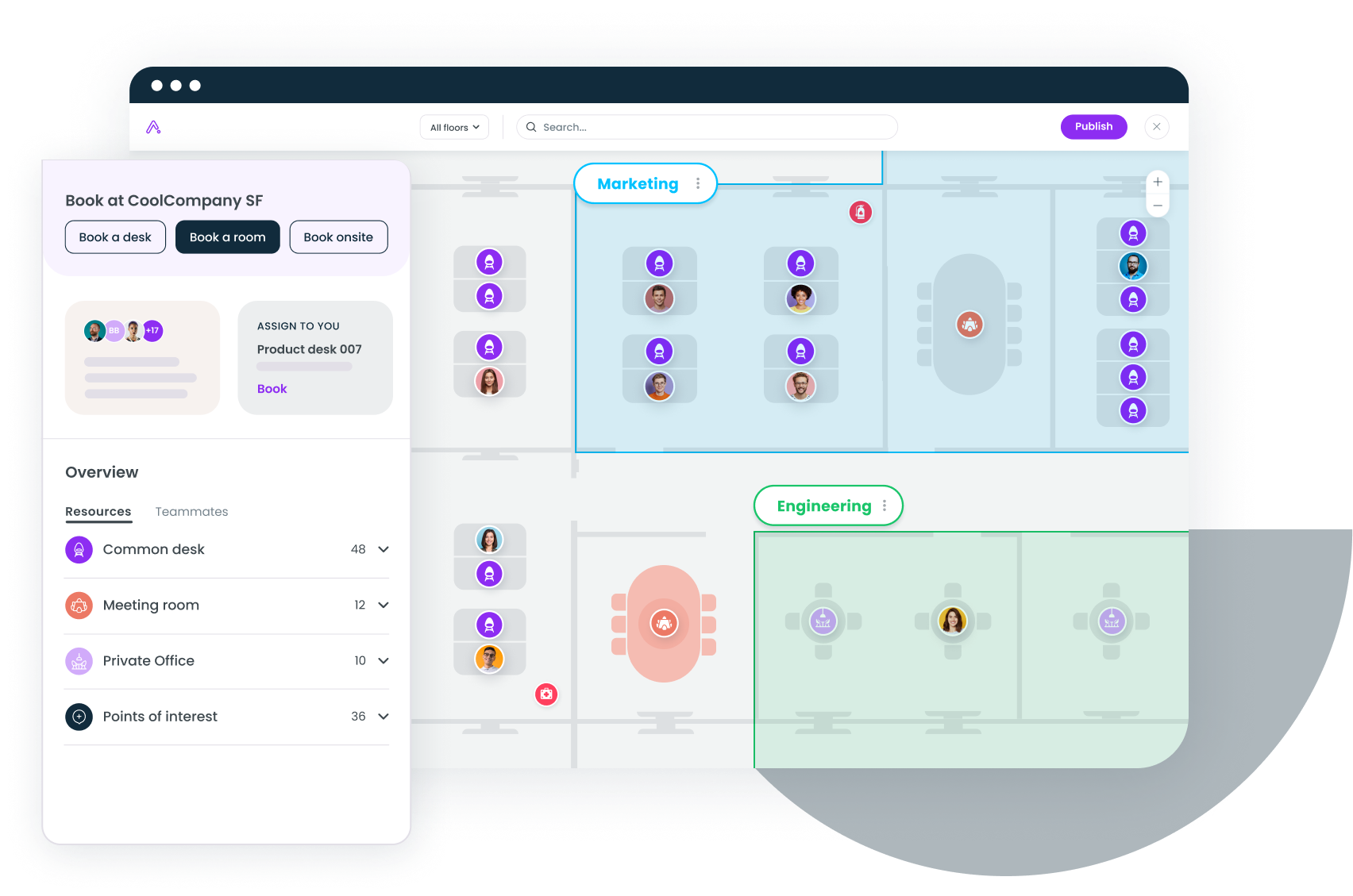
Gable treats room booking as part of one system: meeting rooms, desks, visitors, and utilization analytics in a single dashboard. Employees book from Outlook, Google Calendar, Slack, Microsoft Teams, or mobile, and admins see the occupancy data behind every reservation through its room scheduling software. Gable's booking data shows 72% of bookings are for team gatherings, so the platform is built around coordinating groups.
- Scoring: top marks on booking experience, integrations, and analytics; no proprietary hardware to buy, so total cost stays predictable as you scale.
- Use cases: hybrid companies (200 to 5,000 employees) consolidating their meeting room booking system, desk booking, and visitor management into one tool.
- Key features: real-time floor plans, check-in with automated notifications, budgets and permissions, SOC 2 Type II, GDPR, SSO, RBAC, and AES-256 encryption.
- Pricing: Office Management from $2.50 per user per month; all-in-one plans are custom.
- G2 rating: 4.5/5 (171 reviews).
2. Robin
Robin helped define modern desk and room booking, and its employee-facing experience remains one of the most polished in the category. Room status shows on tablet displays or paired scheduling panels, calendars sync both ways, and reporting covers attendance and room usage.
- Scoring: strong on booking experience and integrations; quote-based pricing costs it points on cost transparency.
- Use cases: larger hybrid teams that want a refined booking experience with attendance reporting behind it.
- Key features: interactive maps, team scheduling, automatic release of unused rooms, workplace analytics dashboards.
- Pricing: quote-based, by seats or desks.
- G2 rating: 4.4/5 (211 reviews).
3. YAROOMS
YAROOMS bundles room booking, desk booking, hybrid scheduling, and digital signage, with room panels that run on standard tablets instead of proprietary screens. It's especially comfortable in Microsoft-heavy offices: employees book inside Teams, and an AI assistant helps find the right space.
- Scoring: solid on booking, integrations, and hardware flexibility; the 20-user cap on the entry plan trims its cost score for growing teams.
- Use cases: small and mid-sized offices that want Joan-style room panels without per-device licenses.
- Key features: Teams-native booking, tablet room displays, visitor management add-on, workplace analytics.
- Pricing: Starter from $99 per month (one location, up to 20 users).
- G2 rating: 4.3/5 (95 reviews).
Gable handles room booking, desk booking, and visitor management across all your offices, with utilization data built in.
Learn more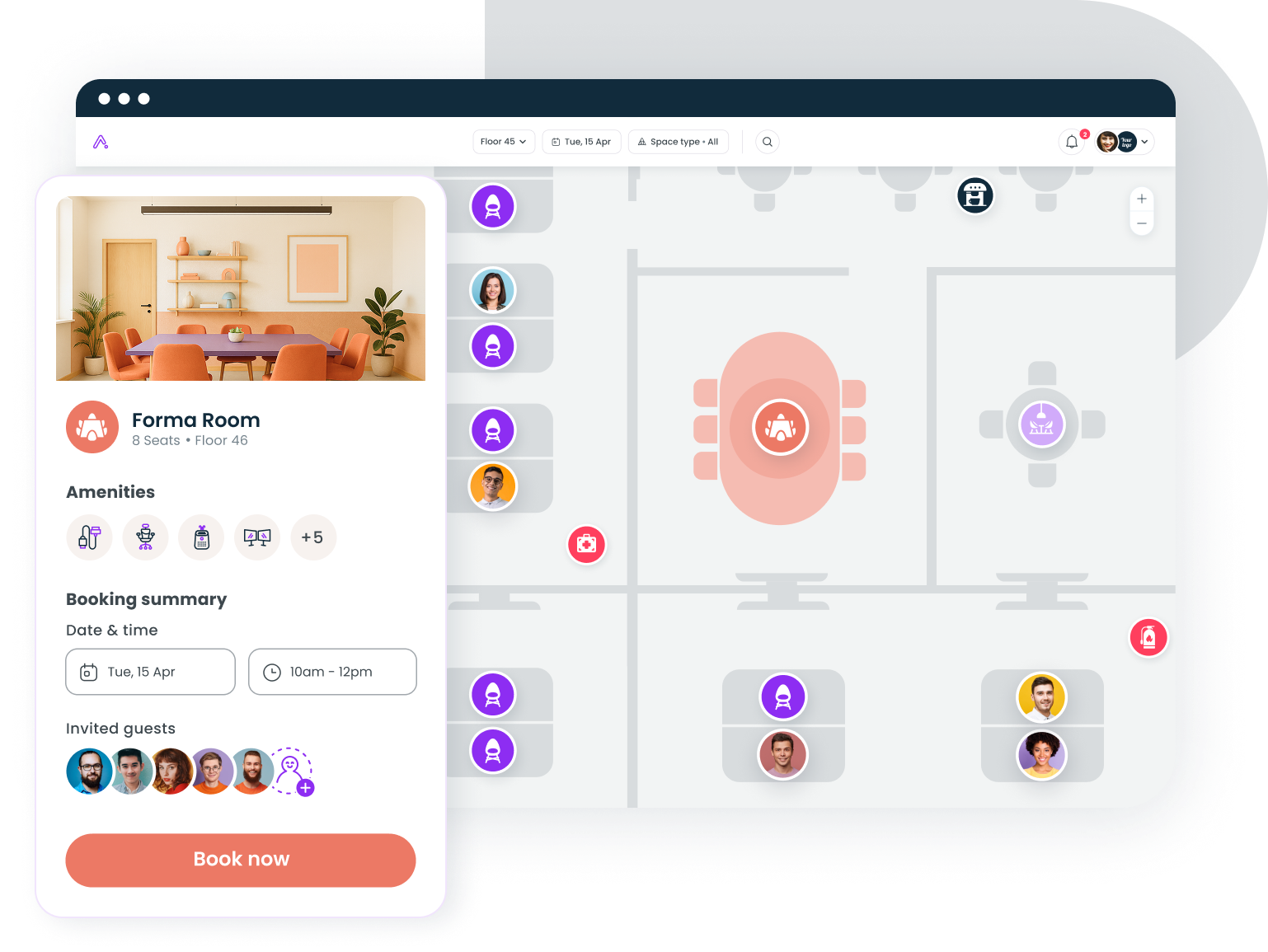
4. Skedda
Skedda is the rule-driven pick: fine-grained control over who can book which space, when, and under what conditions, priced per space with unlimited users. There's no signage or display product, but check-in rules keep bookings honest, and it holds the highest G2 rating on this list.
- Scoring: leads on reviews and no-show handling; loses hardware points because displays aren't part of the product.
- Use cases: single offices and small teams where per-space pricing beats per-user math.
- Key features: custom booking rules, interactive floor plans, check-in with auto-release, utilization reports.
- Pricing: from $99 per month (per-space tiers, unlimited users).
- G2 rating: 4.8/5 (283 reviews).
5. Logitech Tap Scheduler
Logitech Tap Scheduler suits teams leaving Joan's hardware but keeping the panel-at-the-door experience. It's a purpose-built 10.1-inch meeting room display with LED availability indicators, and it runs the room software you choose: Microsoft Teams, Zoom Rooms, Robin, or Meetio. There's no subscription to Logitech itself; the panel sells for $999 at authorized resellers.
- Scoring: the strongest display hardware here; everything else depends on the booking software you pair it with, since Logitech provides the panel rather than the platform.
- Use cases: offices standardizing on Teams or Zoom Rooms that want permanent wired panels rather than battery-powered e-ink.
- Key features: 10.1-inch touchscreen, green and red LED status visible down the hall, mounts for glass, walls, and mullions, Power over Ethernet.
- Pricing: $999 per panel, one-time.
- G2 rating: not applicable (hardware; rated through the software it runs).
How to choose the right meeting room solution
Four factors decide the fit faster than any feature list:
- Number of rooms. Under ten rooms, per-space pricing (Skedda, YAROOMS) stays cheap. Past a few dozen rooms across sites, per-user platforms with central admin (Gable, Robin) scale better.
- Hardware you already own. Spare tablets point you toward software that runs displays on them; if you're wiring panels anyway, Tap Scheduler pairs with whichever booking layer you pick. Nobody should buy screens twice.
- Calendar integrations. Two-way Outlook and Google Calendar sync is the difference between one source of truth and two competing ones. Test the sync delay before rollout; five minutes of lag means double-bookings during back-to-back blocks.
- Budget against data. Global office utilization climbed to 53% in 2026, up from 38% in 2024, according to CBRE, so contention for rooms will keep rising. Cheap booking without reporting costs more later: if a lease decision is coming, weight conference room analytics and office space utilization data heavily.
Which Joan alternative fits your office
Buy for the problem, not the screen. If the screens were what you loved about Joan, keep panels at the door and switch the software behind them. If you run one small office, Skedda or YAROOMS gets you honest bookings for $99 a month. And if the real problem is coordinating people, rooms, and cost across locations, a platform that turns every booking into utilization data pays for itself at the next lease negotiation.
Book a demo and we'll show you how Gable turns room bookings into utilization data you can act on.
Get a demo