.svg)


.svg)
Remote work offers flexibility, but it also introduces unique challenges to employee well-being that traditional office environments never faced. Without the natural movement of commuting or walking to meetings, remote employees often fall into sedentary routines. Without casual conversations at the coffee machine, isolation creeps in. And without clear boundaries between work and personal lives, burnout becomes an ever-present risk.
The data tells a compelling story. According to Gallup's 2025 State of the Global Workplace report, 25% of fully remote workers experience daily loneliness compared to just 16% of on-site workers. Remote workers also report higher stress rates (45%) than their on-site counterparts (38-39%). These mental health concerns directly impact productivity, engagement, and retention.
But here's what makes this situation actionable: wellness programs for remote employees work. A 2024 Wellhub studyfound that 95% of companies measuring the ROI of their wellness programs see positive returns, with 91% of HR leaders reporting decreased healthcare benefit costs as a direct result.
This guide provides 20+ practical wellness activities for remote employees, along with the strategic framework to implement them effectively. Whether you're building a virtual employee wellness program from scratch or looking to refresh existing offerings, you'll find data-backed ideas that promote remote employee health across physical, mental, and financial dimensions.
Why wellness programs matter for distributed teams
Before diving into specific virtual wellness activities, it's worth understanding why investing in remote employee wellness delivers outsized returns for distributed organizations.
The remote work environment creates specific health challenges that wellness programs can directly address. Without the physical separation between office and home, many remote workers struggle to maintain a healthy work-life balance. The Integrated Benefits Institute reports that fully remote workers are 40% more likely to experience symptoms of anxiety and depression compared to hybrid workers, highlighting the urgent need for mental health resources tailored to distributed teams.
The business case for virtual wellness programs
Employee wellness directly impacts your bottom line. According to research from the Global Wellness Institute, companies that prioritize wellbeing report up to 20% higher productivity overall. When you factor in reduced recruitment and training costs from better retention, the financial case becomes even stronger.
McKinsey research adds another dimension: employees experiencing mental health issues are four times more likely to want to leave their organizations. For distributed teams already navigating the challenges of remote collaboration, losing experienced team members carries an especially high cost.
The corporate wellness market reflects this growing recognition. Valued at over $70 billion in 2024, the market is projected to reach $128 billion by 2033, according to industry analysts. This growth signals that forward-thinking organizations view workplace wellness programs not as perks but as strategic investments.
Virtual wellness activities for physical health
Physical health forms the foundation of overall employee wellness. When remote workers maintain healthy habits around movement and nutrition, they bring more energy and focus to their work. Here are proven activities for remote employees that encourage sedentary remote employees to prioritize their physical and mental health.
Online fitness challenges
Virtual fitness challenges create friendly competition while helping employees build healthy habits. Set up step challenges using fitness trackers, or create team-based competitions around minutes of daily movement. The social element encourages employees to participate, while gamification keeps engagement high.
Wellness challenges work particularly well for remote teams because they're asynchronous. A team member in London can log their morning run while their colleague in San Francisco completes an evening yoga session. Everyone contributes to shared goals without requiring real-time coordination.
Consider rotating challenge types monthly to address different aspects of physical health: step challenges one month, hydration challenges the next, followed by sleep quality tracking. This variety keeps participation fresh and helps employees develop multiple healthy habits over time.
Virtual fitness classes
Live instructor-led workouts create shared experiences that strengthen team connections while boosting employee health. Offer a mix of formats to accommodate different fitness levels and preferences: yoga for flexibility and stress reduction, HIIT for cardiovascular health, strength training for muscle maintenance.
Schedule classes at times that work across your team's time zones, or offer multiple sessions throughout the day. Recording sessions allows team members who can't attend live to participate on their own schedule. The key is consistency. A recurring event encourages employees to build exercise into their routines rather than treating it as an occasional add-on.
Many companies partner with fitness platforms that provide on-demand content libraries alongside live classes. This combination gives employees flexibility while still creating opportunities for synchronous participation when they want that social connection.
Movement breaks and stretch sessions
Sitting for extended periods contributes to back pain, eye strain, and decreased energy. Short movement breaks throughout the workday help combat these effects without requiring significant time investment.
Implement company-wide "movement minutes" at set times. A 5-minute stretch break at 11 AM and 3 PM gives everyone permission to step away from their screens. Some teams build these breaks into their meeting culture, starting each video call with a quick stretch led by a rotating facilitator.
For teams that find scheduled breaks too rigid, wellness apps can prompt employees to stand, stretch, or take a quick walk based on their individual schedules. The goal is breaking up sedentary time in whatever way fits each employee's workflow.
Healthy diet and nutrition programs
Nutrition significantly impacts energy levels, focus, and long-term health. Virtual employee wellness programs increasingly include resources that help employees maintain a healthy diet even when working from home makes snacking all too convenient.
Host virtual cooking classes where employees learn to prepare quick, nutritious meals. Bring in nutrition experts for lunch-and-learn sessions on meal prep strategies. Create a shared recipe channel where team members exchange their favorite healthy meals.
Some organizations provide healthy snack box subscriptions delivered to employees' homes. Others offer stipends that employees can use toward meal delivery services or grocery delivery. The specific approach matters less than making healthy eating more accessible and less effortful for your distributed workforce.

From reduced healthcare costs to higher retention, employee wellness programs deliver measurable returns. Learn why investing in your team's health is one of the smartest business decisions you can make.
Explore the benefits
Supporting employee mental health in remote environments
Mental health concerns have become the defining wellness challenge of distributed work. Isolation, blurred boundaries, and the always-on nature of remote work create conditions where stress, anxiety, and depression can flourish. Effective virtual wellness programs must address these mental well-being needs directly.
Mental health resources and professional support
Providing access to mental health professionals removes barriers that might otherwise prevent employees from seeking help. Employee assistance programs (EAPs) that include counseling services give team members a confidential resource when they're struggling.
Beyond traditional EAPs, many organizations now offer subscriptions to mental health apps that offer guided meditation, cognitive-behavioral therapy exercises, and access to therapists via text or video. These digital tools meet employees where they are, reducing the friction of scheduling in-person appointments.
Regular communication about available mental health services matters as much as the services themselves. When leaders openly discuss mental health topics and encourage utilization of support resources, they reduce stigma and normalize help-seeking behavior across the organization.
Mental health days and flexible time off
Sometimes the most effective support for employee mental health is simply time away from work. Designated mental health days, separate from traditional sick leave, signal that the organization takes psychological well-being seriously.
The key is making these days genuinely accessible. If employees feel they can't actually take mental health days due to workload pressure or cultural expectations, the benefit exists only on paper. Leaders should model taking these days themselves and actively encourage their teams to do the same.
Beyond specific mental health days, flexible scheduling allows employees to structure their work around their energy levels and personal needs. Someone dealing with mild depression might be more productive starting later in the morning. A parent managing anxiety might need an afternoon break to pick up kids from school. Flexibility in when and how work happens supports mental well-being in ongoing, practical ways.
Virtual mental health workshops
Educational programming helps employees develop skills to manage stress, build resilience, and maintain positive mental health over time. Group life-coaching sessions or workshops led by mental health professionals can cover topics such as stress management techniques, setting boundaries, recognizing burnout symptoms, and practicing self-compassion.
These workshops work best when they're interactive rather than purely lecture-based. Breakout discussions, guided exercises, and Q&A sessions help employees internalize concepts and connect them to their own experiences. Recording sessions makes them available to anyone who couldn't attend live.
Consider bringing in speakers who can address mental health topics from multiple angles. A therapist might lead a session on anxiety management while a nutritionist covers how diet affects mood. This comprehensive approach acknowledges that mental and physical health are deeply interconnected.
Mindfulness and meditation programs
Mindfulness practices offer proven benefits for reducing stress and improving focus. Guided meditations, even brief ones, can help employees transition between tasks, manage difficult emotions, and maintain presence during challenging moments.
Start with short sessions to build a habit. A 5-minute guided breathing exercise at the start of the day is more sustainable than a 30-minute meditation that feels like another obligation. As employees become comfortable with the practice, they can extend their sessions to suit their personal preferences.
Many organizations integrate mindfulness into existing routines. A minute of silent reflection before meetings begin. A guided body scan during the afternoon movement break. These small touches normalize the practice and make it accessible to employees who might feel intimidated by traditional meditation.
Financial health and wellness education
Financial stress affects employee well-being just as powerfully as physical or mental health challenges. Employees worried about debt, savings, or retirement planning bring that cognitive load to work, impacting focus and performance. Virtual financial literacy workshops and resources help employees develop better money management skills and reduce this source of stress.
Offer virtual financial workshops
Partner with financial advisors or educators to deliver workshops on topics like budgeting, debt management, investing basics, and retirement planning. These sessions help employees make informed financial decisions while signaling that the organization cares about their overall well-being, not just their work output.
Tailor content to your workforce's needs. A team of younger employees might benefit most from sessions on student loan management and building credit. A more experienced workforce might want advanced retirement planning or estate planning information. Survey employees to understand which topics would be most valuable.
Money management resources
Beyond workshops, provide ongoing access to financial health resources. Personal finance apps, budgeting tools, and educational content libraries give employees self-service options for improving their financial wellness on their own timeline.
Some organizations offer one-on-one financial coaching as part of their benefits package. These individualized sessions help employees work through specific situations with professional guidance. For employees facing acute financial stress, access to emergency funds or short-term loans can prevent small problems from spiraling.
Building connection through virtual wellness events
Distributed team management requires intentional effort to build the connections that happen naturally in shared physical spaces. Wellness events offer a vehicle for this connection-building while simultaneously supporting employee health.
Virtual wellness challenges with teams
Team-based wellness challenges foster accountability and strengthen relationships across the organization. Form cross-functional teams for step challenges, meditation streaks, or healthy habit tracking. The friendly competition motivates participation, while the team structure encourages employees to check in with and support one another.
Structure challenges to emphasize participation over performance. Celebrating everyone who completes a challenge, regardless of individual metrics, ensures that employees at all fitness levels feel welcome. Leaderboards can track team progress without singling out individuals who might be struggling.
Digital pet visits and unique experiences
Creative wellness activities spark joy and break up the monotony of remote work. Virtual experiences like digital pet visits, bringing animals to employees' screens, provide moments of delight that improve mood and reduce stress.
Other unique options include virtual cooking classes, online art workshops, wine or coffee tastings with shipped supplies, or guided virtual tours of museums and natural spaces. These experiences give employees something to look forward to and create shared memories that strengthen company culture.
Employee resource groups for wellness
Employee resource groups focused on wellness interests create ongoing communities within your organization. A running club, a meditation circle, a healthy cooking group, or a mental health support network gives employees spaces to connect around shared wellness goals.
These groups work best when they emerge organically from employee interests rather than from top-down mandates. Provide resources and support for groups that form, but let employees drive the creation and direction of these communities.
Bringing remote teams together in person
While virtual wellness activities form the backbone of any remote wellness program, periodic in-person gatherings provide irreplaceable value for employee wellbeing. Research consistently shows that face-to-face interaction strengthens relationships in ways that video calls cannot replicate.
The wellness benefits of intentional gatherings
In-person time serves multiple wellness goals simultaneously. It combats isolation, strengthens social connections, enables physical activity together, and reinforces that employees belong to a larger community. For remote workers who spend most days alone, these gatherings can be transformative for mental well-being.
The key is making in-person time purposeful rather than defaulting to traditional office activities. Instead of sitting in conference rooms, plan off-sites that include movement, outdoor time, and wellness programming. Build in unstructured social time where relationships can deepen naturally.
Flexible workspace access for connection
Not every in-person connection needs to happen at large company events. Giving remote employees access to a flexible workspace enables spontaneous local meetups, collaborative work sessions with nearby colleagues, and a change of scenery when working from home becomes isolating.
When team members can easily book a coworking space to work alongside a colleague, or reserve a meeting room for an in-person brainstorm, they regain some of the serendipitous connection that office life provides. This flexibility supports both collaboration and individual employee wellness.
Gable On-Demand gives your remote employees access to 20,000+ premium workspaces worldwide. Facilitate in-person connections without long-term leases or expensive memberships.
Explore Gable On-Demand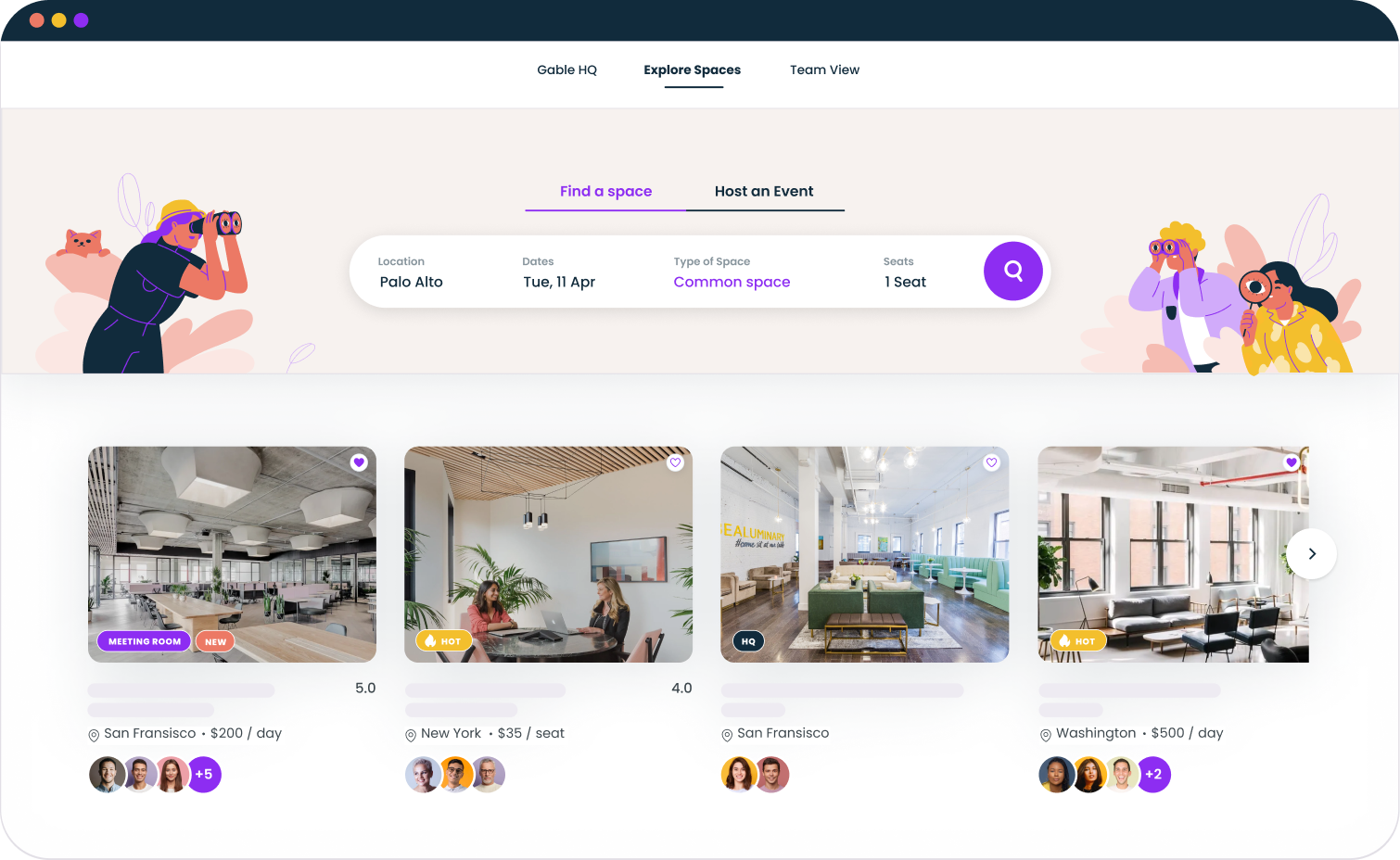
Bringing remote teams together in person
While virtual wellness activities form the backbone of any remote wellness program, periodic in-person gatherings provide irreplaceable value for employee wellbeing. Research consistently shows that face-to-face interaction strengthens relationships in ways that video calls cannot replicate.
The wellness benefits of intentional gatherings
In-person time serves multiple wellness goals simultaneously. It combats isolation, strengthens social connections, enables physical activity together, and reinforces that employees belong to a larger community. For remote workers who spend most days alone, these gatherings can be transformative for mental well-being.
The key is making in-person time purposeful rather than defaulting to traditional office activities. Instead of sitting in conference rooms, plan off-sites that include movement, outdoor time, and wellness programming. Build in unstructured social time where relationships can deepen naturally.
Flexible workspace access for connection
Not every in-person connection needs to happen at large company events. Giving remote employees access to a flexible workspace enables spontaneous local meetups, collaborative work sessions with nearby colleagues, and a change of scenery when working from home becomes isolating.
When team members can easily book a coworking space to work alongside a colleague, or reserve a meeting room for an in-person brainstorm, they regain some of the serendipitous connection that office life provides. This flexibility supports both collaboration and individual employee wellness.
Title: Enable Your Team to Gather Anywhere Body: Gable On-Demand gives your remote employees access to 20,000+ premium workspaces across 900+ cities. Facilitate in-person connections without long-term leases or expensive memberships. Button: Learn more Link: https://www.gable.to/on-demand
Implementing an effective virtual wellness program
Having great wellness ideas matters less than implementing them effectively. The benefits of employee wellness programs only materialize when employees actually participate and when programs are sustained over time.
Start with an assessment of employee needs
Before launching wellness initiatives, survey your remote workforce to understand their specific needs and interests. What wellness challenges do they face? What types of activities appeal to them? What barriers have prevented them from prioritizing health?
This input ensures you invest in programming that will actually resonate. A workforce struggling with isolation needs different interventions than one dealing primarily with physical health concerns. Meet your employees where they are rather than guessing what they need.
Reduce barriers to participation
The biggest predictor of wellness program success is participation rate. Research from Gartner indicates that reducing barriers to entry is crucial for any workplace initiative. Make wellness activities easy to access, available at convenient times, and promoted through multiple channels.
Consider offering wellness stipends that let employees choose their own activities rather than mandating specific programs. This autonomy increases participation by letting people engage with wellness in ways that fit their lives.
Measure and iterate
Track participation rates, gather feedback, and measure outcomes wherever possible. Which activities draw the most engagement? Which ones do employees find most valuable? Are you seeing improvements in the metrics that matter, whether that's reduced sick days, improved engagement scores, or direct feedback about well-being?
Understanding the ROI of employee wellness programs helps justify continued investment and guides decisions about where to focus resources. Be willing to discontinue programs that aren't working and double down on those that are.
Leadership participation and modeling
C-suite participation strongly correlates with overall employee engagement in wellness programs. When leaders visibly participate in wellness activities, discuss their own wellness practices, and prioritize their health, they signal that wellness matters at the organization.
This modeling is especially important for mental health initiatives. When senior leaders share their own experiences with stress, therapy, or mental health challenges, they create psychological safety for others to seek help when needed.
Making wellness part of your remote work environment
Sustainable employee wellness requires embedding wellness into the fabric of how your organization operates, not treating it as a separate program that competes for time and attention.
Integrate wellness into workflows
Build wellness touchpoints into existing routines. Start meetings with a brief check-in that includes how people are doing personally, not just project updates. Include wellness topics in team retrospectives. Make movement breaks a standard part of long working sessions.
When wellness becomes woven into how work happens rather than something extra to do, participation becomes effortless. Employees don't have to find additional time for wellness; it's simply part of how the organization operates.
Address the remote work environment itself
Sometimes the best wellness intervention is addressing the conditions that undermine health. This might mean establishing clear expectations around working hours to prevent an always-on culture. It could involve providing ergonomic equipment for home offices. Or it might require training managers to recognize signs of burnout in their team members.
A holistic approach to remote employee health addresses root causes, not just symptoms. Educate employees on sustainable remote work practices and give them the tools and permissions to prioritize their well-being.
Create accountability and visibility
Regular communication about wellness programming keeps it top of mind. Share participation data, celebrate milestones, and highlight employee wellness wins in company communications. This visibility reinforces that wellness matters and creates social proof that encourages others to participate.
Designate wellness champions or ambassadors within different parts of the organization. These individuals can promote programming, gather feedback, and serve as resources for colleagues interested in improving their health.
Your remote wellness program checklist
Building an effective online wellness program requires attention to multiple dimensions of health. Use this checklist to ensure comprehensive coverage:
Physical health:
- Online fitness challenges and competitions
- Virtual fitness classes (yoga, HIIT, strength training)
- Movement breaks and stretch sessions
- Healthy diet resources and nutrition education
- Ergonomic support for home offices
Mental health:
- Access to mental health professionals and counseling
- Mental health apps and digital resources
- Designated mental health days
- Mental health workshops and educational programming
- Mindfulness and meditation programs
Social and emotional health:
- Virtual team building and social events
- Employee resource groups for wellness interests
- Opportunities for in-person connection
- Recognition programs that celebrate well-being
- Manager training on supporting team wellness
Financial health:
- Financial literacy workshops and education
- Access to financial planning resources
- Emergency fund or loan programs
- Retirement planning support
Organizational support:
- Leadership participation and modeling
- Wellness integrated into workflows and culture
- Measurement and continuous improvement
- Flexible policies that support work-life balance
Building a culture of wellness
Virtual wellness programs for remote employees work best when they reflect genuine organizational commitment to employee well-being rather than checkbox exercises. When employees feel that their employer truly cares about their health, they're more likely to engage with programming and more likely to stay with the organization long-term.
This commitment shows up in the details. It's leadership participating in wellness activities alongside employees. It's flexible policies that let people structure work around their lives. It's managers who check in on well-being, not just deliverables. It's sustained investment in wellness programming even when budgets get tight.
The ROI data is clear: organizations that invest in employee wellness see returns in productivity, retention, and healthcare costs. But beyond the numbers, wellness programs express something important about organizational values. They say that employees matter as whole people, not just as producers of work output.
For distributed teams navigating the unique challenges of remote work, this message lands powerfully. Wellness programs become a tangible way of showing care across physical distance, building the trust and connection that remote work can otherwise erode.
From flexible workspace access to team gathering tools, discover how leading companies use Gable to build connection and support employee wellbeing across their distributed workforce.
Get a demo