.svg)


.svg)
- Team building activities drive measurable results: 63% of leaders report improved communication and 61% see a morale boost after structured activities
- The best activities match your team's development stage, time constraints, and work format (remote, hybrid, or in-person)
- Wellness-integrated team building now accounts for 41% of new event bookings, making it the fastest-growing category in 2026
- Over 60% of team-building events are shifting to under four hours, so micro-events and meeting openers deserve as much planning as full-day offsites
- Hybrid team building works best when you default to an all-remote format rather than splitting the experience between in-person and virtual participants
Team building activities have earned a mixed reputation. Done well, they turn disconnected colleagues into a cohesive group that communicates better, solves problems faster, and genuinely enjoys working together. Done poorly, they become the awkward office memories nobody wants to repeat.
The difference comes down to purpose. The strongest team building activities aren't filler for an afternoon. They're strategic investments in how your team collaborates. Gallup's research shows the stakes are high: managers account for 70% of the variance in team engagement, and highly engaged teams see 23% higher profitability. Meanwhile, 63% of leaders report improved communication after running team-building activities, and 61% see a direct boost in team morale.
Whether you're welcoming new team members, strengthening bonds across a distributed workforce, or planning your next team building day, this guide covers activities that deliver results, organized by time commitment, team format, and development stage.
What the research says about team cohesion
Before jumping into specific activities, it's worth understanding why investing in team cohesion pays off.
According to MIT research published in Harvard Business Review, social time accounts for more than 50% of positive changes in team communication patterns. That single finding explains why even a five-minute team building exercise before a meeting can shift how your entire team collaborates.
The data on isolation is equally compelling. Gallup's research indicates that feelings of isolation can reduce productivity by up to 21%. For remote and distributed teams, intentional team building isn't optional; it's a performance requirement.
And the ROI extends beyond productivity. Organizations spending more than $25 per person per month on team building report 25% fewer morale issues. According to Stanford research, employees who embrace collaborative working focus on tasks 64% longer than their solo peers.
How to choose activities by time commitment
One of the biggest mistakes teams make is mismatching the activity to the available time. A three-hour exercise crammed into 30 minutes frustrates everyone. A five-minute icebreaker stretched across an afternoon feels thin.
Here's how to think about time allocation, especially given that over 60% of team-building events in 2026 are shorter than four hours:
5 To 15 minutes: Meeting openers
Perfect for the start of team calls or brief breaks. These require zero setup and build connection incrementally over weeks.
30 To 60 minutes: Focused sessions
Dedicated time for a single activity with a clear objective. Works well as a recurring calendar block (weekly or biweekly).
2 To 4 hours: Micro-events
The fastest-growing format in 2026. Long enough for depth, short enough to avoid fatigue. Ideal for quarterly team building or onboarding cohorts.
Full-day or multi-day: Offsites and retreats
Reserved for major milestones, annual planning, or team formation. If you're planning something at this scale, our guide to corporate event planning covers the logistics.
Quick team building games (5 to 15 Minutes)
Sometimes you only have a few minutes at the start of a meeting. These activities require minimal setup and can energize your group without disrupting the schedule.
Two truths and a lie
Each team member shares three statements about themselves: two true, one false. The group guesses which is the lie.
This exercise encourages people to share personal information in a low-pressure way, helping new team members integrate while letting established colleagues discover something unexpected about each other.
Office trivia
Create questions about your workplace, team history, or industry. Divide into smaller teams that compete to answer correctly. Mix facts about the company with fun questions about colleagues' preferences.
This activity challenges teams to recall shared experiences while creating friendly competition. It's particularly effective for internal company events that include both tenured employees and recent hires.
One-word check-in
At the start of team calls, ask each person to share one word describing how they're feeling. The next person explains their word before sharing their own.
While deceptively simple, this builds verbal communication skills and helps team members understand each other's current state. It takes two to three minutes but creates space for genuine connection.
Emoji reaction round
Post a question or scenario in your team chat and have everyone respond with a single emoji. Then go around and explain your choice. The constraint forces creative expression and often sparks laughter.
This works especially well for teams across time zones because it can run asynchronously before transitioning to a live discussion.
Looking for more ways to warm up your meetings? We've compiled 75+ icebreaker games organized by time, team size, and outcome.

Looking for event ideas that go beyond surface-level fun? Explore formats that create lasting impact on team culture and collaboration.
Get event ideas
Team building activities that encourage creative thinking
The best exercises create situations where team members must collaborate, communicate, and think creatively under constraints.
Human knot
Participants stand in a circle, close their eyes, and reach across to grab two different hands. The group then works together to untangle themselves into a circle without releasing their grip.
This physical activity challenges teams to communicate clearly under pressure. It requires patience, verbal coordination, and collective strategic thinking. Allow 15 to 20 minutes for groups of 8 to 12 people.
Marshmallow challenge
Each team receives 20 sticks of spaghetti, one yard of tape, one yard of string, and one marshmallow. The goal: build the tallest freestanding structure with the marshmallow on top.
This activity reveals how teams approach problem-solving under time constraints. It often surprises participants when the "obvious" strategies fail. The debrief conversation about what worked (and what didn't) creates valuable insights about team dynamics.
Escape room challenge
Whether using a physical escape room or a virtual version during team calls, this activity requires the entire team to contribute different skills. Puzzles typically demand a mix of logical thinking, creativity, and communication.
Escape rooms naturally encourage team members to leverage each other's strengths. Someone who notices small details might spot a clue, while someone else excels at the logic puzzle. This mirrors how effective collaboration works in real projects.
Bridge building
Divide your group into two teams, each responsible for building half of a bridge using provided materials. The catch: teams can't see each other's progress and must rely on verbal communication to ensure the halves connect.
This exercise demonstrates how critical thinking and clear communication become essential when teams work on interconnected projects. It's a particularly effective exercise for cross-functional groups.
Obstacle course relay
Set up a simple course in your meeting space or outdoors. Team members guide blindfolded colleagues through the course using only verbal instructions. Rotate roles so everyone experiences both guiding and navigating.
This builds trust and demonstrates how effective communication directly impacts the team's success. It's one of the more physical activities, making it ideal for days when you want to get people moving.
Team building activities for remote teams
Keeping remote teams connected requires intentional effort. These activities work well over video calls and help combat the isolation that can affect distributed workforces. For a deeper dive into remote connection strategies, see our guide on engaging remote employees.
Virtual scavenger hunt
Create a list of items that team members must locate in their homes or offices within a set timeframe. Items can range from specific ("something purple") to creative ("something that reflects your personality"). Participants hold up items to their cameras as they find them.
This gets people moving while revealing glimpses into each other's environments. It's perfect for teams that rarely or never meet in person.
Show and tell
Ask each team member to bring an object that's meaningful to them and share its story. Limit presentations to two to three minutes each to maintain energy.
This creates space for personal sharing without feeling forced. Team members often discover unexpected commonalities that strengthen relationships.
Virtual coffee roulette
Pair up random team members for casual 15-minute video chats. Use a scheduling tool to automate the matching process on a weekly or biweekly cadence.
This addresses a key challenge for remote teams: the absence of spontaneous hallway conversations. Regular informal interactions between colleagues who don't usually work together build trust and cohesion over time.
Ship-and-sync workshops
Mail identical kits to each participant (terrarium supplies, cocktail ingredients, craft materials) and run a guided session over video. Everyone builds or creates the same thing simultaneously.
The shared physical experience bridges the screen gap. Participants end up with a tangible reminder of the activity, which reinforces the connection long after the call ends.
GIF Battles
Post a theme or prompt in your team chat and have everyone respond with the most appropriate GIF. Vote on favorites for each round.
This lighthearted activity works asynchronously, making it ideal for teams across time zones. It adds fun to regular communication channels and helps establish team culture.
Hybrid team building: Avoiding the "two teams" trap
53% of hybrid team leaders report challenges maintaining collaboration and communication when some people are in the office and others are remote. The core problem: hybrid activities often create a two-tier experience where in-person participants get the full version and remote participants get a watered-down one.
The most effective approach is to default to an all-remote format for team building, even when some people are in the same office. When everyone joins from their own screen, nobody gets a second-class experience.
If you do run a hybrid activity, follow these principles:
- Use a shared digital canvas. Tools like Miro or FigJam give everyone equal access to contribute, regardless of location.
- Assign a remote advocate. One in-office person monitors the chat and ensures remote voices are heard during discussions.
- Avoid side conversations. If it's not on the main audio channel, it doesn't count. This keeps remote participants from missing context.
- Test the tech first. Audio issues in a conference room can derail the entire experience for remote participants.
For more on running effective hybrid meetings, including camera placement and facilitation techniques, check our dedicated guide.
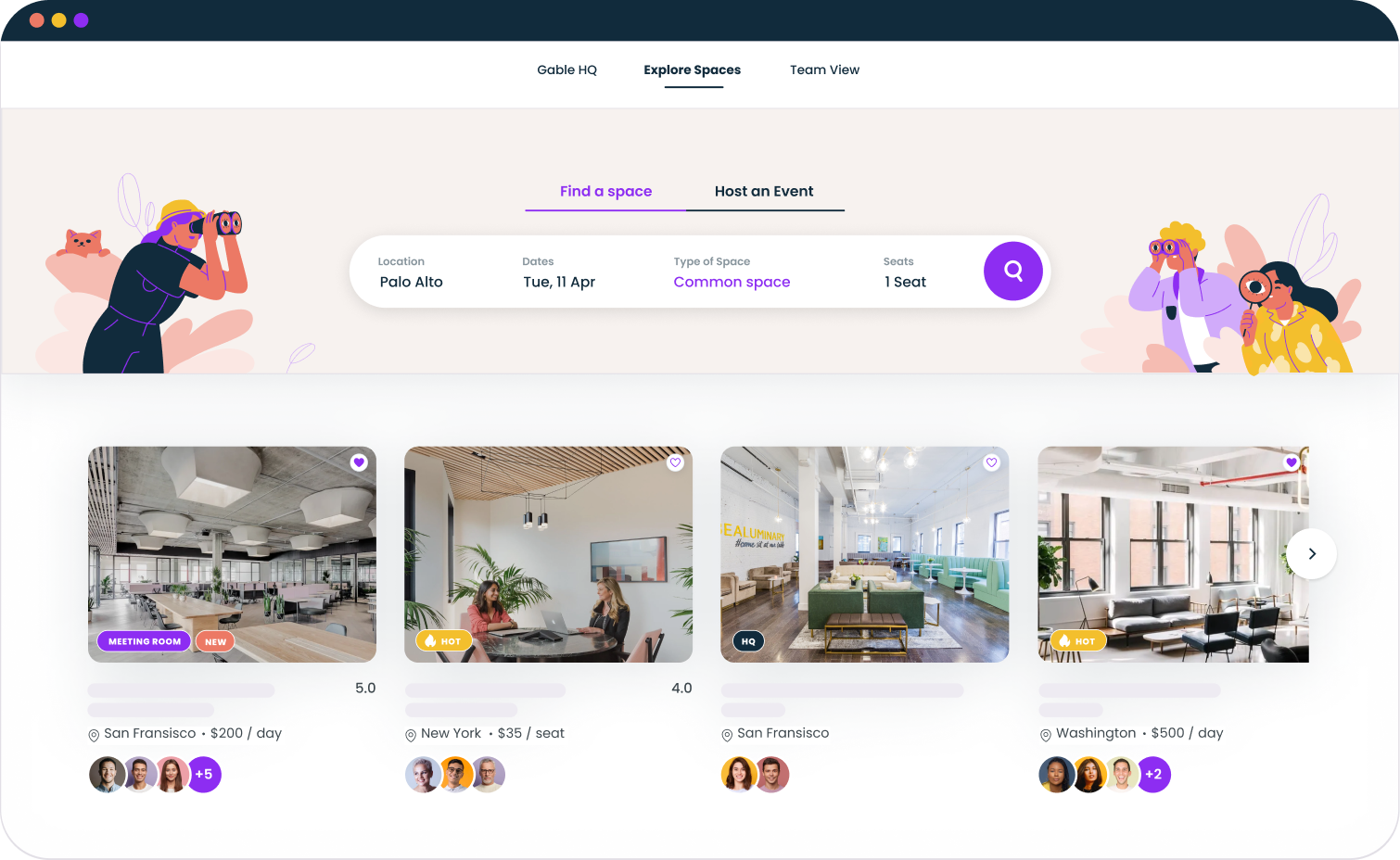
Gable Events helps you find venues, send invitations, and track spending for team gatherings, whether they're onsite, offsite, or hybrid.
Learn more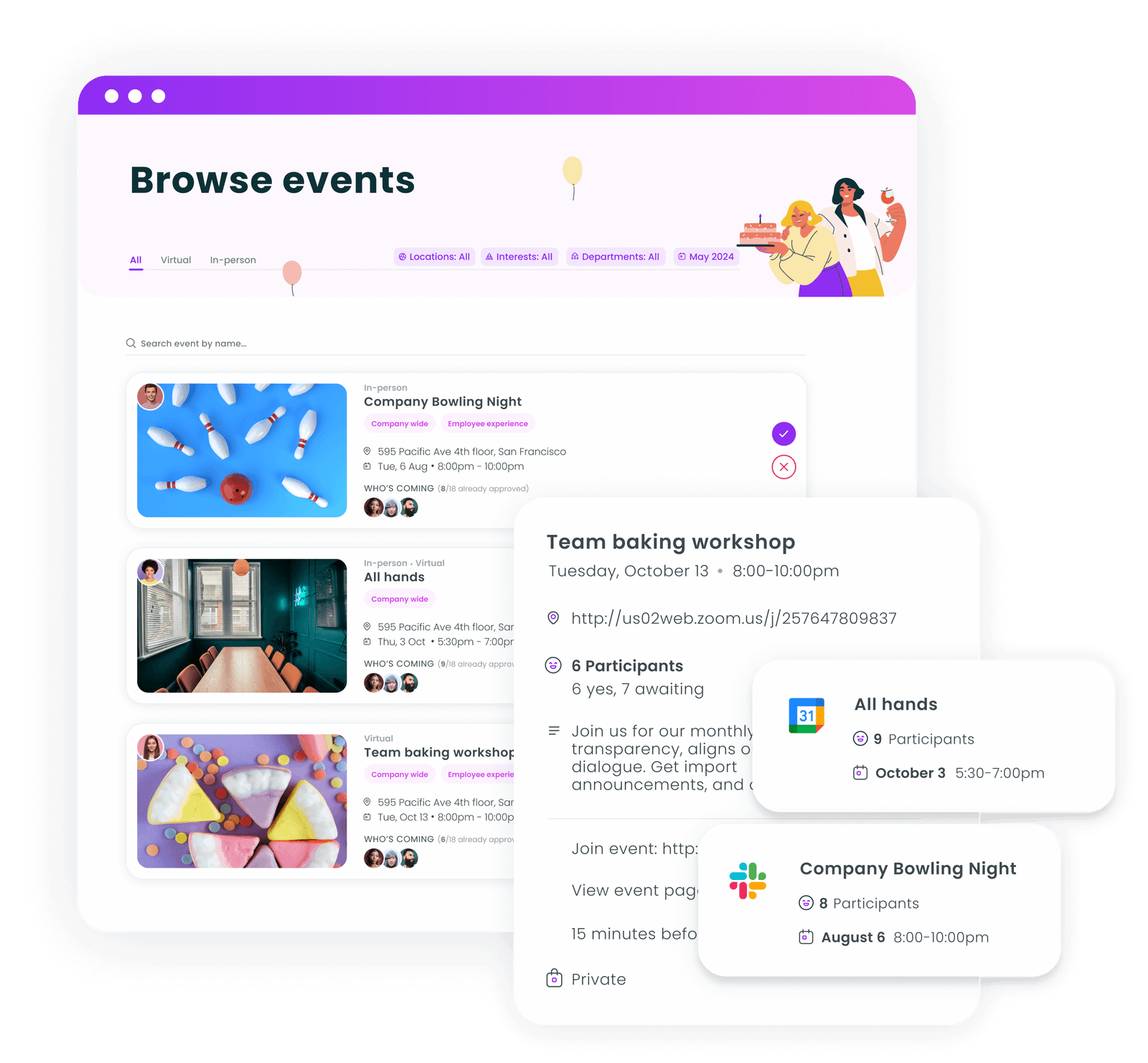
Wellness-integrated team building
Wellness-focused activities represent 41% of new event bookings in 2026, up from 18% in 2024. This isn't a passing trend. Teams are recognizing that activities supporting physical and mental health produce stronger engagement than purely social events.
Guided outdoor experiences
Organize group hikes, nature walks, or outdoor yoga sessions. The combination of physical movement and natural settings reduces stress while creating space for organic conversation. These work particularly well as quarterly team building events.
Mindfulness workshops
Bring in a facilitator for a guided meditation or breathwork session. Follow it with a group discussion about stress management techniques. This format works for both in-person and virtual teams.
Cooking demos with a health focus
Hire a chef or nutritionist to lead a cooking session focused on quick, healthy meals. Teams cook together (in person or via shipped kits) and share the meal afterward. The collaborative cooking process requires coordination and communication, while the health angle adds lasting value.
Recharge half-days
Combine a short team activity with protected personal time. For example, run a 90-minute team workshop in the morning, then give the afternoon off for rest. This approach acknowledges that collective wellness days can be more effective than individual mental health days.
Team building ideas that develop strategic thinking
Some situations call for activities that directly develop skills your team uses in their work. These combine engagement with genuine skill development.
Case study workshop
Present a real business challenge (anonymized if needed) and have teams develop solutions. Groups present their approaches, and the team discusses the merits of different strategies.
This brings strategic thinking into a collaborative context. It works particularly well when you want team building to feel directly relevant to daily work.
Reverse brainstorming
Instead of solving a problem directly, ask teams to brainstorm how to make the problem worse. Then flip each "bad" idea into a potential solution.
This approach often generates more creative solutions than traditional brainstorming. It's a particularly engaging exercise that sharpens problem-solving skills.
LEGO Serious play
Provide LEGO sets and pose abstract questions about team dynamics, challenges, or goals. Team members build models to represent their answers and explain them to the group.
The tactile building process activates different thinking pathways than verbal discussion alone. This works well for teams that need to surface unspoken assumptions or align on shared goals.
Role reversal exercise
Have team members switch roles for a defined period or simulated scenario. Marketing presents the engineering perspective. Junior team members lead a session.
This builds empathy across the team and helps everyone understand the constraints and pressures their colleagues face daily.
What, so what, now what
After completing any activity or project, facilitate a structured debrief using three questions:
- What happened? Describe the experience factually.
- So what does that mean? Interpret the patterns and dynamics.
- Now what will we do differently? Commit to specific changes.
This framework turns any experience into a learning opportunity. It encourages team members to reflect on group dynamics and connect activities to future behavior.
Team building by development stage
Not every team needs the same type of activity. A newly formed team has different needs than one that's been working together for years. Using Tuckman's model of team development, here's how to match activities to your team's current stage:
Forming: new teams finding their footing
Focus on getting-to-know-you activities that lower barriers. Two truths and a lie, personal user manuals, and show-and-tell sessions help people learn about each other without pressure. The goal is building familiarity and psychological safety.
Storming: teams navigating conflict
Choose activities that build communication skills and surface tensions constructively. Feedback practice sessions, role reversal exercises, and structured debates give teams a safe space to work through disagreements. Avoid high-competition activities during this stage.
Norming: teams establishing rhythms
Activities that clarify roles and strengthen trust work best here. Strength mapping, team canvas workshops, and bridge-building exercises help teams solidify how they work together. This is also a good stage for workplace satisfaction surveys to capture what's working.
Performing: high-functioning teams pushing further
Challenge these teams with complex problem-solving activities. Hackathons, case study workshops, and innovation challenges keep high-performing teams engaged. The marshmallow challenge and escape rooms also work well because they introduce novel constraints.
Team building activities for small groups (3 to 8 People)
Smaller teams can go deeper with activities that require more individual participation. These work well for project teams, leadership groups, or any context where psychological safety is a priority.
Personal user manuals
Each team member creates a one-page document explaining how they work best: communication preferences, pet peeves, preferred feedback methods, and what energizes them. Share and discuss as a group.
This exercise accelerates the process of learning to work together effectively and creates a reference document for ongoing use.
Strength mapping
Using a framework like StrengthsFinder results or a simple self-assessment, map each person's strengths visually. Discuss how the team's collective strengths complement each other and where gaps might exist.
This helps team members appreciate one another's contributions and identify ways to collaborate more effectively.
Feedback practice
In pairs, practice giving and receiving specific, actionable feedback in a structured format. Rotate partners and scenarios.
Building feedback skills improves team communication well beyond the exercise itself. It's one of the most practical skills you can develop as a team.
Failure celebration
Have each person share a professional failure and what they learned from it. The group discusses how those lessons apply more broadly.
This builds psychological safety by normalizing mistakes as learning opportunities. It requires vulnerability, making it most appropriate for groups with existing trust.
Team canvas workshop
Use a visual framework to align on team purpose, values, roles, and working agreements. Each person contributes, and the group builds consensus.
This creates a tangible artifact that guides future work together. It's particularly valuable for new teams or teams going through transitions.
Activities for large groups (20+ people)
When you're working with 20 or more people, logistics become essential. These activities scale well while maintaining meaningful connections.
World café
Set up multiple discussion tables, each with a different question or topic. Participants rotate between tables at timed intervals, building on conversations left by previous groups.
This format ensures everyone participates and generates rich insights from diverse perspectives. It works well for entire-group gatherings where you want substantive discussion.
Department showcase
Have different teams or departments present what they do, current projects, and how others can collaborate with them.
This promotes cross-organizational teamwork and helps employees understand the broader context of their work. It's especially valuable for larger organizations where teams operate in silos.
Lightning talks
Invite volunteers to present five-minute talks on topics they're passionate about, work-related or not.
This format showcases your group members' diverse interests and expertise while building presentation skills in a low-stakes environment.
Photo challenge
Divide into teams and assign creative photo challenges to complete around your venue or city. Teams document their adventures and present their results.
This works particularly well for company offsite activities. It gets people moving, encourages creativity, and produces memorable content.
Interactive polling sessions
Use real-time polling tools to gather opinions, make collective decisions, or reveal interesting facts about the group.
The instant visualization of results creates engagement even in very large groups and can spark discussion about surprising findings.
Physical team building activities
Sometimes the best team building days involve getting away from screens and moving together.
Cooking challenge
Teams compete to create dishes from provided ingredients. No prior cooking skill required, and the shared meal afterward extends the bonding time.
This activity requires coordination, communication, and adapting when things don't go as planned.
Volunteer projects
Organize a group volunteer activity like park cleanup, meal packing, or construction projects for a local nonprofit.
Working together toward a meaningful goal builds team cohesion while contributing to the community. It's among the most purpose-driven team building ideas. If you're looking to measure the ROI of these events, track participation rates and post-event engagement scores.
Sports day
Organize a casual sports tournament or field day with multiple activities. Mix skill levels and keep competition friendly.
Physical activity releases endorphins and creates shared experiences that strengthen bonds. Keep it inclusive by offering various participation levels.
Walking meetings
Replace seated meetings with walks, either in person or with people walking in their own locations during a call.
Regular use of walking meetings improves both physical health and meeting quality. People often think more creatively while moving.
Outdoor adventure
Organize hiking, kayaking, or other outdoor activities appropriate for your group's abilities and interests.
These experiences create strong memories and conversations that continue long after the activity ends. If you're planning something bigger, our guide to planning a corporate retreat covers the full logistics.
Inclusive and culturally aware team building
Inclusive, culturally aware events see 44% higher engagement scores than generic team-building exercises. Building inclusivity into your activities isn't an add-on; it's a design principle.
Here's what that looks like in practice:
- Offer multiple participation levels. Not everyone can do a ropes course. Provide alternatives that let people contribute without physical strain.
- Rotate facilitation. Let different team members lead activities. This distributes power and surfaces diverse perspectives.
- Consider dietary and cultural needs. Food-based activities should accommodate restrictions. Alcohol-centered events exclude people who don't drink.
- Use sensory-friendly options. Loud, chaotic activities can be overwhelming for some participants. Balance high-energy formats with quieter alternatives.
- Avoid activities that single people out. Spotlight-heavy games can trigger anxiety. Choose formats where participation feels natural, not performative.
How to choose the right team building activity
With dozens of options available, selecting the right one requires considering several factors:
- Start with your goal. Are you trying to integrate new team members, improve communication, build problem-solving skills, or give people a break? Different activities serve different purposes.
- Know your team. What are the physical abilities, comfort levels, and preferences of your group? An obstacle course might thrill some teams but alienate others.
- Match the format. Consider whether your team is colocated, remote, or hybrid. For distributed teams, Gable's workplace analytics can help you understand where your people are and how they're collaborating, so you can plan activities that bring the right people together.
- Respect time constraints. Quick activities work well for regular meetings; more involved exercises suit dedicated workplace events. Don't try to cram a three-hour activity into a 30-minute window.
- Build on what works. Pay attention to which activities generate genuine engagement and positive feedback. Over time, you'll develop a repertoire of exercises tailored to your company culture.
Making team building part of your culture
The most effective organizations don't treat team building as a once-a-year event. They embed opportunities for connection into regular work patterns.
Start small with quick activities during routine meetings. Even a few minutes of personal connection at the start of team calls can shift dynamics over time.
Plan dedicated time for deeper activities quarterly or during major transitions. New team members joining, team mergers, and significant project milestones all create natural opportunities for intentional team building.
For distributed teams, consider how physical space supports connection. Flexible workspaces enable remote employees to occasionally work alongside colleagues without requiring expensive permanent offices in every location. Even occasional in-person gatherings can strengthen relationships that sustain remote collaboration for months.
Track results over time. Notice changes in communication patterns, collaboration quality, and team satisfaction. Workplace experience benchmarks can help you compare your team's engagement against industry standards. The most successful team building programs evolve based on what works for specific teams, not what looks good on a planning document.
Bring your team together with purpose
Team building activities work best when they serve a genuine need. The goal isn't to fill a calendar slot. It's to develop the communication skills, trust, and cohesion that make your team more effective in their actual work.
Start with your team's specific situation. New team members struggling to integrate? Focus on getting-to-know-you activities. Cross-functional collaboration breaking down? Try exercises that bring different groups together. Remote team feeling disconnected? Prioritize activities that create genuine personal connections.
Then match the activity to your team's style, stage, and constraints. A quick exercise before your next meeting might be the right starting point. A quarterly micro-event might be the format that sticks.
Whatever you choose, the investment pays dividends. Teams that communicate well, trust each other, and enjoy working together consistently outperform those that don't.
Planning an offsite, team building day, or regular collaboration session? Gable helps companies book workspaces worldwide, making it easy to gather your team wherever they're located.
Get a demo