.svg)


.svg)
Planning a corporate retreat sounds exciting until you start. Suddenly, you're juggling budgets, battling over dates, and wondering if your team really wants to spend a weekend doing trust falls in the woods.
Here's the good news: a well-planned company retreat can genuinely transform how your team works together. According to Gallup's 2025 State of the Global Workplace report, global employee engagement dropped to just 21% in 2024, costing organizations an estimated $438 billion in lost productivity. In-person retreats are among the most effective ways to reverse this trend. Research shows that 60% of employees feel in-person company offsites make them more engaged in their roles, and firms with robust team bonding strategies see a 73% decrease in employee turnover.
Whether you're organizing your first team retreat or looking to improve on past experiences, this complete guide walks you through the entire retreat planning process from setting clear goals to gathering feedback after everyone returns home.
Step 1: Define your retreat goals and purpose
Before you start booking retreat venues or planning team building activities, answer a fundamental question: what do you want this company retreat to accomplish?
The most successful retreats tie to specific organizational objectives. Consider whether your goals include solving a specific business challenge, improving a company culture, training your leadership team in new skills, or celebrating achievements and boosting team morale.
Your retreat purpose shapes every decision that follows, from location selection to activity planning to how you structure the company retreat agenda. Write down your goals and share them with key stakeholders early in the planning process. This ensures everyone is on the same page before you invest significant time and resources, and gives you clear criteria for evaluating success when you send out your post-retreat survey.
Step 2: Set your budget early and realistically
Your budget will determine nearly every aspect of your corporate retreat, from destination and duration to activities and accommodations.
According to RetreatsAndVenues research, the average retreat spend per employee for companies with 21-50 employees is $3,692 USD, including flights and accommodations. The average retreat length is approximately 4 days. Single-day local retreats typically cost between $55 and $70 per person, while all-inclusive overnight retreats may run $300-$350 per person per day.
When building your budget, plan for venue and meeting space rental, food options, transportation, accommodations, team-building exercises, workshop materials, an unexpected expenses buffer of 10-15%, and, if applicable, a professional facilitator. A key principle: cover all employees' expenses throughout the retreat. Asking people to go out of pocket for transfers, meals, or activities can be divisive and detract from the retreat experience.
Step 3: Choose the right location for your team
The location you select sets the tone for your entire retreat experience. Think about what kind of environment will best support your goals while remaining accessible to your entire team.
Accessibility matters because the perfect spot loses appeal if getting there requires 10 hours of travel. A destination 30-90 minutes outside a major city often works well for in person retreats, ensuring people stay on property and spend time together rather than heading off to explore on their own.
For remote teams spread across multiple locations, popular US destinations include New York, Texas, Colorado, Arizona, and Florida. September, October, and May are the most popular months for corporate retreats. Venues that can accommodate various group dynamics are ideal, as you'll need spaces for full-team sessions as well as breakout rooms for smaller groups. Ensure the venue has reliable WiFi, appropriate AV equipment, and enough meeting rooms for everyone to work comfortably.

Explore research-backed strategies for keeping remote and distributed employees engaged, connected, and thriving.
Read the guide
Step 4: Plan your company retreat agenda
The best corporate retreats balance structure with free time. You want enough planned activities to move toward your goals, but not so many that everyone ends up exhausted and craving alone time.
Start by mapping out your days. A typical four-day company retreat might look something like this:
Day 1 focuses on arrival and connection. Welcome everyone with a shared meal and icebreaker activities. Keep the energy light and focused on helping team members get to know each other, especially if you have a remote team that rarely meets in person.
Day 2 shifts to focused work sessions. This is where you tackle strategic discussions, workshops, or problem-solve around key business challenges. Schedule your most demanding sessions in the morning when energy is highest, and build in generous breaks.
Day 3 combines work with team-building exercises. Morning sessions can address remaining work priorities, while afternoons open up for organized activities. Options might include a scavenger hunt, cooking classes, wine tasting, escape rooms, group hikes, or even axe-throwing. The goal is to strengthen relationships through shared experiences.
Day 4 centers on action planning and departure. Before everyone leaves, establish clear next steps from your discussions. What actions will people take? Who is responsible? Set follow-up dates and ensure the retreat feeling translates into real change back at the office.
Throughout your agenda, protect unstructured time. Some of the most valuable connections happen during cocktail hours, over coffee, or during a spontaneous walk. Not everyone thrives in organized group activities, so providing options and free time ensures all personality types can engage.
If you're working with an external facilitator, involve them early in agenda planning. They bring expertise in group dynamics, can design sessions that achieve your objectives, and free your internal team to participate fully rather than managing logistics.
Step 5: Organize engaging team-building activities
Team building doesn't have to mean forced fun or awkward trust exercises. The best team-building activities feel natural, create shared experiences, and give people stories to tell afterward.
Consider your group size and the mix of personalities on your team. Some people thrive in competitive environments while others prefer collaborative challenges. A good retreat includes variety.
For outdoor enthusiasts, consider group hikes to explore local trails with fresh air and natural scenery, a beach volleyball tournament if you're near the coast, kayaking or paddleboarding for water-adjacent venues, or a Park City ski day if you're in the mountains during winter.
For creative types, cooking classes let you prepare a meal together; escape rooms challenge teams to problem-solve under pressure; a game night with trivia or board games creates low-key fun; and art workshops like painting or pottery offer hands-on creativity.
For strategic thinkers, hackathons where teams tackle real business challenges foster innovation, scenario planning exercises addressing industry trends spark discussion, and collaborative puzzle challenges requiring diverse thinking styles build connection.
Whatever activities you choose, ensure they're accessible for everyone. A hiking adventure excludes team members with mobility limitations. Consider offering alternatives so no one feels left out. The goal is building connections across your entire team, not just among the most athletic or outgoing members.
Also consider bringing in local experiences that connect to your retreat location. Restaurant recommendations from locals, guided tours of the area, or unique regional activities create memorable experiences that standard hotel conference rooms cannot match. For more activity inspiration, explore our guide to company offsite activities designed to boost collaboration and strengthen team connections.
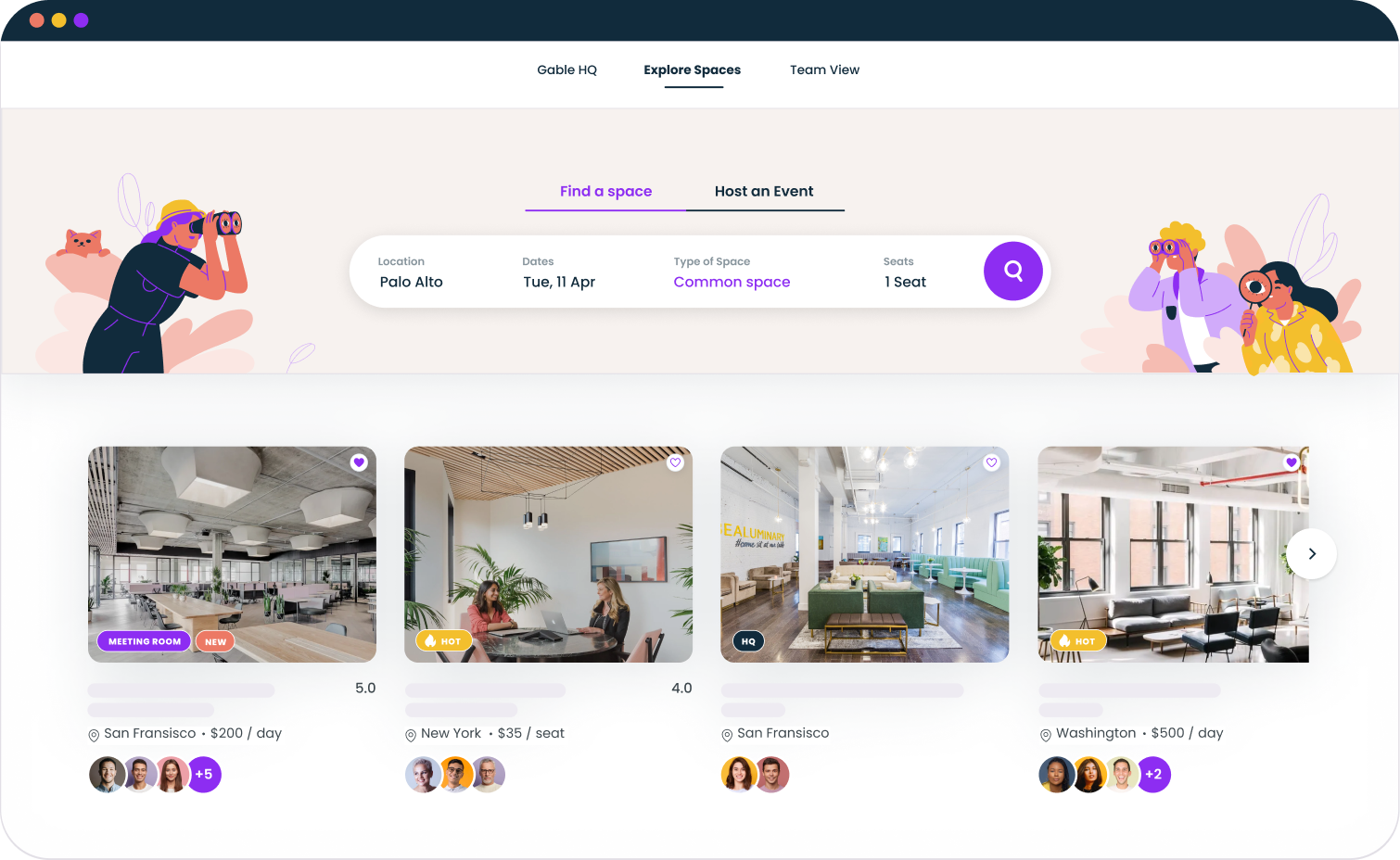
Gable Events helps you plan, source, and manage corporate events with the right venues, seamless logistics, and real-time tracking.
Explore Gable Events
Step 6: Handle logistics with care
The logistics behind a seamless experience often determine whether your retreat succeeds or falls flat. Sweat the details so your team can focus on connecting and collaborating.
Transportation deserves careful attention. If you're flying everyone to a central location, book flights early and coordinate arrivals. Arrange shuttles or shared rides from the airport to the venue. Nothing starts a retreat on the wrong foot like team members stressed about getting there.
Accommodations should be comfortable and appropriate for your team. Discuss accommodations in advance if you expect employees to share rooms, and offer alternatives for those who prefer their own space. Cover creature comforts explicitly, including sleeping arrangements, bathroom facilities, WiFi access, and food availability.
Dietary requirements are essential to address. Collect information well in advance about allergies, restrictions, and preferences. Work with your venue to ensure every meal has options for everyone. Food is a significant part of the retreat experience, and feeling excluded at meals undermines the entire purpose.
Communication before the retreat should be comprehensive. People will want to know exact dates and location, accommodation details and what's provided, how to get there and whether transportation is arranged, the purpose of the retreat and expected outcomes, anything they need to prepare in advance, and the full agenda. Clear communication reduces pre-retreat anxiety and helps team members arrive ready to engage.
Step 7: Keep everyone in mind
Here's something many retreat planners forget: not everyone experiences events the same way. A retreat designed for extroverts who love constant interaction will exhaust introverts and may exclude team members with different needs.
Accessibility goes beyond physical accommodations. Consider team members with disabilities, chronic conditions, dietary restrictions, or mental health needs. Ensure activities have alternatives, quiet spaces are available for those who need breaks, and the schedule includes genuine downtime.
Different personality types need different things. Introverts recharge through alone time, so build this into the schedule. Not everyone wants to participate in high-energy games, so offer low-key alternatives. Some people process best through writing or reflection rather than group discussion.
Family and personal obligations matter. Acknowledge that attending the retreat means time away from loved ones. Be respectful of the commitment you're asking for and ensure the retreat delivers genuine value worth that sacrifice.
Inclusion should thread through every activity. Avoid inside jokes that exclude newer team members. Mix up groups so people connect with colleagues outside their immediate teams. Create opportunities for quieter voices to be heard, not just the most outspoken participants.
The goal is to ensure every team member feels welcome, valued, and able to participate fully. When you plan a company retreat with everyone in mind, you build camaraderie across your entire organization rather than reinforcing existing cliques.
Step 8: Gather feedback with a post-retreat survey
Your retreat doesn't end when everyone returns home. Capturing feedback while experiences are fresh helps you understand what worked and how to improve for next time.
Create an anonymous post retreat survey covering overall satisfaction, which activities were most valuable, what could be improved, whether the retreat achieved its goals, and suggestions for future locations. Send the survey within a week while memories are vivid, and keep it concise at 10-15 questions maximum.
Beyond the survey, look for behavioral indicators of success. Do teams collaborate differently after the retreat? Has communication improved? Are people referencing conversations from the retreat in their work? These signals tell you whether the investment delivered lasting value.
Step 9: Turn retreat momentum into lasting change
The biggest risk with corporate retreats is that energy fades within weeks of returning to normal routines. Before the retreat ends, establish clear action points with owners and deadlines. Document decisions so they're visible to everyone and schedule follow-up meetings to review progress.
For distributed and hybrid teams, consider how you'll maintain the retreat feeling between gatherings. Research shows that 72% of Gable bookings are for team gatherings, indicating employees value opportunities to connect in person beyond annual retreats. Quarterly offsites, regional meetups, or access to coworking spaces can sustain momentum. Many businesses find that building a strong hybrid workplace strategy helps maintain the connections forged during retreats throughout the year.
Common mistakes to avoid when planning a corporate retreat
Even well-intentioned retreat planners make preventable errors. Watch out for these common pitfalls.
Overpacking the agenda leaves no room for organic connection. If every minute is scheduled, people never have casual conversations that build real relationships. Balance is essential.
Ignoring input from attendees leads to retreats that miss the mark. Survey your team about preferences before finalizing plans. What activities interest them? What would they find valuable? Planning in a vacuum risks investing heavily in experiences no one wanted.
Forgetting to set clear expectations creates confusion. Communicate what's planned, what's optional, whether work will be expected, and what people should bring. The more clarity upfront, the smoother the retreat runs.
Choosing a venue without visiting can lead to unpleasant surprises. Photos don't always tell the full story. If possible, do a site visit or at minimum get detailed videos and references from past corporate groups.
Neglecting follow-through wastes the investment. If nothing changes after the retreat, people will question the value of future gatherings. Commit to turning retreat outcomes into real action.
See how Gable can help you source venues, manage logistics, and track engagement for company retreats, off-sites, and team gatherings.
Get a demo