.svg)


.svg)
Remote work comes with plenty of perks: flexibility, no commute, and the freedom to work from anywhere. But there's a hidden cost that many workplace leaders overlook. According to Gallup's 2024 State of the Global Workplace report, 25% of fully remote employees report experiencing loneliness, compared to just 16% of on-site workers and 21% of hybrid employees.
That loneliness isn't just uncomfortable. It's expensive. Research shows that employee isolation can reduce productivity by up to 21%, and disengaged workers cost the global economy approximately $8.9 trillion annually. For distributed teams, these numbers represent both a challenge and an opportunity.
The good news? Remote team building activities can flip this script entirely. When done right, they transform scattered individuals into cohesive teams that communicate better, collaborate more effectively, and actually enjoy working together, even through a screen.
This guide breaks down 25+ remote team building activities organized by purpose, time commitment, and team size. Whether you're looking for quick virtual team games to start your next meeting or planning a full virtual team lunch, you'll find ideas that help team members learn about each other and strengthen team bonds without feeling forced or awkward.
Why remote team building actually matters
Before diving into specific team building activities for remote teams, let's address the elephant in the virtual room: does remote team building even work?
The data says yes. A Stanford study found that employees who embrace collaborative work spend 64% more time on tasks than their solo peers. Research from MIT, published in the Harvard Business Review, indicates that social time accounts for more than 50% of positive changes in team communication patterns. And according to the Institute for Corporate Productivity, businesses promoting collaboration are five times more likely to be considered high-performing.
For remote teams specifically, the stakes are even higher. Without the natural interactions that happen in an office environment, building personal connections requires intentional effort. Regular team building activities create the touchpoints that help distributed teams feel like actual teams rather than collections of individuals working on the same projects.
The impact extends beyond team morale. Gallup research shows that highly engaged teams see 23% higher profitability. And engaged employees are 64% less likely to experience loneliness, creating a virtuous cycle where team building drives engagement, which further reduces isolation.
Quick virtual team games (5-15 minutes)
Not every team building activity needs a full hour blocked on the calendar. Some of the most effective activities take just a few minutes and fit naturally at the beginning or end of regular team meetings. These quick games help team members learn each other's communication styles while keeping energy high.
Two truths and a lie
This classic icebreaker works beautifully in a virtual setting. Each team member shares three statements about themselves: two true and one false. The rest of the team guesses which statement is the lie.
Why it works: The game reveals fun facts about other team members while practicing active listening. It creates shared stories that team members reference long after the game ends.
Best for: New teams, onboarding sessions, or groups where team members don't know each other well.
Time: 2-3 minutes per person
Virtual background contest
Challenge team members to create the most creative, funny, or themed virtual background. Set a theme like "your dream vacation spot," "your favorite movie scene," or "where you'd be if you weren't in this meeting."
Why it works: This takes just a few minutes but sparks conversation and reveals personality. It gives quieter team members an easy way to participate without being put on the spot verbally.
Best for: Teams that use Microsoft Teams, Zoom, or other video platforms regularly.
Time: 5-10 minutes total
Rapid-fire favorites
Prepare a list of quick questions like favorite food, last show binged, or dream vacation destination. Go around with each team member, answering immediately without overthinking.
Why it works: Speed keeps the activity energetic while helping team members learn preferences and interests that inform future conversations.
Best for: Opening team calls or warming up before brainstorming sessions.
Time: 5-10 minutes, depending on team size
Word association chain
Start with a random word and have each team member share the first word that comes to mind. Continue building the chain and see where it leads.
Why it works: This exercise shows how different people think and often produces hilarious results that become inside jokes.
Best for: Small teams of 4-8 people.
Time: 5 minutes
Show and tell spotlight
Designate one team member per meeting to share something from their workspace, whether it's a favorite tool, a plant, or a project they're proud of. Give them 3-5 minutes to present and answer questions.
Why it works: Gives remote workers a window into each other's work environments and creates natural conversation starters for future one-on-ones.
Best for: Rotating through team meetings over several weeks.
Time: 5-10 minutes

When virtual team building leads to in-person meetups, our guide covers activities for amazing company offsites that strengthen team connections and drive real results.
Read the guide
Virtual team games for problem-solving and collaboration skills
When teams need to work on collaboration skills and strategic thinking, these activities create low-stakes environments for practicing teamwork.
Virtual escape rooms
Online escape room experiences give teams 45-60 minutes to solve puzzles together under time pressure. Platforms offer themes ranging from mystery to adventure, and most handle groups of 6-10 people.
Why it works: Escape rooms require group decision-making under pressure, revealing how teams communicate and problem-solve together. They're one of the most popular fun team building activities because they're genuinely engaging.
Best for: Project teams, departments preparing for big initiatives, or quarterly team building virtually.
Time: 45-60 minutes
Virtual murder mystery
Host a murder mystery event where team members play characters and work together to solve a crime. Many services offer pre-packaged virtual murder mystery experiences with scripts, costume suggestions, and facilitator guides.
Why it works: Role-playing lets team members step outside their normal personalities. The collaborative investigation builds team engagement while being genuinely entertaining.
Best for: Larger teams of 10-20 people, particularly for special occasions.
Time: 60-90 minutes
Online trivia tournaments
Create custom trivia covering company history, industry facts, pop culture, or specific team interests. Tools like Kahoot or free alternatives make hosting easy. Include categories that different team members will excel at.
Why it works: Trivia lets different strengths shine. The person who struggles with technical questions might dominate the music round, building mutual respect.
Best for: Teams of any size, easily adapted for small teams or large groups using breakout rooms.
Time: 20-40 minutes
The "Yes, And" improvisation game
Borrowed from improv comedy, this game has team members build on each other's ideas. One person starts with a statement, and each subsequent person adds to it by saying "Yes, and..." before contributing.
Why it works: Teaches collaboration skills and shows how building on ideas creates better outcomes than shutting them down.
Best for: Creative teams or groups working on innovation projects.
Time: 10-15 minutes
At home scavenger hunt
Create a list of common household items and challenge teams to find them quickly. The person who finds the most items in 3 minutes wins. Make it interesting with categories like "something purple," "something older than you," or "something you love but never use."
Why it works: Gets people moving and laughing while revealing interesting things about home environments.
Best for: Energizing mid-meeting breaks or kicking off fun virtual activities.
Time: 5-10 minutes
Building personal connections: activities for relationship building
Strong remote teams aren't just effective collaborators. They're groups where team members genuinely care for one another. These activities focus on relationship building beyond work tasks.
Virtual coffee breaks
Pair random team members for 15-20 minute video chats with no work agenda. Use tools like Donut for Slack to automate the pairing, or simply assign pairs manually each week. These virtual coffee chats replicate the spontaneous conversations that happen naturally in offices.
Why it works: One-on-one conversations build deeper connections than group activities. Research shows that periodic face-to-face time, even virtual, significantly strengthens distributed team relationships.
Best for: Ongoing weekly or bi-weekly practice.
Time: 15-20 minutes per session
Virtual team lunches
Schedule a lunch video call where everyone eats at the same time. Optional: Send meal delivery gift cards so everyone orders from the same type of restaurant. Keep the conversation casual and work-free.
Why it works: Sharing meals is a universal bonding experience. According to Gallup, sharing meals with others is as strong an indicator of well-being as income.
Best for: Teams spanning similar time zones, monthly or quarterly.
Time: 30-45 minutes
Show your space tours
Invite team members to give brief video tours of their workspace, home office, or even neighborhood. Make it optional and keep the atmosphere supportive rather than comparative.
Why it works: Seeing where colleagues work creates understanding about their daily context and often reveals shared interests.
Best for: Teams that have been working together remotely but haven't met in person.
Time: 5-10 minutes per person
Interest-based channels and clubs
Create dedicated Slack channels or groups around personal interests: book clubs, gaming, cooking, fitness challenges, or hobby sharing. Let participation be entirely voluntary.
Why it works: Shared interests create bonds that transcend work roles. The person who helps you with a recipe recommendation becomes more than just "that person in marketing."
Best for: Larger organizations where employees might not interact regularly.
Time: Ongoing, asynchronous
"This or That" debates
Present fun dilemmas like "beach vacation or mountain retreat?" or "morning person or night owl?" and let team members defend their positions. Keep it light and entertaining.
Why it works: Low-stakes debates reveal preferences and personalities while generating laughs.
Best for: Quick warm-ups before meetings.
Time: 5-10 minutes
Virtual team building for large groups
Managing team dynamics in large groups requires activities that don't devolve into chaos. These work for teams of 20+ or for all-hands company gatherings.
Teams race challenges
Create a competition where teams race to complete a series of online tasks. Assign teams in advance and track progress on a shared digital whiteboard tool. Tasks might include creating a collaborative document, finding specific information online, or completing creative challenges.
Why it works: Competition energizes large groups while breakout teams create intimate collaboration opportunities.
Best for: Company-wide virtual events or quarterly gatherings.
Time: 30-60 minutes
Photo sharing challenges
Launch a week-long challenge where team members post photos to a shared channel based on daily prompts: "your morning view," "your favorite mug," "your workspace buddy (pet or plant)."
Why it works: Asynchronous participation means everyone can join regardless of time zone, and photos spark ongoing conversation.
Best for: Distributed teams across multiple time zones.
Time: 5 minutes daily, ongoing over several days
Live virtual cooking or craft sessions
Hire a professional to lead a cooking class, cocktail workshop, or craft session via video. Send ingredient or supply kits in advance so everyone has what they need.
Why it works: Shared activities create memorable experiences while producing something tangible, like a meal or craft project.
Best for: Special occasions, end-of-quarter celebrations, or holiday events.
Time: 60-90 minutes
Virtual talent show
Invite team members to share a hidden talent via video: singing, magic tricks, juggling, poetry reading, or anything they're willing to perform. Make participation completely voluntary and supportive.
Why it works: Reveals unexpected dimensions of colleagues and creates lasting memories.
Best for: Annual or semi-annual team celebrations.
Time: 30-60 minutes, depending on participants
Sometimes the best remote team building happens face-to-face. Gable On-Demand gives your distributed team access to 20,000+ premium workspaces worldwide, so colleagues can meet up for collaboration sessions, team building events, or simply work side-by-side.
Learn more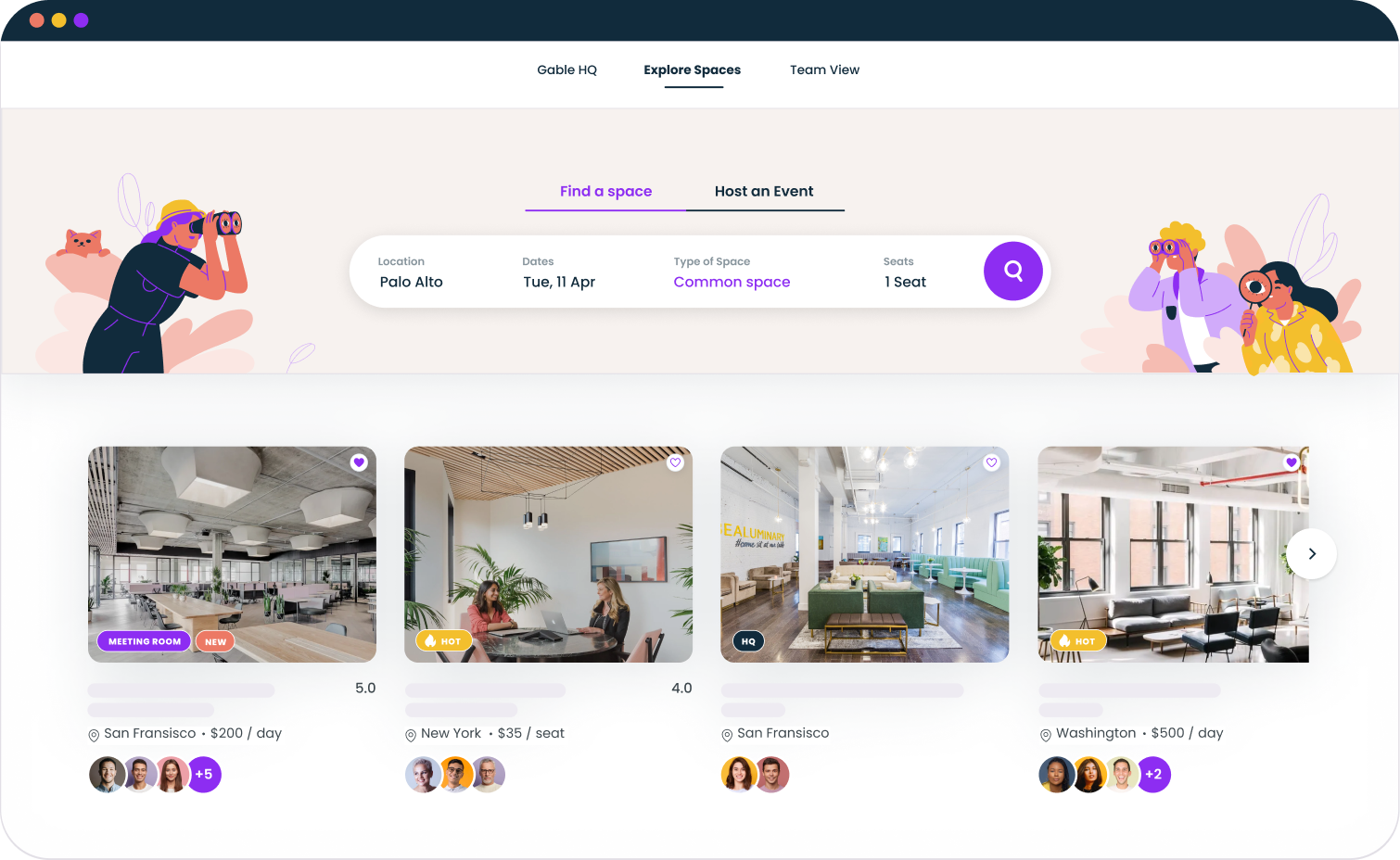
Building strong remote teams through regular activities
The most effective approach to remote team building isn't a single annual event. It's integrating connection into regular work rhythms. Here's how to build a sustainable program:
Start meetings with quick activities
Reserve the first 5-10 minutes of team meetings for casual conversation or quick games. This isn't wasted time. Research shows that social time directly improves team communication and performance.
Create optional social spaces
Not everyone wants to participate in every team activity, and that's fine. Create spaces like Slack channels or optional video hangouts where people can engage when they have capacity. Forced fun backfires.
Schedule hosted events quarterly
Larger, more structured activities work best on a quarterly or seasonal basis. These might include virtual escape rooms, cooking classes, or game tournaments. Give plenty of notice so team members can plan around them.
Mix synchronous and asynchronous options
Distributed teams often span time zones. Include activities that don't require everyone online simultaneously: photo challenges, interest-based discussions, or recognition threads where team members can participate on their own schedule.
Combine virtual and in-person when possible
For companies with employees in the same regions, consider supplementing virtual activities with occasional in-person gatherings. Even quarterly meetups at a flexible workspace can dramatically strengthen relationships formed online.
How to choose the right team building activities for remote workers
Not every activity works for every team. Consider these factors when selecting team building activities for remote workers:
Team size and composition
Quick icebreakers work for any size, but complex games may need to be modified for very large or very small teams. Consider whether breakout rooms would help larger groups participate more actively.
Time zones and schedules
If your team spans the globe, favor asynchronous options or rotate meeting times so the same people aren't always inconvenienced.
Team culture and comfort levels
Some teams embrace silly games; others prefer low-key conversations. Only one person typically sets the tone, and that person is usually the manager. Model the level of participation you want to see.
Current team needs
A team struggling with communication needs different activities than a team that works well together but feels disconnected. Match activities to actual challenges.
Frequency and sustainability
Fun games lose impact if they become obligations. Build team building into regular rhythms rather than special events, but keep participation voluntary and varied.
Measuring the impact of team building for remote teams
How do you know if your team building efforts are working? Look for these indicators:
Increased informal communication: Do team members reach out to each other outside structured meetings? Growing informal channels suggest stronger relationships.
Participation in optional activities: Voluntary participation rates indicate genuine engagement rather than obligation.
Team collaboration metrics: Look at cross-functional projects, knowledge sharing, and willingness to help other team members with tasks outside immediate responsibilities.
Engagement survey results: Track questions related to connection, belonging, and team relationships over time.
Retention patterns: Teams with strong connections tend to have higher retention rates. According to Deloitte, organizations that foster collaboration see 20% higher employee retention.
Remember that team building is a long game. Consistent, modest investment beats occasional large events in building a sustainable team culture.
Getting started: your first steps
If you're new to intentional remote team building, start simple:
- Add five minutes of social time to your next team meeting. Ask a simple question like "What's something good that happened this week?"
- Set up virtual coffee breaks using an automated tool or manually assign them. Start with voluntary participation.
- Create one interest-based channel in your team communication platform. Let it be low-pressure and optional.
- Schedule one larger activity for next quarter. Give team members input on what they'd enjoy.
- Track participation and feedback informally. Adjust based on what resonates with your specific team.
The goal isn't perfecting team building. It's creating consistent opportunities for your distributed teams to connect as humans, not just colleagues.
Gable helps workplace leaders bring distributed teams together, whether through our global network of 20,000+ on-demand workspaces or our comprehensive workplace management platform. See how companies like Snowflake and Upwork build stronger teams with Gable.
Get a demo