.svg)


.svg)
On December 10, 2025, Gable hosted workplace leaders from Reddit and Business Insider to discuss the practical decisions that shape whether people show up and what their experience looks like when they do.
When everyone wants a conference room but your utilization data shows spaces sitting empty, what do you do?
Michelle Lozzi, Senior Director of Experience at Reddit, and Shaq Lawson, Senior Director of Operations at Business Insider, shared how they handle mismatched utilization across locations, unrealistic space requests, and the data that informs their decisions.
Here's what workplace leaders can learn from their approaches.
Different Policies, Same Challenges
Reddit and Business Insider operate under very different workplace policies, but both face similar challenges around space utilization and employee expectations.
Business Insider takes a flexible approach to RTO. Rather than enforcing blanket mandates, they encourage managers to create team meetings and collaborative opportunities that naturally drive office attendance. The strategy has shown results: Shaq noted they've seen a measurable increase in utilization when teams have a reason to gather.
Reddit operates as a fully distributed company with ten global offices and no RTO mandate. Michelle explained their philosophy: "The requirement wasn't day-over-day in-office use, but creating meaningful moments of connection that sustain trust and respect for the hard work back at home between on-sites."
The key difference? Reddit focuses on building muscle for in-person culture through intentional gatherings rather than mandating daily presence. Michelle emphasized they maintain a lean real estate portfolio with short-term leases (3-5 years, even internationally) to stay nimble.
Not Every Meeting Needs a Conference Room
Both leaders pushed back on the common assumption that every meeting requires a private conference room.
Shaq was direct: "You'll never have enough conference rooms. It's not a real thing. You can have 40 people as a headcount in 60 conference rooms, and someone's still gonna find something wrong."
His approach involves listening to requests, then asking employees to try alternatives before committing to expensive buildouts. One-on-ones can happen in kitchens or on walks. Not every conversation is confidential. And when someone books a 10-person room for a two-person meeting, it's worth questioning whether they actually need that space.
Michelle emphasized the importance of treating requests as engagement opportunities rather than complaints: "At the end of the day, our job is sometimes being the bartender. You listen to the problem, offer a little life advice on how to get around it, and help people understand limited resources."
The solution-oriented approach matters. Both leaders stressed transparency about what's feasible, what's not, and why. When employees understand the budget, timeline, and tradeoffs involved in building new conference rooms, they're often willing to try creative alternatives.
Data Informs Decisions, But Context Drives Them
Utilization metrics matter, but numbers alone don't tell the full story.
Shaq tracks badge swipes and Google Workspace booking data to understand meeting patterns. One insight that changed his space planning: "People are booking, like, 10-person rooms for one-on-ones. This is obnoxious. We don't need this."
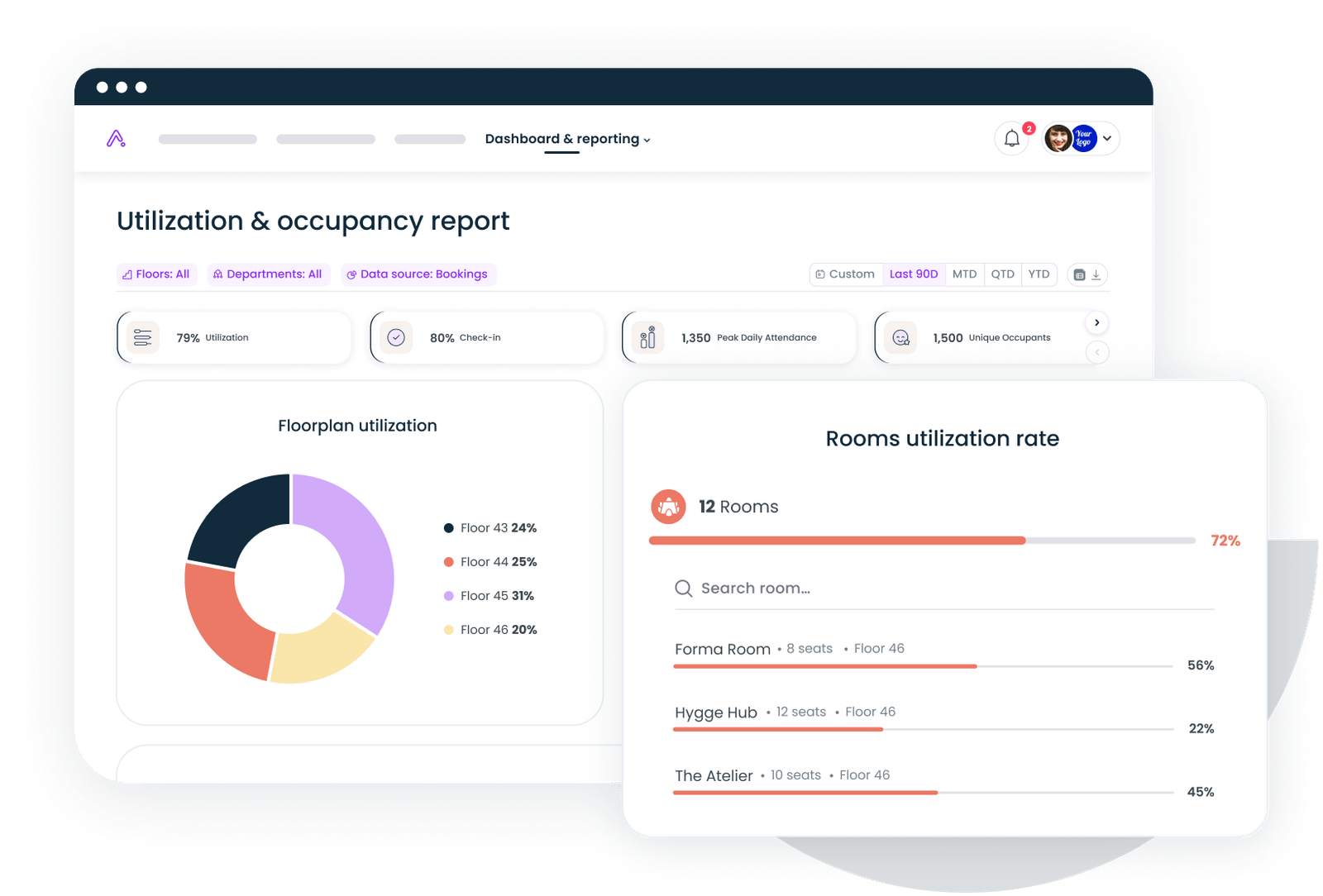
The data revealed rooms felt "always booked" but showed only 40% actual utilization. The problem wasn't lack of space; it was booking behavior. Armed with that information, he could address the real issue: helping employees understand how to use spaces appropriately.
Michelle tracks utilization weekly across all Reddit offices, but she focuses on two distinct narratives: day-over-day use versus on-site gatherings. Understanding both helps her justify keeping offices open despite uneven attendance.
She also emphasized the importance of storytelling with data: "Data is just data. You could look at numbers all day, and it might not be helpful." The key is articulating why offices exist and how they support meaningful work, especially to leadership watching utilization numbers.
Both leaders noted that sales teams consistently drive the highest utilization because they need walls, soundproofing, and professional environments for client meetings. Revenue-generating functions get priority: a practical reality for any workplace strategy.

Hear more insights from Michelle and Shaq on managing hybrid offices, measuring what matters, and getting teams together.
Watch recording
Building Culture Without Mandates
Reddit's approach to culture building centers on intentional programming rather than mandates.
Michelle described their traveling event series, Project Atelier: "The meaning of Atelier is a space used for masters to teach apprentices and for creative exchanges to happen." The program creates FOMO: people choose to participate rather than being told to attend.
The details matter. When teams gather in San Francisco, there are fresh-baked goods from Tartine, a local bakery where people normally wait in line. Small touches like memorable smells and tastes create positive associations with coming to the office.
The impact shows up in data. Teams that participated in the traveling events saw a 10% jump in engagement survey scores around Reddit's question: "Does Reddit provide valuable opportunities to build community?"
Michelle's team operates as "mini-marketers and trend forecasters," thinking through what makes people want to stay at an event and talk to strangers. The goal isn't forcing attendance—it's creating experiences people actively choose.
Visibility and Trust
Both leaders emphasized the importance of being accessible and present rather than hiding behind links and automated responses.
Shaq described his approach: "I treat every single employee like my customer. Although we're in a media organization in a corporate space, I kind of treat it like a retail environment. Anytime someone comes up to me, I'm thinking I'm at a cash register, and they're coming to check out with something."
He makes time for employees across all time zones, often responding outside New York hours to address problems immediately rather than letting them carry into the next day. That responsiveness has built credibility over six and a half years: employees know if Shaq says he's working on something, he actually is.
Michelle stressed similar principles: "Listening and building trust is such a big part of our job. Understanding how to support people is truly what this job is."
She also shared a perspective from Reddit's CEO that guides their work: "I don't want us to talk about debating problems any longer. I just want us to talk about debating solutions." The shift from complaining to problem-solving creates more productive conversations.
Food Brings People In (When Used Strategically)
One audience question asked about meal programs and office utilization. Both leaders confirmed food works, but only when used intentionally.
Shaq started monthly catered breakfasts and lunches three years ago, even when finance questioned the investment. The result: 30-40% higher attendance on catered days compared to normal days.
But the real value wasn't just the immediate boost. Catered meals created opportunities for managers to gather their teams, which led to recurring in-person meetings even without food. The meals served as a catalyst for ongoing collaboration.
Michelle added an important caveat: "Use meals for gathering opportunities, not stipends to let people eat independently. If people are just eating food on their own, that's a very different way of caring for them. Instead, use meals as gathering moments to continue to build community."
The distinction matters. Meal programs should facilitate connection, not just provide a perk.
Balancing Real Estate Optimization and Employee Experience
The tension between optimizing real estate costs and creating great employee experiences came up multiple times.
Shaq's approach focuses on repurposing spaces rather than permanent changes. When building out a conference room or studio space, he keeps infrastructure flexible so rooms can revert back if priorities shift. That adaptability matters when dealing with 10-year leases that can't easily scale up or down.
He also looks for revenue opportunities: subletting unused space to subsidiaries or peer companies rather than letting square footage sit empty.
Michelle emphasized creative problem-solving when resources are limited. When a new VP wanted their team of 20 to work together daily in Reddit's packed New York office, the solution wasn't building new space: "Let's book a conference room for your team to work for 2 hours, 2 days a week. What's the goal you're trying to solve for, and how do we meet that need creatively with the resources we have?"
The key question both leaders return to: What problem are we actually trying to solve? Once that's clear, creative solutions emerge.
Key Takeaways for Workplace Leaders
Define the goal before designing the solution. Both leaders emphasized understanding what employees actually need rather than assuming more space or more amenities solve every problem.
Data provides insights, but context drives decisions. Utilization metrics matter, but understanding behavior, department needs, and company culture is equally important.
Trust building is essential. Accessibility, transparency about constraints, and following through on commitments create credibility that makes future conversations easier.
Not everyone needs the same thing. Sales teams need different spaces than engineers. Some locations will be packed while others sit empty. One-size-fits-all policies rarely work.
Small details create big impact. Whether it's catered meals, fresh-baked goods, or simply being visible in the office, thoughtful touches show employees their experience matters.
Flexibility is more valuable than perfection. Build spaces and programs that can adapt as needs change rather than committing to permanent solutions based on current assumptions.
See how Gable helps companies manage office space, coordinate events, and support distributed teams all in one platform.
Get a demo